
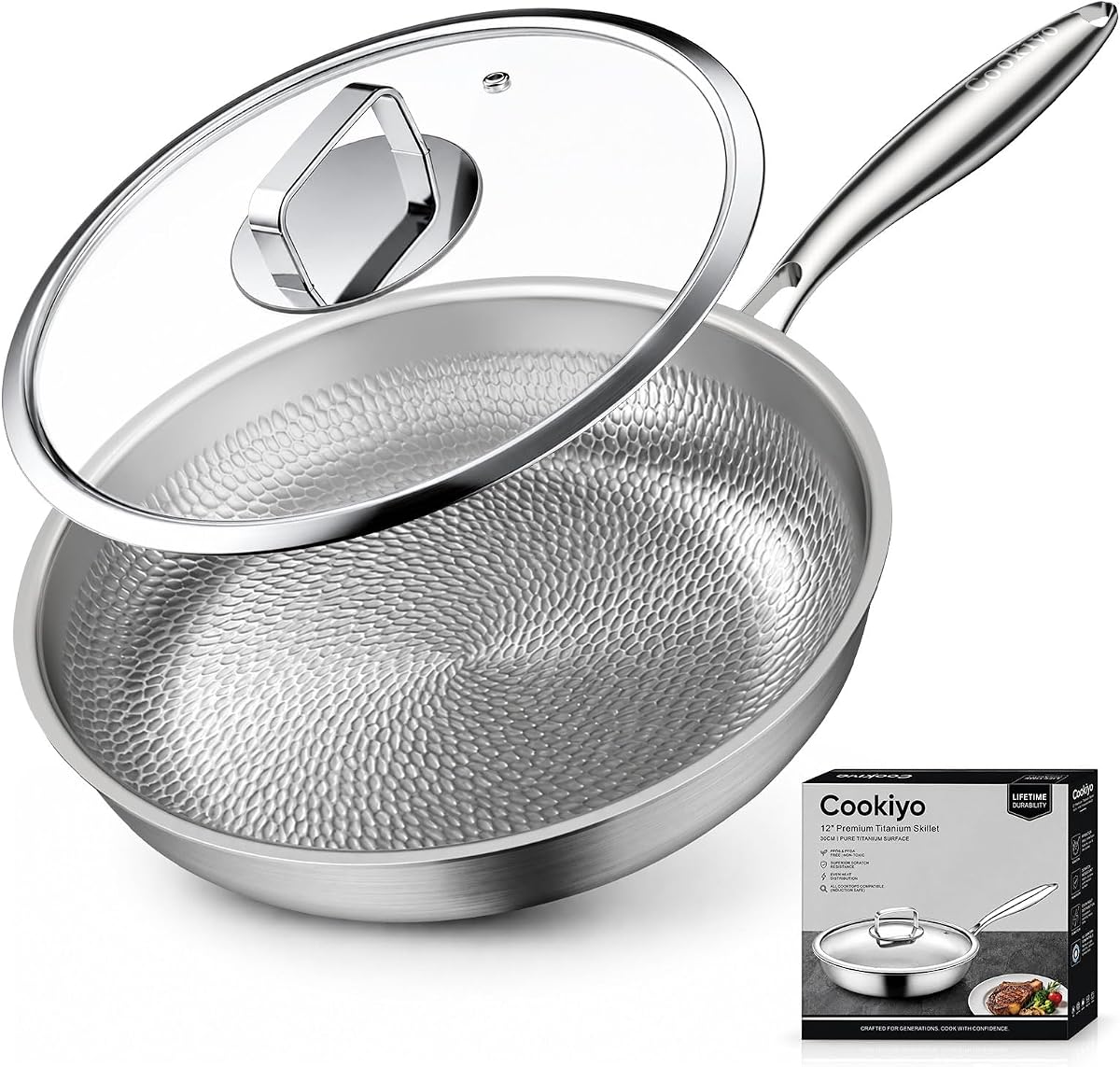
Titanium Skillets Uncovered: What to Know Before Buying a 12-Inch Pan
When shopping for a 12-inch titanium skillet like this hammered chef-grade model, you're prioritizing durability and non-toxic cooking. This guide helps you evaluate key features—from handle ergonomics to heat distribution—so you can make an informed choice that fits your kitchen and cooking style.
Key Considerations Before Buying
- Size and Weight: A 12-inch pan offers ample cooking surface, but the weight matters—especially if you have limited wrist strength. Titanium is lightweight, but check the total weight (including the lid) to ensure it's manageable for everyday use.
- Heat Conductivity: Pure titanium is a poor heat conductor; many manufacturers add an aluminum or copper core for even heating. Look for pans that mention a multi-layer base or 'even heat distribution' to avoid hot spots.
- Lid Fit and Oven Safety: A tight-fitting lid helps with moisture retention, and oven-safe handles (like stainless steel) expand versatility. Verify the maximum oven temperature rating to ensure it meets your cooking needs.
What Our Analysts Recommend
Quality indicators include a sturdy, riveted handle that stays cool on the stovetop, a flat base that doesn't warp at high heat, and a surface that's genuinely free of coatings—look for 'PFAS-free' and 'no coating' claims. Also check if the pan is induction-compatible and dishwasher-safe for hassle-free maintenance.
Skillets Market Context
Market Overview
The cookware market is increasingly leaning toward non-toxic, eco-friendly options, with titanium pans emerging as a premium alternative to traditional nonstick. Consumers are moving away from PFAS-coated pans due to health concerns, creating demand for durable, coating-free alternatives that still offer easy release.
Common Issues
Common issues in titanium cookware include poor heat distribution (if not properly constructed), sticking with certain foods, and higher price points compared to standard nonstick. Some users also report that 'titanium' is just a marketing term for a coating, so it's crucial to verify whether the pan is truly pure titanium or just titanium-infused.
Quality Indicators
Look for pans with a thick, multi-ply base, a hammered surface (which can improve nonstick properties), and clear labeling about composition and certifications. Trusted brands often provide detailed specs about material thickness and heat tolerance, and user reviews can highlight real-world performance.
Review Authenticity Insights
Grade B Interpretation
The Grade B rating and 15% estimated fake review rate suggest that while the majority of reviews are genuine, a notable minority may be incentivized or inauthentic. This is typical for newer or less-established products, and it means you should read reviews critically, focusing on verified purchases and detailed experiences.
Trust Recommendation
Given the 4.56-star average (adjusted to 4.20), you can trust the overall positive sentiment, but be aware that the true satisfaction level might be slightly lower. Look for reviews that mention specific cooking tests—like searing, frying eggs, or simmering—to gauge real performance, and weigh the negative reviews for consistent issues.
Tips for Reading Reviews
For this type of cookware, pay attention to reviews that discuss heat distribution, sticking, and durability over time. Photos of the pan in action and after months of use are valuable. Also, check for reviews from users who own multiple cookware brands to get comparative insights.
Expert Perspective
This 12-inch titanium skillet with a lid appears to be a solid choice for health-conscious cooks who want a large, coating-free pan. The hammered surface and PFAS-free construction align with current trends, and the 4.56 rating (even adjusted) indicates good user satisfaction. However, the 15% suspicious review rate warrants a cautious approach, and the pan's performance may vary depending on your stove type and cooking habits.
Purchase Considerations
Consider your typical cooking volume—12 inches is great for families but may be heavy for some. Also, think about whether you need the lid (it adds convenience but also cost). If you're transitioning from traditional nonstick, expect a learning curve with sticking; using adequate oil or butter is key. Compare pricing with other titanium or stainless steel options to ensure value.
Comparing Alternatives
Shoppers should also explore other titanium or ceramic-coated pans in this size to compare features like weight, handle comfort, and warranty. Reading reviews across multiple brands will help you find the best fit for your budget and cooking style.


