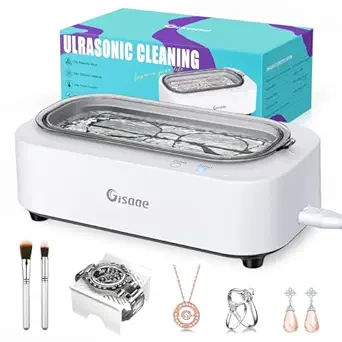
48kHz Ultrasonic Jewelry Cleaner: What to Know Before You Buy
A 48kHz ultrasonic cleaner like this one uses high-frequency sound waves to lift dirt from jewelry, but the frequency and power output directly affect what it can safely clean. This guide covers the key specs and trade-offs for shoppers considering this model.
Key Considerations Before Buying
- Frequency matters: 48kHz is a higher frequency than the common 40kHz units, producing smaller cavitation bubbles that are gentler on delicate stones and settings but may take longer to remove heavy grime. It's a good match for fine jewelry, not industrial parts.
- Tank size and material: Check the stainless steel tank capacity and construction, since smaller tanks limit what fits (rings and chains yes, large watches or multiple pieces no) and thin tanks can corrode or dent over time.
- Timer and heat controls: Basic units run fixed cycles, while better ones offer adjustable timers and gentle warming; without heat, some cleaning solutions work more slowly, so match features to how often you'll use it.
What Our Analysts Recommend
Look for 304 stainless steel tanks, a lid that seals, and clearly rated power (in watts) rather than vague claims. Reviews that mention specific cleaning results on particular jewelry types are more useful than generic praise.
Ultrasonic Cleaners Market Context
Market Overview
Ultrasonic cleaners have moved from labs and repair benches into home use, with 40–48kHz jewelry-focused units now widely sold online at consumer prices. The category is crowded with similar-looking machines, so frequency, tank size, and build quality are the real differentiators.
Common Issues
Buyers often find that cheap units have weak transducers, noisy operation, or tanks that rust; some also overestimate what ultrasonic cleaning can do, expecting it to restore heavily tarnished or damaged pieces. Misuse on soft or porous stones is another frequent complaint.
Quality Indicators
Solid transducer mounting, stainless steel construction, and honest power ratings separate better units from lookalikes. Consistent review mentions of quiet operation and durable tanks are good signs; repeated complaints about weak cleaning or leaks are red flags.
Review Authenticity Insights
Grade B Interpretation
A Grade B with an estimated 15% fake review rate means most reviews look genuine, but a meaningful minority may be inflated. The adjusted rating of 4.50/5 versus the displayed 4.89/5 suggests the true satisfaction level is strong but not flawless.
Trust Recommendation
Treat the 4.89 rating with mild caution and focus on the adjusted 4.50 as a more realistic signal. Read a sample of detailed reviews, especially critical ones, before buying.
Tips for Reading Reviews
Prioritize reviews that name specific jewelry types, cleaning times, or problems encountered, since these are harder to fake. Be skeptical of short, generic five-star reviews posted in clusters.
Expert Perspective
This 48kHz cleaner sits in a sensible spot for home jewelry care: high enough frequency to be gentle, with a rating that holds up reasonably well after adjusting for suspected fakes. The 81-review base is modest but enough to show a pattern of satisfied users, and the authenticity grade suggests the feedback is mostly trustworthy. It's a credible option for routine cleaning of rings, chains, and similar pieces.
Purchase Considerations
Weigh how often you'll clean jewelry against tank size and whether you need heat or adjustable timers; a basic unit may suffice for occasional use. Also confirm the frequency and power specs match your pieces, and avoid using it on soft or fracture-prone stones.
Comparing Alternatives
Compare frequency, tank capacity, and warranty against other 40–48kHz models before deciding, since small spec differences matter more than brand names here.