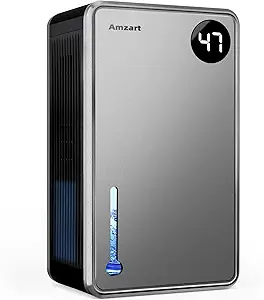
What to Know Before Buying a 28-Pint Basement Dehumidifier
The VEAGASO dehumidifier is rated for 28 pints of moisture removal per day and spaces up to 2,000 sq. ft., putting it in the compact-to-mid-size class of basement dehumidifiers. At that capacity, it's best suited to moderately damp basements rather than chronically wet crawl spaces or large open floors.
Key Considerations Before Buying
- Match pint capacity to your space and dampness level: 28 pints/day handles moderate moisture in rooms up to roughly 2,000 sq. ft., but very wet basements may need 40–50 pints/day. Oversizing wastes energy; undersizing leaves the air clammy.
- Noise output matters if the unit runs near living space: this model advertises a 38dB sleep mode, which is roughly library-quiet, though compressor dehumidifiers typically run louder on high fan settings. Check whether the low-noise mode still dehumidifies effectively.
- Water management is a daily reality: decide whether you'll empty a collection tank manually or run a continuous drain hose to a floor drain or sump pump. Tank capacity and hose compatibility are practical deal-breakers for unattended basement use.
What Our Analysts Recommend
Prioritize units with auto-restart after power outages, adjustable humidistat settings, and auto-defrost for cooler basement temperatures, since coils can freeze below roughly 65°F. Verify the pint rating is based on standard DOE test conditions (65°F, 60% RH) rather than inflated marketing figures, and confirm the drain option and filter accessibility before buying.
Dehumidifiers Market Context
Market Overview
The dehumidifier market is crowded with dozens of unfamiliar brands, many of which share near-identical designs and specs from the same overseas manufacturers. Capacity ratings, noise claims, and square-footage coverage are often the main differentiators, so comparing those numbers directly is essential.
Common Issues
Frequent complaints across the category include units that stop dehumidifying within a season, inaccurate humidistats, leaking tanks, and noise that's louder than advertised. Compressor models also struggle in cold basements, and refrigerant or drainage problems are the most common failure points.
Quality Indicators
Better dehumidifiers use recognizable compressor brands, publish clear DOE-based pint ratings, offer continuous drain options, and include auto-defrost and auto-restart. Strong warranty coverage and responsive customer support are meaningful signals, since repairs are rarely economical on budget units.
Review Authenticity Insights
Grade B Interpretation
A Grade B with an estimated 15% fake or incentivized review rate means most of the 47 reviews look authentic, but a meaningful minority may be biased or low-quality. The adjusted rating of 4.60/5 versus the raw 5.00/5 suggests the genuine sentiment is still positive, just slightly less perfect than the headline number implies.
Trust Recommendation
Treat the 5.00 rating as directionally positive rather than definitive, and weight reviews that describe specific basement conditions, runtime, and noise over short praise-only posts. With only 47 reviews, the sample is small, so look for patterns across multiple detailed reviews rather than relying on the average alone.
Tips for Reading Reviews
For dehumidifiers, focus on reviews mentioning long-term performance (months of use), actual noise levels, tank-emptying frequency, and customer service experiences. Be skeptical of reviews that repeat marketing phrases like '2000 sq. ft.' without describing a real room, and check whether negative reviews describe consistent defects or one-off shipping damage.
Expert Perspective
The VEAGASO 28-pint dehumidifier targets a common need—moderate basement moisture control in a quiet package—and its verified-purchase review base with mostly authentic sentiment is encouraging for a lesser-known brand. The 38dB sleep mode and 2,000 sq. ft. coverage claim are attractive, but the small review count and 15% estimated fake rate mean buyers should verify performance claims independently. The adjusted 4.60/5 rating suggests real users are largely satisfied, though not unanimously.
Purchase Considerations
Weigh the lower upfront price typical of off-brand dehumidifiers against the risk of shorter lifespan and harder warranty service compared with established brands. If your basement stays below 65°F or you need unattended draining, confirm auto-defrost and hose compatibility before buying, and measure your actual square footage and dampness level rather than trusting the maximum coverage claim.
Comparing Alternatives
Compare this unit against similarly priced 30–35 pint models from better-known dehumidifier brands, especially if warranty length and long-term reliability matter more to you than a quiet sleep mode.