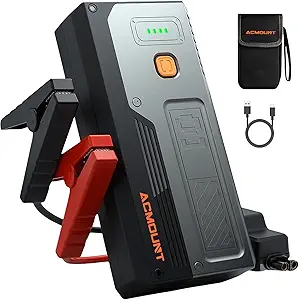
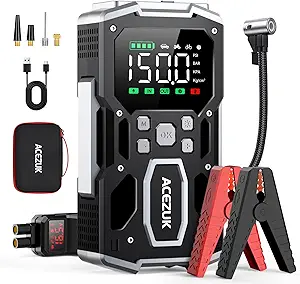
5000A Jump Starter with 150PSI Compressor: What to Know Before Buying
When you're eyeing a 5000A jump starter with a built-in 150PSI air compressor, you're looking at a dual-purpose tool that can rescue a dead battery and inflate tires. This category blends high-current jump starting with air delivery, making it essential to understand both functions' capabilities and limitations.
Key Considerations Before Buying
- Peak amperage ratings like 5000A are often marketing numbers; real-world performance depends on the internal battery capacity (Ah) and cable quality. For a 9L gas or 8L diesel engine, ensure the unit's stated compatibility matches your vehicle's displacement, not just the peak amp claim.
- The 150PSI auto-pause pump is a convenience feature, but check its actual flow rate (L/min) and whether it can handle frequent use—some compressors overheat after a few minutes of continuous operation, which can be a problem if you're inflating multiple tires.
- Safety protections (like the 10-safety system) are critical, but verify they include reverse polarity protection, spark-proof technology, and over-temperature shutdown. A misconnected clamp on a high-current unit can cause serious damage if protections fail.
What Our Analysts Recommend
Look for a unit with a clear display showing battery voltage and pressure, robust clamps with copper teeth, and a sturdy case that protects against drops. Also, check the recharge time and whether the jump starter can be used while charging—some models have pass-through charging, which is handy for emergencies.
Jump Starters Market Context
Market Overview
The jump starter market has evolved from simple battery packs to multi-function devices with air compressors, USB ports, and even inverters. As of 2025, consumer demand is shifting towards higher peak currents (3000A+) to handle larger engines and colder climates, while integrated compressors are becoming a standard feature for roadside convenience.
Common Issues
Common problems include overstated peak amperage, compressors that fail after a few uses, and batteries that lose capacity over time. Users also report that some units struggle to hold a charge when stored for long periods, so look for low self-discharge technology.
Quality Indicators
Quality is often signaled by the battery chemistry (LiFePO4 is safer and longer-lasting than Li-ion), the gauge of the jumper cables (thicker is better), and the presence of a thermal management system. A reputable brand will also provide a clear specification sheet, including internal battery capacity in Wh, not just peak amps.
Review Authenticity Insights
Grade B Interpretation
The B grade with an estimated 10% fake review rate suggests that while most feedback is authentic, a small fraction may be incentivized or overly promotional. This is typical for a high-rated product, but you should still read reviews critically, especially those with 5-star ratings that lack specific details.
Trust Recommendation
Given the 4.89 overall and 4.60 adjusted rating, you can trust the product's general performance, but the 10% fake rate means you should pay extra attention to reviews that mention long-term durability. Look for patterns in negative reviews about the compressor or battery longevity to get a balanced view.
Tips for Reading Reviews
When reading reviews for a jump starter, focus on those that describe jump-starting a vehicle similar to yours in size and engine type. Also, note any comments about the compressor's inflation speed and whether the auto-pause function works accurately—these are common pain points that may not be obvious from the product description.
Expert Perspective
This 5000A jump starter with a 150PSI compressor appears to be a solid performer based on the high genuine review scores and the authenticity grade. The dual functionality is a practical advantage for drivers who want to avoid carrying separate devices. However, the 10% fake review rate is a caution flag, and you should verify that the unit meets your specific engine size and tire pressure needs.
Purchase Considerations
Weigh the unit's weight and size—a 5000A unit is typically heavier and bulkier than lower-amp models, which may be a drawback if you plan to store it in a compact car. Also, consider the warranty and customer support; a product with a 1-year warranty may not be ideal for a device that relies on battery health.
Comparing Alternatives
If you only need jump-starting without air inflation, you might find a lighter, more compact unit with a higher capacity-to-weight ratio. Conversely, if you require a compressor for frequent tire inflation, consider a dedicated air compressor that may offer higher duty cycles and faster inflation.