How to Choose a Tower Surge Protector That Actually Fits Your Space
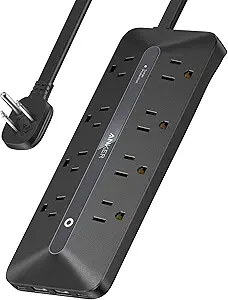
A tower-style power strip like this 2000-joule model with 12 AC outlets and 4 USB ports (including 2 USB-C) solves a common problem: too many devices, too few outlets, and not enough desk space. But not all towers are built the same—here's what to check before you buy.
Key Considerations Before Buying
- Surge protection rating: This unit offers 2000 joules, which is solid for home office and dorm electronics like laptops, monitors, and phones. Higher ratings (3000J+) are better for expensive AV equipment, but 2000J is adequate for most everyday gear.
- Outlet layout and spacing: With 12 AC outlets arranged vertically, you can plug in bulky adapters without blocking neighboring outlets—a key advantage over flat strips. Check that the tower's footprint fits your desk or floor space.
- USB charging convenience: The 4 USB ports (2 USB-C) let you charge phones, tablets, and accessories without wall adapters. Look for USB-C ports that support fast charging if your devices require it.
What Our Analysts Recommend
Prioritize a surge protector with a clearly stated joule rating, a resettable circuit breaker, and a flat plug that won't block other wall outlets. The 6-foot cord on this model offers flexibility, but ensure it reaches your desired location. Also check for a warranty—quality brands often include a connected equipment warranty.
Power Strips Market Context
Market Overview
The power strip market has shifted toward multi-functional towers that combine surge protection, USB charging, and space-saving designs. With remote work and dorm living on the rise, demand for high-outlet-count towers with USB-C is growing, but quality varies widely across generic brands.
Common Issues
Many budget power strips skimp on surge protection components, offering low joule ratings that degrade over time. Others have poorly spaced outlets or weak USB ports that charge slowly. Overloading a strip beyond its electrical rating is a frequent user error that can lead to overheating.
Quality Indicators
A reputable surge protector will list its joule rating, clamping voltage, and response time. Look for UL certification, a resettable breaker, and a fire-resistant casing. Brands with a track record and clear warranty terms are safer bets than unknown sellers.
Review Authenticity Insights
Grade B Interpretation
This product's B authenticity grade and 15% estimated fake review rate mean most reviews are genuine, but a small portion may be incentivized or fake. The adjusted rating of 4.50/5 (down from 4.89) still indicates strong satisfaction among verified buyers.
Trust Recommendation
Trust the overall sentiment but verify specific claims: look for reviews that mention long-term use, actual joule performance, or comparisons to other brands. Pay attention to verified purchase badges and detailed usage stories, which are harder to fake.
Tips for Reading Reviews
When reading reviews for power strips, focus on comments about build quality, outlet spacing, and whether the USB ports deliver expected charging speeds. Be wary of reviews that only praise the product without specifics or that use identical phrasing across multiple listings.
Expert Perspective
This tower surge protector offers a practical solution for crowded workspaces, with a high outlet count and convenient USB-C ports. Its 2000J rating provides decent protection for typical electronics, and the 4.5/5 adjusted rating suggests most users are satisfied. However, the 15% fake review estimate means you should dig deeper than the star average.
Purchase Considerations
Consider your device load: if you're plugging in high-power items like space heaters or laser printers, this may not be the right choice—surge protectors are for electronics, not appliances. Also, check whether the tower's height and cord length suit your setup.
Comparing Alternatives
Compare with similar towers from brands like Anker, Belkin, or APC, which may offer higher joule ratings or better warranties at a similar price.