
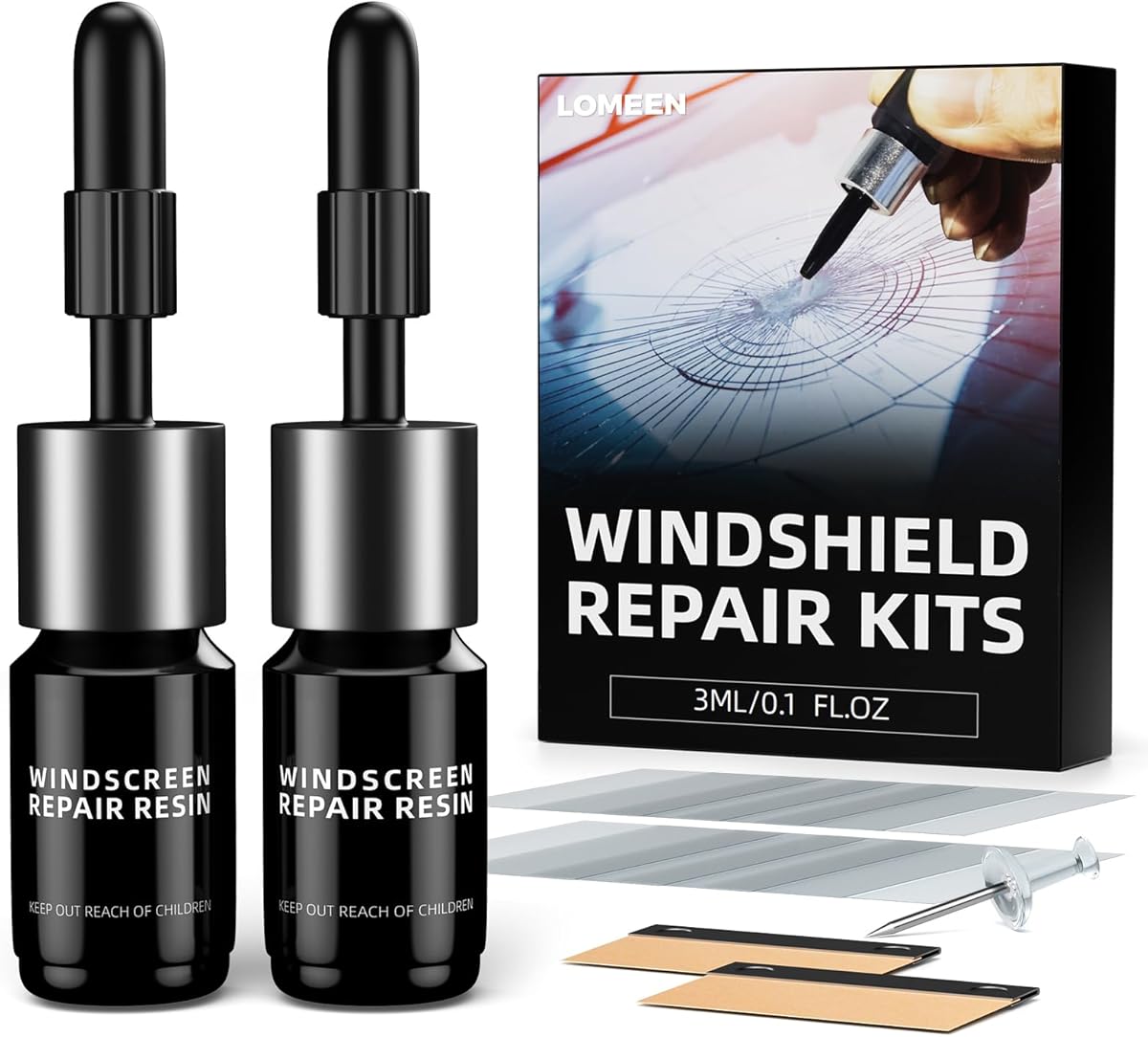
Nano liquid windshield repair kits require proper technique for optimal results
This two-bottle nano glass repair system targets specific damage types—bulls-eye and star-shaped cracks—rather than all windshield damage. The dual-liquid approach suggests a resin-and-catalyst formulation designed to penetrate and polymerize within glass fractures, requiring precise application timing.
Key Considerations Before Buying
- This kit specifically addresses bulls-eye and star-shaped cracks under 6 inches; it's ineffective for long cracks, edge cracks, or damage in the driver's direct line of sight.
- The nano liquid formulation requires temperature control (typically 50-90°F during application) and UV light exposure for proper curing, limiting use in certain weather conditions.
- Successful repair depends heavily on proper surface preparation, including thorough cleaning and creating a vacuum seal with the included bridge apparatus.
What Our Analysts Recommend
Quality kits include a sturdy injection bridge with reliable suction cups, multiple curing films, and clear instructions addressing temperature limitations. The resin bottles should have precision tips for controlled application and be packaged to prevent premature curing from light exposure.
Windshield & Glass Repair Tools Market Context
Market Overview
The DIY windshield repair market has shifted toward nano-technology resins that claim deeper penetration than traditional cyanoacrylate-based systems, with prices ranging from $10-$40 for consumer kits. Professional-grade systems still outperform DIY options for structural integrity and optical clarity.
Common Issues
Consumer kits often fail due to improper crack preparation, insufficient resin penetration into deeper glass layers, or temperature sensitivity during curing. Many users underestimate the skill required for invisible repairs and expect professional-grade results.
Quality Indicators
Superior kits include UV-blocking curing strips, multiple bridge adapters for different crack types, and detailed troubleshooting guides. The resin should have appropriate viscosity—too thin runs uncontrollably, too thick won't penetrate micro-fractures.
Review Authenticity Insights
Grade C Interpretation
A Grade C with 22% estimated fake reviews indicates moderate authenticity concerns—approximately 1 in 5 reviews may be inauthentic. The adjusted 4.50 rating (down from perfect 5.00) suggests genuine feedback is still positive but less uniformly perfect.
Trust Recommendation
Focus on verified purchase reviews that mention specific application details like weather conditions, crack dimensions, or curing times. Be skeptical of reviews claiming 'perfect invisible repair' without acknowledging the learning curve involved.
Tips for Reading Reviews
Prioritize reviews discussing long-term results (weeks/months post-repair) and those comparing this nano-liquid system to traditional resin kits. Look for mentions of the two-bottle mixing process and how the included tools performed during application.
Expert Perspective
This kit's strong adjusted rating (4.50/5) suggests genuine users achieve satisfactory results for its intended applications, though the authenticity grade warrants cautious optimism. The two-bottle nano-liquid approach represents current DIY technology but requires realistic expectations—repairs typically prevent spreading rather than restore optical perfection. The specific targeting of bulls-eye and star cracks indicates formulation optimization for radial fracture patterns common from stone impacts.
Purchase Considerations
Consider your crack's exact characteristics: star cracks require more resin volume and precise center-point injection. Evaluate whether you can maintain the required temperature range during the 20-30 minute curing process. This kit represents better value for multiple repairs or preventative applications on new damage.
Comparing Alternatives
Compare resin viscosity, bridge design, and curing methods with single-bottle systems and professional injection pump kits costing $50+.


