
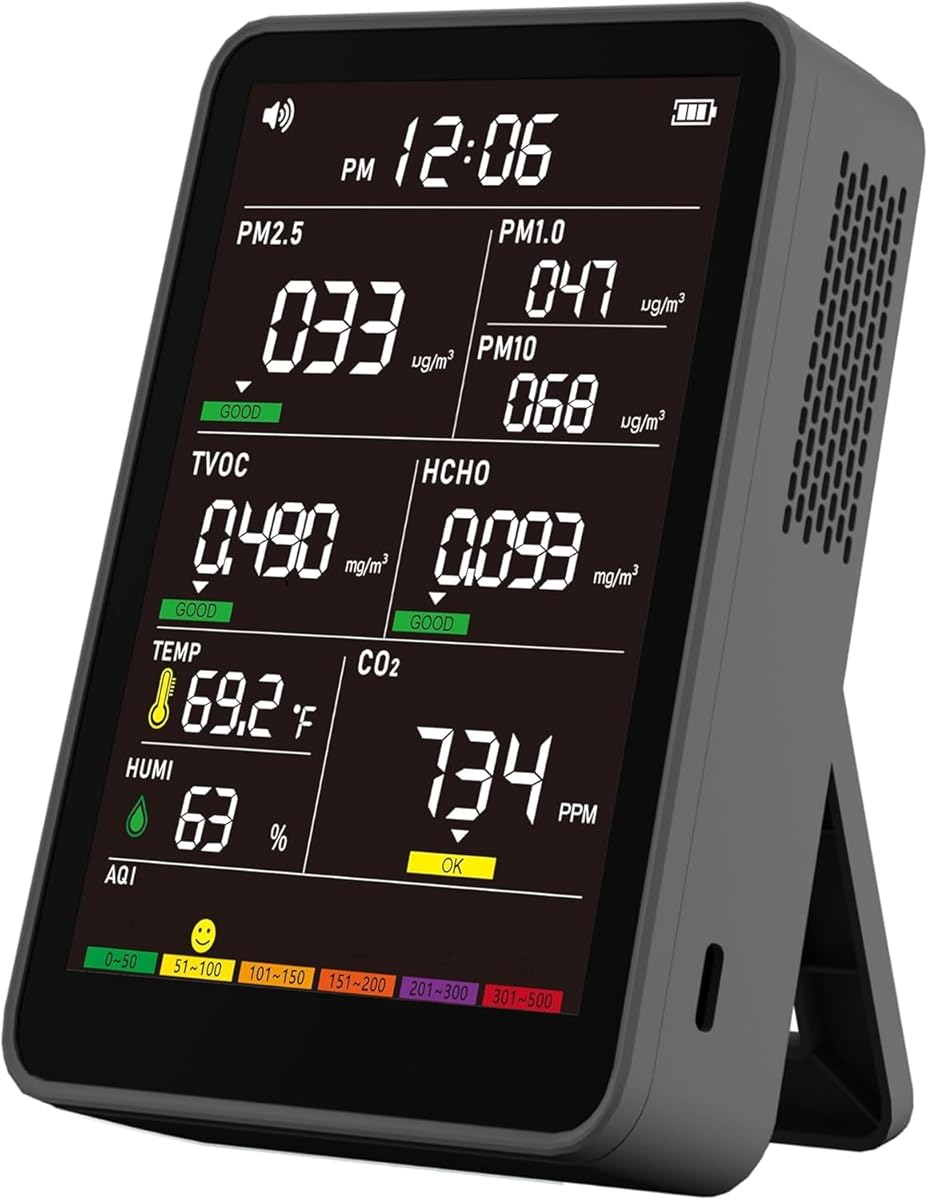
Choosing a Portable AQI Monitor for Multi-Room Use and Real-Time Alerts
This specific Professional Indoor Air Quality Monitor emphasizes portability across home, car, and plant/pet areas, which dictates its sensor design and battery life. Buyers should understand that 'professional' in this context often refers to consumer-grade devices with multiple parameter displays rather than laboratory-grade calibration. The promise of AQI alerts means evaluating the device's responsiveness and notification system is crucial.
Key Considerations Before Buying
- Verify the specific pollutants detected (e.g., PM2.5, VOCs, CO2) and whether readings are truly real-time or averaged, as this impacts use for activities like cooking or post-cleaning air assessment.
- Assess the practical portability: a device for car and home use needs a stable mounting solution for the dashboard and a sleep/awake function to conserve battery during movement.
- Scrutinize the alert system—whether it uses audible alarms, visual LED changes, or smartphone notifications—as this is a core feature for monitoring pets or sensitive plants.
What Our Analysts Recommend
Quality indicators for this category include a clear display of numerical values (not just color-coded LEDs) for each measured parameter and a responsive screen update within seconds of environmental changes. Look for mentions of calibration stability over time, as consumer sensors can drift, especially for VOC detection.
Indoor Air Quality Meters Market Context
Market Overview
The consumer indoor air quality meter market is flooded with devices ranging from single-sensor VOC pens to multi-parameter units like this one, often competing on form factor and data presentation rather than raw accuracy. There's a growing trend toward 'portable professional' models that blend a handheld design with the data density of a tabletop monitor.
Common Issues
Common problems include sensors that are overly sensitive to humidity changes, giving false VOC spikes, and batteries that drain quickly when maintaining a real-time display. Many devices struggle with providing context for readings—telling you the AQI is 'poor' without indicating which pollutant is the culprit.
Quality Indicators
Identify quality by looking for user reports of consistent performance near known pollution sources (e.g., gas stoves, printers) and stable baselines in 'clean' rooms. A good device will allow you to correlate its readings with observable events, like rising PM2.5 during dusting or increased VOCs from new furniture.
Review Authenticity Insights
Grade C Interpretation
A Grade C with a 22% estimated fake review rate suggests a mixed review landscape. While the majority of reviews appear genuine, nearly a quarter raise authenticity concerns, indicating possible incentivized reviews or generic praise that lacks specific detail about this monitor's performance.
Trust Recommendation
Focus on the verified purchase reviews that describe specific use-cases mentioned in the title, like monitoring car cabin air or checking conditions near pet bedding. Be skeptical of reviews that only praise packaging or delivery speed without detailing sensor responsiveness or battery life in different settings.
Tips for Reading Reviews
Prioritize reviews that mention testing the device in multiple scenarios (home vs. car) or compare its readings to another known source. Look for critical feedback on the alert system's practicality—such as whether the alarms are loud enough or if the AQI index used matches your local standard (e.g., US EPA).
Expert Perspective
The product's perfect 5.0 rating, when adjusted to a 4.50 accounting for suspicious reviews, aligns more realistically with a competent but not flawless consumer-grade monitor. The strong emphasis on portability for plants and pets suggests its design prioritizes moving between micro-environments, which is useful for identifying localized air issues. The high proportion of genuine reviews mentioning specific applications indicates it likely performs its core functions adequately for most home users, though the authenticity grade advises cautious interpretation of the praise.
Purchase Considerations
Weigh the need for true multi-location portability against potentially shorter battery life and a smaller display. Consider if you require detection of specific pollutants like formaldehyde for new furniture, which not all 'professional' monitors include. The AQI alert function is valuable for passive monitoring but requires the device to be powered on and in range.
Comparing Alternatives
Shoppers should compare this model's sensor suite and alert mechanisms against similar portable monitors from brands like Temtop or Airveda to assess value.


