
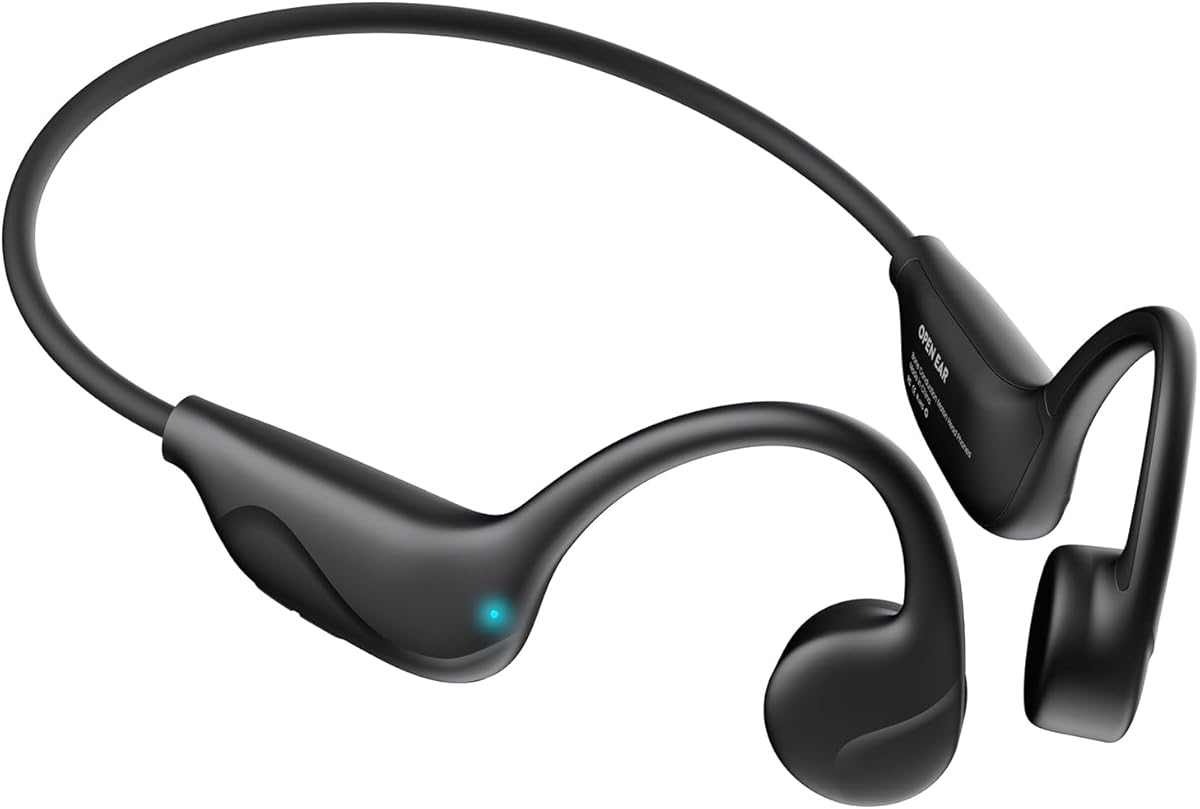
Open-Ear Bone Conduction Headphones: Balancing Situational Awareness with Sound Quality
These specific bone conduction headphones prioritize situational awareness for runners and cyclists, using transducers that bypass your eardrums entirely. With IPX5 waterproofing and 12-hour battery life, they're engineered for active use where traditional earbuds would fail. The open-ear design means you'll hear traffic, conversations, and your surroundings while listening to audio.
Key Considerations Before Buying
- Bone conduction sound quality differs fundamentally from traditional headphones—expect less bass response but clearer environmental awareness during outdoor activities.
- The IPX5 rating indicates protection against water jets, making these suitable for sweat-heavy workouts and light rain, but not submersion.
- Comfort varies significantly with head shape and glasses; the behind-the-neck design must maintain consistent transducer pressure against your cheekbones.
What Our Analysts Recommend
Quality bone conduction headphones should maintain stable Bluetooth connectivity during movement (V6.0 here suggests recent protocols) and have secure but non-fatiguing temple pressure. Check for microphone quality in windy conditions—a common weakness in open-ear designs where mics are exposed to environmental noise.
Open-Ear Headphones Market Context
Market Overview
The open-ear headphone market has expanded beyond bone conduction to include directional speaker designs, but bone conduction remains preferred for activities requiring maximum situational awareness. Recent Bluetooth improvements have reduced latency issues that previously plagued audio-video synchronization.
Common Issues
Sound leakage in quiet environments and vibration discomfort at high volumes are inherent bone conduction limitations. Many models struggle with microphone clarity during outdoor use, as open designs pick up wind and ambient noise alongside voice.
Quality Indicators
Look for secure IP ratings matching your activity level (IPX5 indicates sweat and rain resistance), battery life claims that match real-world usage patterns, and flexible but stable frames that maintain transducer contact during vigorous movement.
Review Authenticity Insights
Grade B Interpretation
A Grade B authenticity rating with 11% estimated fake reviews suggests mostly genuine feedback but requires careful review reading. The adjusted 4.70/5 rating (from 5.00) indicates some review inflation but still represents strong user satisfaction.
Trust Recommendation
Focus on reviews mentioning specific use cases like running routes, gym workouts, or cycling commutes—these demonstrate authentic experience. Be skeptical of reviews lacking situational context or those using identical phrasing across multiple products.
Tips for Reading Reviews
Look for detailed comments about comfort during extended wear and microphone performance in windy conditions—these are authentic pain points. Reviews discussing battery life accuracy over months of use provide more value than initial impressions.
Expert Perspective
This product's exceptionally high adjusted rating (4.70/5) despite authenticity concerns suggests genuine user satisfaction, particularly among active users who prioritize situational awareness. The 12-hour battery claim aligns with typical bone conduction efficiency, though real-world performance often depends on volume levels and connectivity stability. The Bluetooth V6.0 implementation should provide reliable connections for runners who need consistent audio without dropouts.
Purchase Considerations
Evaluate whether you truly need bone conduction technology versus other open-ear designs—if maximum environmental awareness during outdoor activities is critical, these are appropriate. Consider your sensitivity to vibration on cheekbones and whether you'll use the microphone frequently in noisy environments.
Comparing Alternatives
Compare with other bone conduction models offering higher IP ratings for swimming or different frame designs that might better accommodate eyewear.


