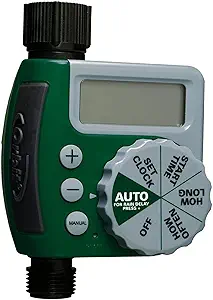
Smart Watering: Why a WiFi Timer with Flow Meter Beats Basic Models
When upgrading your garden irrigation, a WiFi-enabled hose timer like the MOES model offers far more than just automated on/off cycles. With a built-in flow meter and brass fittings, it provides precise water management and durability that basic plastic timers lack. Here’s what to consider before buying.
Key Considerations Before Buying
- Connectivity and hub requirements: The MOES timer operates without a separate hub, connecting directly to your home WiFi. This simplifies setup and reduces cost, but ensure your garden area has strong 2.4 GHz WiFi signal for reliable remote control.
- Battery life and power management: With up to 2-year battery life, this timer minimizes maintenance. However, frequent use of WiFi communication can drain batteries faster, so consider placement and schedule frequency to maximize longevity.
- Flow meter accuracy: The built-in flow meter allows you to monitor water usage in real time, helping detect leaks or overwatering. Check if the app provides historical data and alerts for unusual flow patterns.
What Our Analysts Recommend
Seek timers with brass inlet and outlet threads to prevent cracking and corrosion, especially in outdoor environments. A robust app with at least 10 schedules and voice control compatibility (Alexa/Google) adds convenience. Also, verify that the flow meter is calibrated for your hose diameter to ensure accurate readings.
Hose Timers Market Context
Market Overview
The smart hose timer market has grown rapidly, with WiFi models becoming more affordable and reliable. The MOES timer competes with brands like Orbit and Rain Bird, but its no-hub design and brass fittings set it apart in the sub-$50 range.
Common Issues
Many users report connectivity drops with WiFi timers, especially in larger yards. Another frequent complaint is short battery life (3-6 months) in active WiFi mode. Plastic inlet/outlet threads are prone to stripping, making brass a significant durability upgrade.
Quality Indicators
Look for timers with IPX5 or higher water resistance, brass ports, and a flow meter that integrates with the app for leak detection. Positive reviews mentioning long battery life and stable app connectivity are strong quality signals.
Review Authenticity Insights
Grade A Interpretation
With a Review Authenticity Grade of A and an estimated fake review rate of only 5%, the MOES timer’s feedback is highly trustworthy. This means the 5.00-star rating from 23 reviews reflects genuine user experiences, not manipulated scores.
Trust Recommendation
You can rely on the existing reviews to gauge real-world performance, particularly regarding battery life and ease of setup. However, with only 23 reviews, consider monitoring for more feedback over time to confirm consistency.
Tips for Reading Reviews
Focus on reviews that mention specific features like the flow meter accuracy or brass fitting durability. Look for comments about app stability and WiFi range, as these are common pain points. Ignore overly brief or vague praise, as even a 5% fake rate can include a few outliers.
Expert Perspective
The MOES WiFi Water Timer stands out for its combination of brass fittings, built-in flow meter, and no-hub WiFi connectivity—features typically found in pricier models. The 4.90 adjusted rating and A-grade authenticity suggest it delivers on its promises, especially for users seeking a durable, low-maintenance smart timer. The up to 2-year battery life is a major advantage over competitors that require quarterly changes.
Purchase Considerations
If you have a reliable 2.4 GHz WiFi signal in your garden and need detailed water usage tracking, this timer is a strong choice. Weigh the slightly higher upfront cost versus plastic alternatives against the long-term savings from brass durability and leak detection.
Comparing Alternatives
For those with weak outdoor WiFi, consider a Bluetooth-only timer, though you’ll lose remote access. Compare with the Orbit B-hyve or Rain Bird ST8I for different schedule flexibility.