Solar Ultrasonic Repellents: Balancing Motion Detection Range with Solar Charging Efficiency
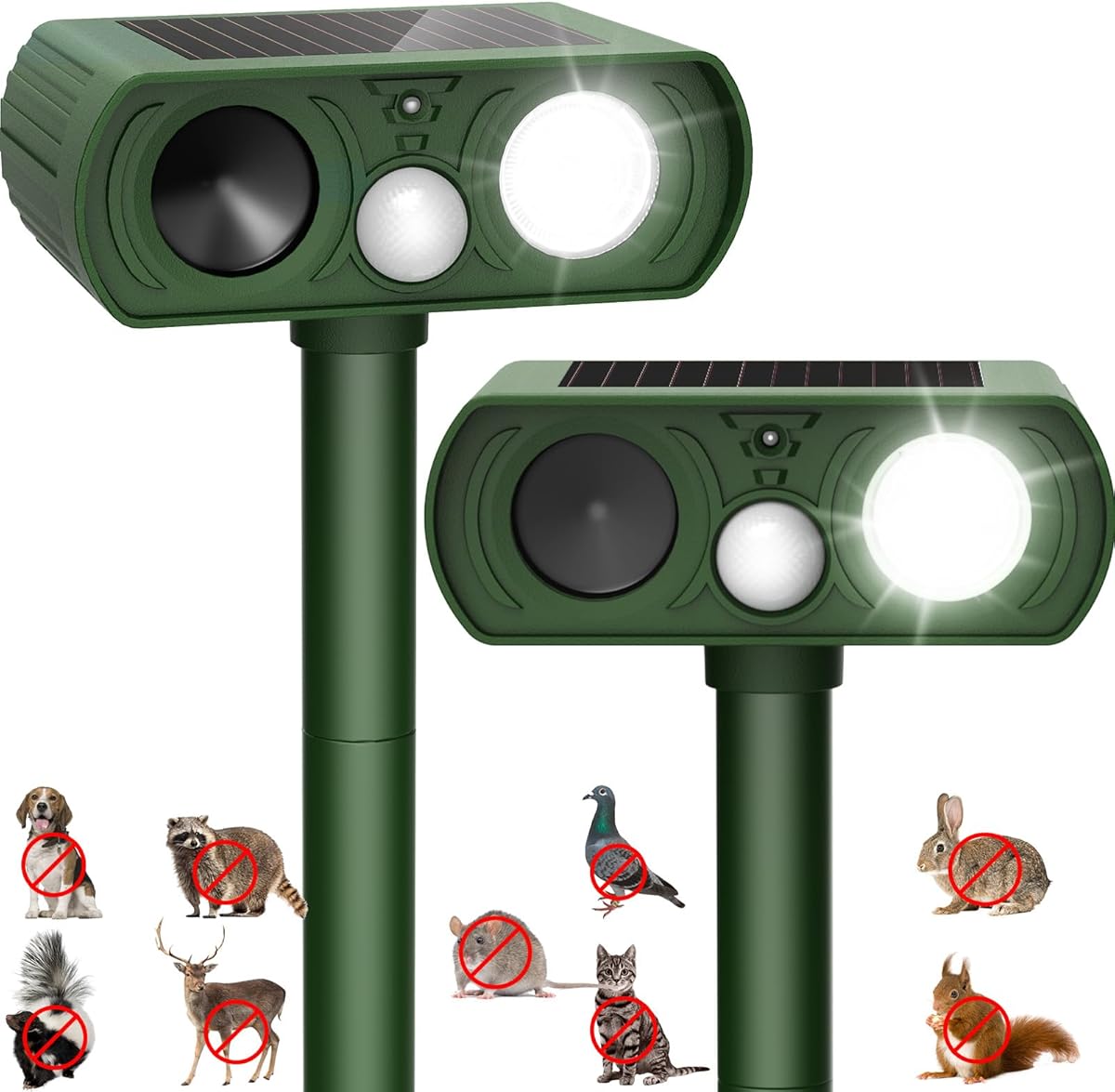
This upgraded dual-pack solar repellent combines ultrasonic frequencies with motion-activated strobe lights, specifically designed for persistent garden pests like deer and raccoons. Buyers should understand that effectiveness depends heavily on proper placement and solar panel orientation, as these devices require consistent sunlight to maintain their motion detection and ultrasonic emission capabilities.
Key Considerations Before Buying
- The 2-pack configuration requires strategic placement at different garden entry points, as ultrasonic waves have limited directional range and cannot penetrate solid barriers.
- Solar-powered operation means placement must balance optimal sunlight exposure with coverage of high-traffic animal pathways, which may require seasonal repositioning.
- Motion detection combined with flashing lights creates a multi-sensory deterrent, but may be less effective against habituated urban wildlife that have grown accustomed to similar stimuli.
What Our Analysts Recommend
Quality indicators include waterproof IP65+ ratings for all-weather durability and adjustable frequency settings to target specific animals. Genuine solar-powered units should maintain charge through 2-3 cloudy days, while cheaper models may rely more on backup batteries.
Ultrasonic Repellers Market Context
Market Overview
The ultrasonic animal repellent market has shifted toward solar-powered models with motion sensors, creating a competitive landscape where 'upgraded' often refers to improved solar efficiency and adjustable frequency ranges. Current products increasingly combine multiple deterrent methods rather than relying solely on ultrasound.
Common Issues
Users frequently report inconsistent results due to improper placement, insufficient solar charging in shaded areas, or animals becoming habituated to the ultrasonic frequencies over time. Many cheaper models fail to deliver the advertised frequency ranges needed to affect larger pests like deer.
Quality Indicators
Look for specific frequency ranges (typically 15-65 kHz for comprehensive coverage), genuine solar panels with at least 6V output, and motion sensors with adjustable sensitivity. Higher-quality units feature multiple emission patterns to prevent animal adaptation.
Review Authenticity Insights
Grade B Interpretation
A Grade B authenticity rating with 15% estimated fake reviews suggests generally reliable feedback, but shoppers should be particularly critical of overly enthusiastic 5-star reviews that lack specific installation details or long-term performance observations. The 4.60 adjusted rating from verified purchases represents a more realistic performance expectation.
Trust Recommendation
Focus on reviews that mention specific animals deterred (deer versus squirrels), installation challenges with solar positioning, and performance changes across seasons. Verified reviews discussing 30+ day usage provide more reliable data than initial impressions.
Tips for Reading Reviews
Prioritize reviews that detail exact placement relative to animal pathways and include observations about solar charging performance in different weather conditions. Be skeptical of reviews claiming universal effectiveness across all animal types without mentioning specific frequency adjustments.
Expert Perspective
This product's 4.60 adjusted rating from verified purchasers indicates generally positive performance, particularly for users who properly manage the solar charging and placement variables. The combination of ultrasonic emissions with motion-activated strobe lights represents a thoughtful multi-modal approach, though effectiveness will vary significantly based on local wildlife behavior and garden layout. The 2-pack configuration is essential for creating overlapping coverage zones that prevent animals from simply bypassing a single unit.
Purchase Considerations
Consider your specific pest profile—deer require different frequency ranges than burrowing animals like rabbits—and evaluate whether your garden receives consistent direct sunlight for solar charging. These devices work best as perimeter deterrents rather than spot solutions for established infestations.
Comparing Alternatives
Compare this model's solar panel specifications and frequency adjustment options against similar-priced competitors, as these technical details significantly impact real-world performance.