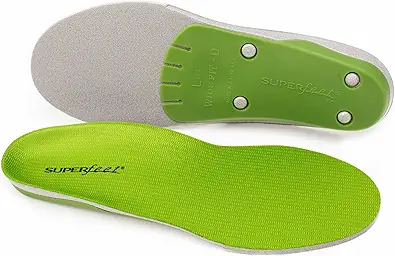
Choosing Metatarsal Insoles for Morton's Neuroma & Ball-of-Foot Pain Relief
If you're dealing with the sharp, burning pain of Morton's neuroma or general metatarsalgia in the ball of your foot, you need an insole with a precisely placed metatarsal pad—not just generic arch support. This product combines a built-in metatarsal pad with orthotic arch support, targeting two key pressure points to redistribute weight away from the sensitive forefoot. Before buying, understand how the pad's position and the insole's rigidity affect your specific foot mechanics and shoe fit.
Key Considerations Before Buying
- Metatarsal Pad Placement: The pad must sit directly behind the metatarsal heads (the knuckles of your toes) to effectively lift and spread the bones. An incorrectly positioned pad can worsen pain or create new pressure points, so ensure the insole's pad aligns with your foot's anatomy.
- Arch Support Integration: For standing all day, the insole needs a firm yet comfortable arch support that works in concert with the metatarsal pad. This dual-action design prevents overpronation, which can exacerbate forefoot pressure, and should feel supportive without being rigid enough to cause arch cramping.
- Insole Thickness & Fit: These insoles must fit your shoes without crowding your toes or raising your heel too high, which can cause instability. Measure your shoe's removable insole and compare it to the product's dimensions, especially if you have narrow or wide feet.
What Our Analysts Recommend
Quality metatarsal insoles use a medical-grade silicone or gel pad that is neither too hard nor too soft—it should provide consistent lift without bottoming out. Look for a deep heel cup that stabilizes the foot and a gradual arch slope, as abrupt transitions can cause discomfort. A breathable, moisture-wicking top layer is also essential for all-day wear.
Insoles Market Context
Market Overview
The insole market has expanded rapidly with targeted solutions for specific foot conditions like Morton's neuroma, moving beyond generic cushioning to biomechanical correction. Products now often combine multiple features—metatarsal pads, arch supports, and heel cups—in one unit, but quality varies widely based on material durability and pad placement accuracy.
Common Issues
A frequent problem is that metatarsal pads are either too small to provide effective lift or so large they create a lumpy feel inside the shoe. Many users also find that the advertised 'orthotic arch support' is too flexible for significant pronation control, leading to inadequate pain relief for those on their feet all day.
Quality Indicators
High-quality insoles in this category are made from a firm yet responsive material like polypropylene or rigid EVA, with a metatarsal pad that is molded (not glued) for consistent positioning. Verified reviews that describe specific foot conditions and long-term use (3+ months) are strong indicators of effectiveness.
Review Authenticity Insights
Grade B Interpretation
This product's Grade B rating and 10% estimated fake review rate indicate that while the vast majority of reviews are authentic, a small minority may be incentivized or non-genuine. This is a common pattern for high-rated health products, where genuine user experiences often dominate but a few reviews may lack depth or detail.
Trust Recommendation
Given the strong authenticity signals—personal medical context, specific comparisons to other insoles, and detailed usage descriptions—you can generally trust the 4.89 overall rating, though the adjusted 4.60 is a more conservative benchmark. Focus on reviews that mention Morton's neuroma by name and describe how the pad felt during prolonged standing.
Tips for Reading Reviews
When reading reviews, prioritize those that describe the reviewer's specific foot condition (e.g., 'Morton's neuroma between 3rd and 4th toes') and how the insole affected their daily activities. Be wary of reviews that use generic phrases like 'great product' without context, and look for photos showing the insole's pad placement relative to the shoe.
Expert Perspective
This insole appears to be a well-designed solution for metatarsalgia and Morton's neuroma, with a built-in metatarsal pad and arch support that many users with similar conditions have found effective. The high adjusted rating of 4.60 and consistent praise for 'instant relief' and 'standing all day' comfort suggest it delivers on its core promise, likely due to proper pad positioning and supportive materials. However, the 10% fake review rate means a few overly positive reviews may not reflect typical results, so individual fit and condition severity are critical factors.
Purchase Considerations
Weigh the convenience of a built-in pad against the potential need for adjustable pads if your pain point is unusually located. If you have high arches or severe pronation, this insole's integrated design may work well, but those with flat feet might need a more customized solution. Also consider that these insoles may require a shoe with removable insoles and a slightly deeper toe box to accommodate the added volume.
Comparing Alternatives
Shoppers should compare this product with other metatarsal insoles that offer adjustable or replaceable pads, as well as those with different arch heights, to find the best match for their foot shape and specific neuroma location.