
What to Know Before Buying a VG10 Damascus Gyuto
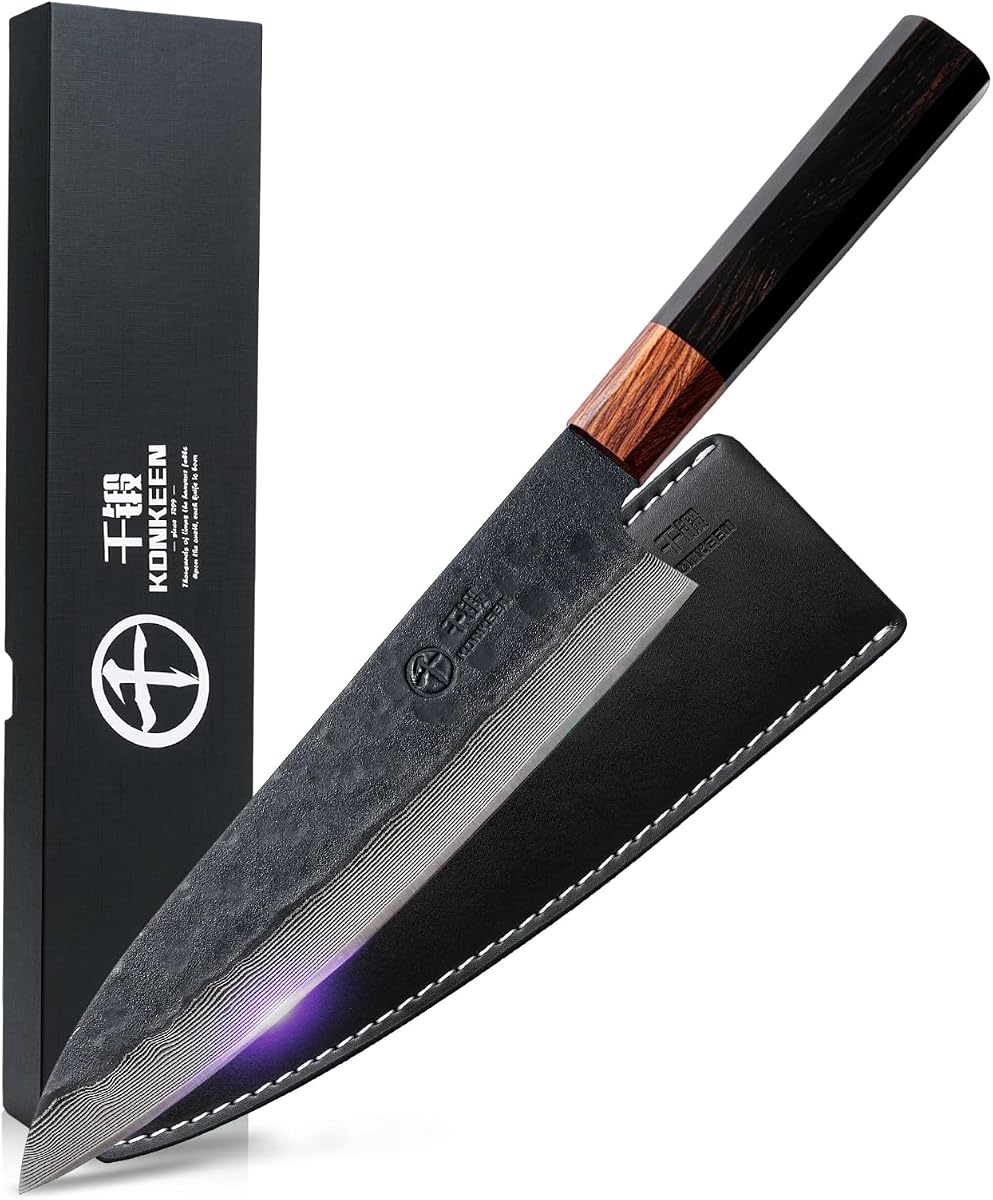
This 8-inch gyuto pairs a VG10 stainless steel core with 67 layers of Damascus cladding and a hand-forged finish, so buyers should understand how core steel, cladding, and handle construction affect real-world performance. The rosewood-and-ebony handle and included leather sheath also signal it's positioned as a gift-oriented package, which changes what you should scrutinize.
Key Considerations Before Buying
- VG10 is a hard, high-carbon stainless steel that takes a very keen edge but is less forgiving than softer German steels—avoid twisting or chopping through bone, and expect to hone rather than steel the edge. The 67-layer Damascus cladding is primarily cosmetic and corrosion-resistant; it does not make the cutting edge tougher.
- An 8-inch gyuto is the most versatile blade length for most home cooks, handling everything from onions to proteins, but the black finish and Damascus pattern can show scratches and water spots, so hand-washing and immediate drying are essential. A hand-forged blade may also arrive with slight cosmetic irregularities that are normal, not defects.
- The rosewood-and-ebony handle is a comfort and aesthetics choice, but check whether it's a full tang and how it's sealed—wood handles need occasional oiling and can loosen if repeatedly soaked. The leather sheath is convenient for storage and gifting but should not replace a proper knife block or magnetic strip for daily use.
What Our Analysts Recommend
Look for clear disclosure of the VG10 core and cladding construction, a full-tang handle with tight fit and no gaps, and a blade that arrives sharp and straight with an even grind. Because Damascus patterning varies blade to blade, inspect photos and reviews for consistency, and confirm the seller offers returns in case the handle or finish doesn't meet expectations.
Chef's Knives Market Context
Market Overview
The chef's knife market is flooded with Damascus-patterned VG10 blades at widely varying quality levels, from reputable Japanese makers to budget rebrands that use the same marketing language. Buyers increasingly shop on aesthetics and gift appeal, which makes construction details and seller accountability more important than ever.
Common Issues
Common complaints in this segment include edges that dull quickly or chip under normal use, Damascus patterns that are etched rather than layered, and handles that loosen or develop gaps. Misleading 'hand-forged' claims and inconsistent sharpness out of the box are also frequent, especially among lower-priced Damascus listings.
Quality Indicators
Genuine quality shows in a straight, evenly ground blade, a crisp lamination line where the core meets the cladding, and a handle with no gaps or play. Reputable sellers disclose steel type, hardness (often around 60-61 HRC for VG10), and offer straightforward returns; vague specs and stock-only photos are warning signs.
Review Authenticity Insights
Grade B Interpretation
A Grade B with an estimated 15% fake review rate means most reviews are likely genuine, but roughly one in seven may be incentivized or exaggerated—enough to inflate the 4.44 rating. The adjusted 4.10 rating is a more realistic signal of buyer satisfaction, still solid but with more room for mixed experiences.
Trust Recommendation
Treat the adjusted 4.10 rating as the working number and prioritize reviews that mention long-term edge retention, handle fit, and actual sharpness out of the box. Be cautious of short, glowing reviews that repeat marketing phrases like '67 layers' or 'ultra sharp' without describing real use.
Tips for Reading Reviews
Filter for verified purchases and read the three- and four-star reviews first—they tend to describe specific tradeoffs like handle finish or edge maintenance. Look for reviewers who mention their cooking experience and how the knife performed after weeks or months, not just on arrival.
Expert Perspective
This knife offers an appealing spec sheet—VG10 core, 67-layer Damascus, hand-forged styling, and a gift-ready sheath—at a price point that likely undercuts established Japanese brands. The adjusted 4.10 rating suggests most buyers are satisfied, but the 15% estimated fake review rate means the headline 4.44 overstates consensus. It's a reasonable entry into Damascus gyutos for someone drawn to the aesthetic, provided expectations about edge care and handle maintenance are set.
Purchase Considerations
Weigh whether you want a showpiece gift or a daily workhorse: the black finish and wood handle demand more care than a stainless Western knife, and VG10 rewards good habits. Confirm the seller's return policy and check recent reviews for consistency in sharpness and handle quality before committing.
Comparing Alternatives
Compare against other VG10 gyutos from known Japanese makers and against simpler high-carbon or stainless options if durability matters more than Damascus appearance.


