
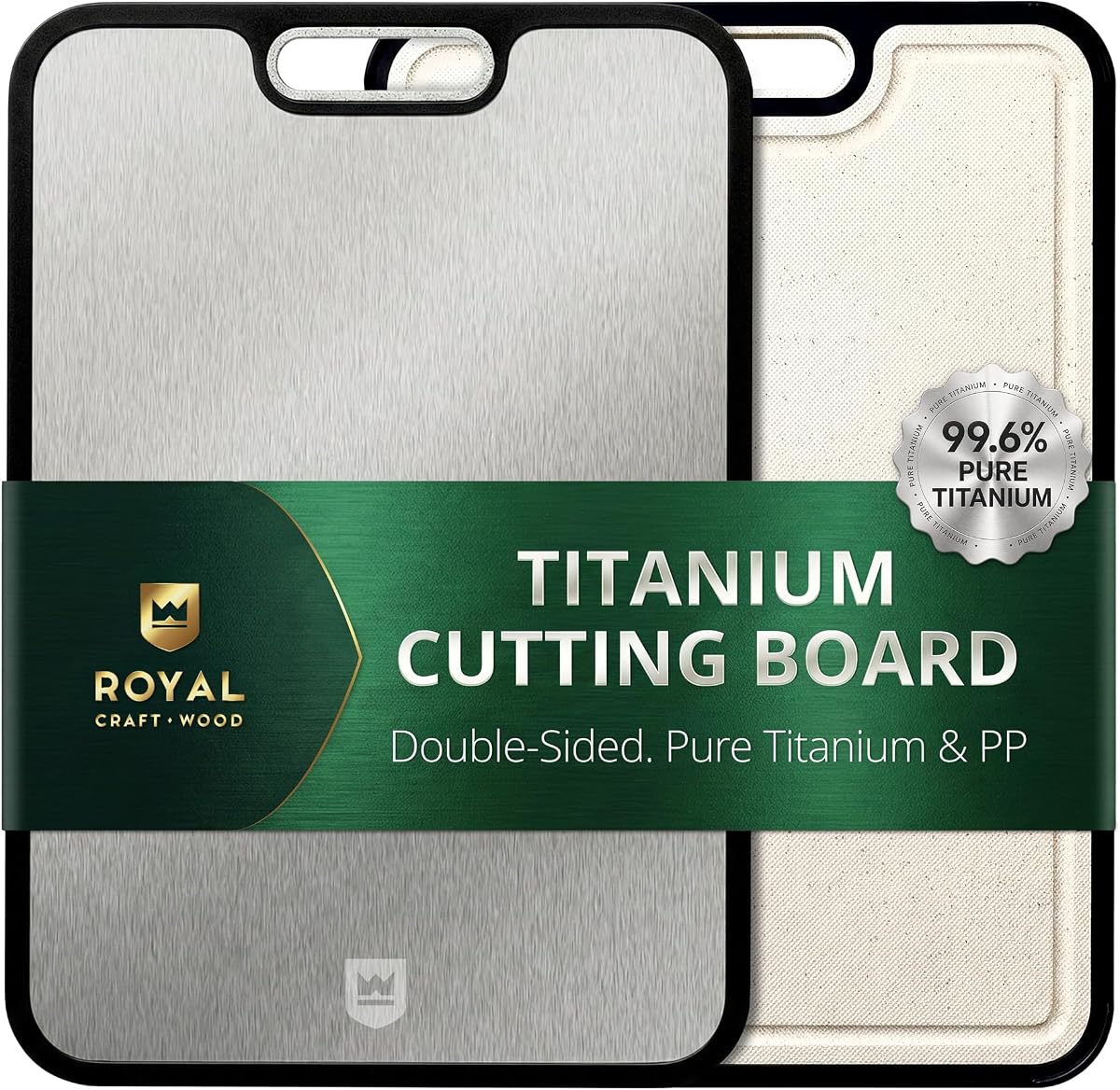
Double-Sided Titanium Cutting Board: Is It Worth the Hype?
When shopping for a cutting board, you might not immediately think of titanium, but this 15” x 10.3” model offers a unique two-in-one approach: a pure titanium side for meat and a PP plastic side for produce. Understanding how to evaluate its durability, knife-friendliness, and hygiene can help you decide if this modern material suits your kitchen routine.
Key Considerations Before Buying
- The titanium side is extremely hard and non-porous, making it resistant to bacteria and deep scratches, but it can dull knives more quickly than wood or plastic—consider your knife steel and sharpening habits.
- The deep juice groove on the titanium side is designed to catch meat juices, preventing cross-contamination on countertops, but ensure the groove is deep enough for your typical cuts without overflowing.
- The reversible design with a PP plastic side offers versatility for chopping vegetables or fruits, but check that both surfaces are securely bonded and non-slip to avoid shifting during use.
What Our Analysts Recommend
Look for a board with a substantial thickness (at least 1/4 inch) to prevent warping or bending under heavy chopping. The titanium surface should be smooth with no sharp edges, and the juice groove should be uniformly deep. A non-slip base or feet are crucial for safety, especially with metal surfaces that can slide on countertops.
Cutting Boards Market Context
Market Overview
The cutting board market has seen a surge in metal boards, particularly titanium and stainless steel, as consumers seek non-porous, easy-to-clean alternatives to wood and plastic. Titanium boards are marketed as ultra-durable and hygienic, often appealing to health-conscious cooks and those who prepare raw meat frequently.
Common Issues
A primary concern with metal cutting boards is noise—chopping on titanium can be loud and jarring compared to wood. Additionally, metal surfaces can be slippery for certain foods, and the hardness may cause excessive blade wear, leading to more frequent knife sharpening.
Quality Indicators
High-quality titanium boards should be made from 100% pure titanium (not coated), with a weight that feels substantial but not cumbersome. Look for rounded corners, a smooth finish, and a PP side that is food-grade and BPA-free. Customer photos showing wear after extended use can reveal true durability.
Review Authenticity Insights
Grade B Interpretation
With a Grade B and an estimated 10% fake review rate, this product’s reviews are largely trustworthy but not flawless. The high volume of verified purchases and specific personal details in reviews suggests most feedback is genuine, though a small fraction may be incentivized or fabricated.
Trust Recommendation
Given the 4.89 average rating and 10,545 reviews, you can generally trust the positive consensus, but focus on reviews that mention long-term use (months later) or specific drawbacks like knife dulling or noise. Ignore overly generic five-star reviews with no product details.
Tips for Reading Reviews
For cutting boards, prioritize reviews that discuss actual cooking scenarios—such as chopping raw chicken or slicing vegetables—and note any mentions of knife performance. Look for patterns in complaints about warping, slipping, or odor retention, which are common issues with metal boards.
Expert Perspective
This titanium cutting board offers a compelling blend of hygiene and versatility, particularly for meat preparation, backed by a strong rating from a large user base. The double-sided design adds practical value, but the potential for knife dulling and noise are trade-offs that serious cooks should weigh. The adjusted rating of 4.60 out of 5, accounting for suspicious reviews, still reflects high satisfaction, suggesting the product delivers on its core promises.
Purchase Considerations
If you frequently handle raw meat and prioritize easy sanitization over knife preservation, this board is a solid choice. However, if you use high-end Japanese knives or prefer a quieter, more forgiving surface, you may want to test it first or invest in a quality wooden board for delicate tasks.
Comparing Alternatives
Shoppers should compare this titanium board with other non-porous options like tempered glass or high-density polyethylene boards, which offer different balances of durability, noise, and knife friendliness.


