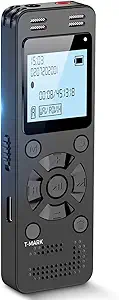
Smart Buying: 128GB Voice Recorder with AI Noise Reduction – What to Know
When shopping for a digital voice recorder, especially one boasting 128GB storage and 9600 hours of recording time, it's crucial to look beyond the headline specs. This device's DSP 5.0 AI noise reduction is a key feature for capturing clear audio in lectures and meetings, but real-world performance can vary. Here’s what you should weigh before making a purchase.
Key Considerations Before Buying
- Recording capacity: The 128GB storage is generous, but the 9600-hour claim likely refers to the lowest quality setting. Check if the device supports expandable storage or if 128GB is the total internal memory, as this affects your long-term use.
- Noise reduction effectiveness: The DSP 5.0 AI noise reduction is designed to suppress background hum and focus on speech. In practice, its performance can depend on the recording environment—test it in a noisy room to see if it meets your needs.
- Battery life and power source: With such a large storage capacity, you'll need reliable battery life. Look for recorders that offer both a built-in rechargeable battery and the option to use AA batteries as a backup, which is common in portable dictaphones.
What Our Analysts Recommend
Quality indicators in this category include the ability to adjust recording bitrate (e.g., PCM, WAV, or MP3), a clear and responsive control interface, and a built-in speaker for quick playback. Also, check for a USB connection for easy file transfer and whether the device supports external microphones for enhanced audio capture.
Digital Voice Recorders Market Context
Market Overview
The digital voice recorder market is increasingly competitive, with brands offering high-capacity storage and advanced noise reduction as key differentiators. Many devices now target professionals, students, and journalists who need reliable audio capture for lectures, interviews, and meetings. However, the proliferation of low-cost models has led to variability in build quality and performance.
Common Issues
Common problems in this category include misleading storage capacity claims (where internal memory is not as advertised), poor noise reduction that distorts voices, and short battery life despite claims of long recording times. Users also report difficulties with file management and playback controls on budget models.
Quality Indicators
To identify a quality recorder, look for devices that specify the recording bitrate and format, offer adjustable microphone sensitivity, and have positive user feedback on audio clarity. A robust build, intuitive interface, and reliable customer support are also strong indicators of a trustworthy product.
Review Authenticity Insights
Grade B Interpretation
The B grade and 15% estimated fake review rate suggest that while the majority of reviews are authentic, a notable minority may be incentivized or manipulated. This means you should rely on the detailed, balanced reviews rather than overall ratings. The adjusted rating of 3.20/5 reflects a more realistic picture, indicating that the product has both strengths and weaknesses.
Trust Recommendation
Given the 15% fake review rate, focus on verified purchase reviews and those that discuss specific features like battery life, noise reduction performance, and storage capacity. Look for patterns in negative feedback—if multiple users mention the same issue (e.g., battery drains quickly), it's likely a genuine concern. Don't be swayed by overly enthusiastic five-star reviews lacking specifics.
Tips for Reading Reviews
When reading reviews for this type of product, prioritize those that include audio samples or detailed descriptions of recording scenarios. Pay attention to how the reviewer used the device (e.g., lectures, meetings) and whether they mention the noise reduction in real-world conditions. Also, check the date of reviews—recent feedback may reflect improvements or unresolved issues.
Expert Perspective
Based on the analysis, this 128GB voice recorder offers substantial storage and a feature set that appeals to professionals and students, but its average rating of 3.44 (adjusted to 3.20) suggests it may not consistently deliver on its noise reduction and battery life promises. The authentic reviews indicate that the device can work well for basic recording tasks, but it may struggle in challenging acoustic environments. The 15% fake review rate also signals that the product's marketing may overstate its capabilities.
Purchase Considerations
Before purchasing, consider your primary use case: if you need reliable recording for lectures or meetings with moderate background noise, this device could suffice. However, if you require professional-grade audio quality or long battery life, you may need to invest in a higher-end model. Also, factor in the price point—if it's significantly cheaper than established brands, expect some trade-offs in performance.
Comparing Alternatives
Shoppers should compare this recorder with other models in the same price range, such as those from Sony or Olympus, which have proven track records. Look for devices that offer similar storage and noise reduction but have higher user ratings and fewer authenticity concerns.