
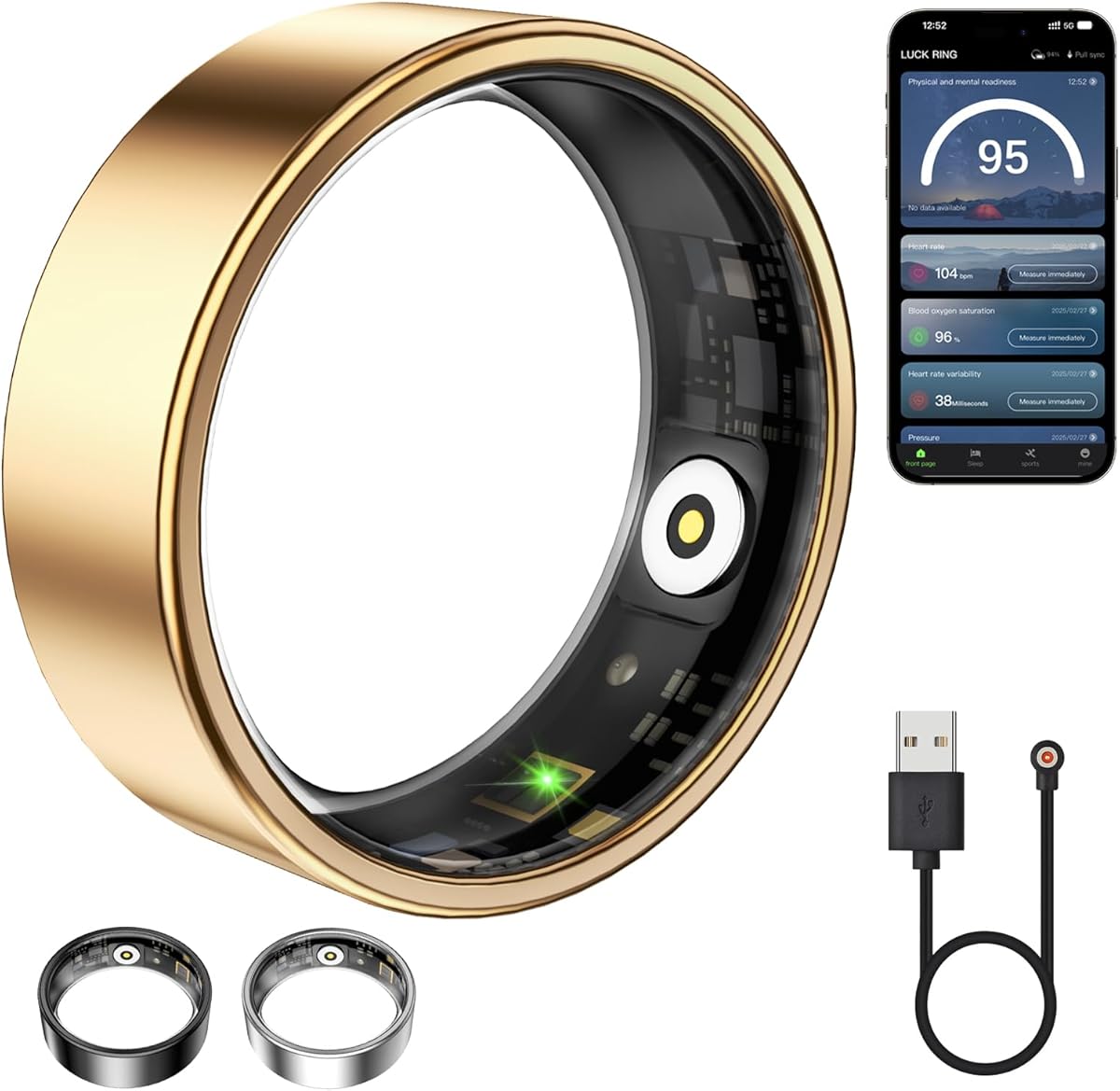
Smart Ring Selection: Balancing Discreet Health Tracking with Wearable Accuracy
When evaluating this specific rose gold smart ring with its claimed 7-day battery life and IP68 waterproof rating, buyers should understand that ring-based trackers face unique accuracy challenges compared to wrist-worn devices. The promise of continuous heart rate and SpO₂ monitoring from a ring form factor requires particular attention to sensor placement and fit, as finger physiology varies significantly from wrist measurements.
Key Considerations Before Buying
- Ring sizing is critical for optical sensor accuracy—this model's #7 size must fit snugly without restricting circulation to ensure reliable heart rate and blood oxygen readings during both activity and sleep.
- The 'no subscription' claim differentiates this from cloud-dependent competitors, but verify what historical data storage and syncing capabilities are included without ongoing fees.
- IP68 waterproof rating suggests shower and swim resistance, but confirm whether the ring tracks swimming metrics or if water exposure merely won't damage the electronics.
What Our Analysts Recommend
Quality indicators for this category include consistent sensor contact through multiple finger positions, as rings rotate naturally. Reviewers should mention specific data correlations—like sleep stage alignment with perceived restfulness or workout heart rate matching perceived exertion. The rose gold finish should maintain integrity despite frequent hand washing and potential chemical exposure.
Rings Market Context
Market Overview
The smart ring market has expanded beyond early adopters to mainstream consumers seeking discreet, jewelry-integrated health tracking, with particular growth in sleep-focused devices. Unlike smartwatches, rings prioritize minimalism and continuous wear, making battery life claims of 'long-lasting' (like this product's) a key competitive differentiator.
Common Issues
Optical sensors in rings struggle with consistent placement during finger flexion, potentially creating data gaps during intense typing or weight training. Many rings also lack standardized sizing systems, creating fit uncertainty, while proprietary charging solutions can compromise travel convenience.
Quality Indicators
Superior smart rings demonstrate consistent data collection across hand dominance (left vs. right wear) and provide actionable insights rather than raw metrics. Look for manufacturers that disclose sensor specifications and algorithm methodologies, rather than treating them as black-box solutions.
Review Authenticity Insights
Grade A Interpretation
A Grade B authenticity rating with 15% estimated fake reviews indicates generally trustworthy feedback but suggests some incentivized or biased reviews may be present. The adjusted 4.50/5 rating (down from 4.89/5) reflects this dilution, representing a more realistic assessment of genuine user experiences.
Trust Recommendation
Focus on reviews that discuss specific usage patterns relevant to your needs, like sleep tracking accuracy for side sleepers or heart rate reliability during particular activities. Be skeptical of reviews that only praise generic features without mentioning how the ring integrates into daily life.
Tips for Reading Reviews
Prioritize reviews that mention wearing the ring for multiple weeks, as initial impressions often overlook battery degradation or software quirks. Look for discussions about the companion app's functionality, as the ring's value depends heavily on data presentation and interpretation.
Expert Perspective
This product's exceptionally high 4.89/5 rating—even when adjusted to 4.50/5—suggests strong user satisfaction, particularly noteworthy given the technical challenges of ring-based biometrics. The combination of blood oxygen monitoring with sleep tracking in a subscription-free model addresses two growing consumer demands: comprehensive health insights without recurring costs. However, the limited review count (42) warrants caution, as early adopters may tolerate imperfections that mainstream users would not.
Purchase Considerations
Weigh the convenience of 24/7 ring wear against potential data accuracy trade-offs, particularly if you require clinical-grade measurements. Consider whether the rose gold finish aligns with your daily activities—lighter finishes may show wear more readily than darker alternatives. Verify the manufacturer's update policy for firmware improvements to sensor algorithms.
Comparing Alternatives
Compare this ring's sensor suite and battery life against established competitors like Oura or newer entrants, noting differences in data ownership policies and ecosystem integration.


