
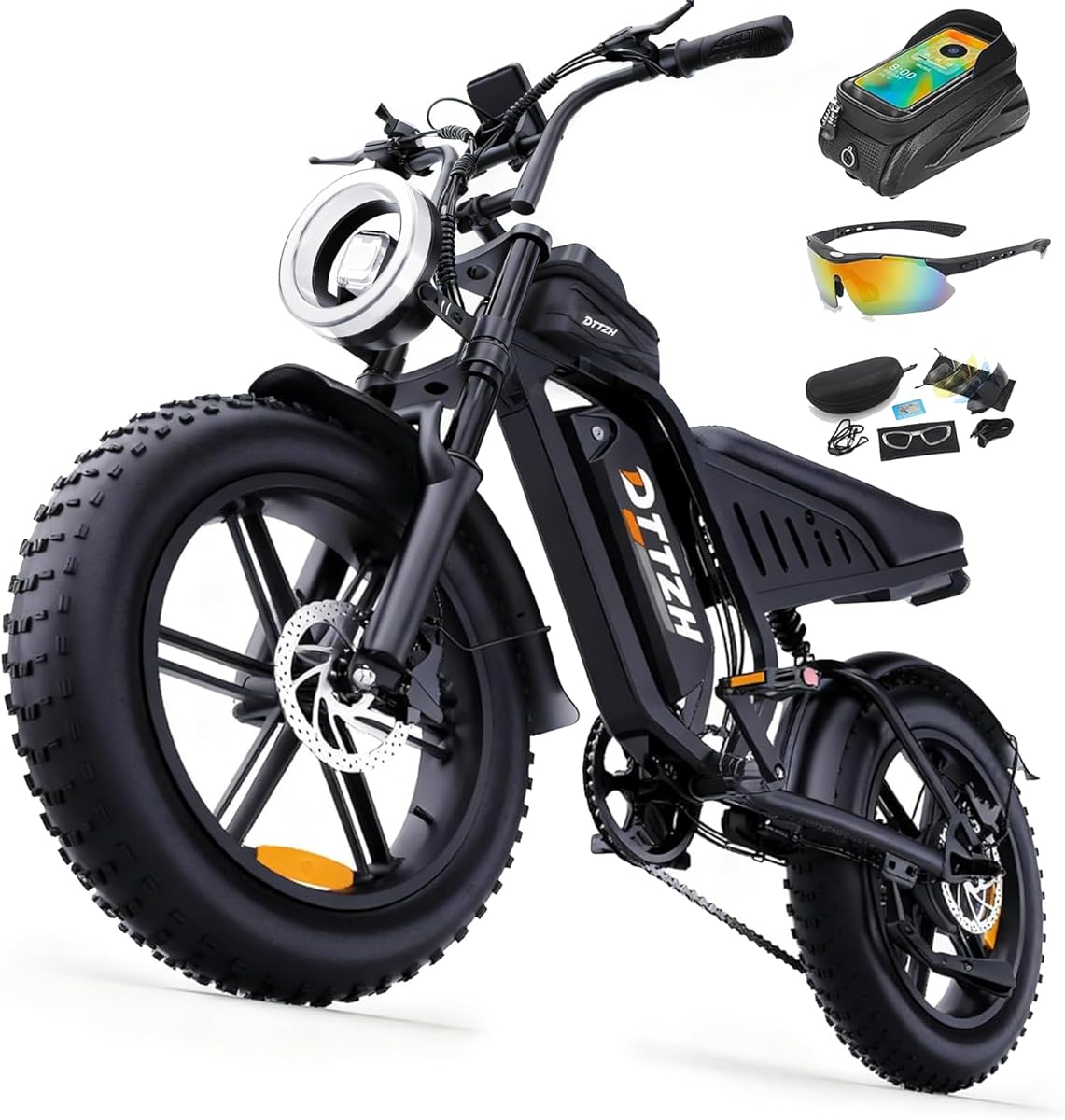
High-Power Fat Tire E-Bikes: Navigating Power, Range, and Local Regulations
The F6 series represents a specific niche in electric bikes: high-wattage fat tire models that blur the line between e-bike and electric motorcycle. With motor options ranging from 1500W to 4000W and top speeds up to 50 MPH, these are not typical pedal-assist commuter bikes. Buyers must understand the trade-offs between the F6, F6S, and F6PRO configurations, which offer different battery capacities (48V 15Ah to 60V 30Ah) and motor power, directly impacting range (60-100 miles) and performance.
Key Considerations Before Buying
- Local e-bike classification laws are critical; a 4000W motor and 50 MPH capability likely classifies this as a motor vehicle in most US jurisdictions, requiring registration, insurance, and a motorcycle license.
- The advertised 100-mile range is a best-case scenario; real-world mileage with the 60V 30Ah battery will be significantly less at higher speeds, under load, or on rough terrain using the 20" fat tires.
- The NFC and password unlock features add security but represent electronic points of failure; verify the manufacturer's warranty covers these components and understand the manual bypass procedure.
What Our Analysts Recommend
For a bike in this power class, scrutinize the frame construction—look for reinforced welding at the head tube and rear dropout where motor torque stress is highest. Quality indicators include a branded battery cell supplier (like Samsung or LG) listed in the specifications, hydraulic disc brakes (essential for 40+ MPH stops), and a detailed, accessible manual for the controller and PAS settings.
Electric Bicycles Market Context
Market Overview
The high-power fat tire e-bike market is rapidly expanding, catering to riders seeking off-road capability or motorcycle-like performance without official registration. These bikes often exist in a regulatory gray area, with manufacturers emphasizing 'off-road use only' while advertising street-legal speeds.
Common Issues
Common problems include controller failures from sustained high-power draw, premature wear on the fat tires if used predominantly on pavement, and challenges finding local shops willing to service proprietary, high-voltage electrical systems. Battery management system (BMS) reliability over time is a frequent concern.
Quality Indicators
Beyond motor wattage, assess the battery's amp-hour (Ah) rating and voltage for true energy capacity (Wh). A quality bike will have torque arms installed on the rear hub motor axle, use waterproof connectors throughout the wiring harness, and provide clear diagnostics for error codes from the display.
Review Authenticity Insights
Grade B Interpretation
A Grade B with an 11% estimated fake review rate suggests a generally trustworthy review pool with a moderate level of potentially inauthentic praise. The adjusted rating of 4.20 (down from 4.44) indicates the genuine customer experience is still very positive, but slightly less stellar than the raw average implies.
Trust Recommendation
Focus on verified purchase reviews that discuss long-term ownership (3+ months), specifically mentioning battery degradation, component durability, or customer service interactions. Be slightly skeptical of reviews that only praise the unboxing or first ride without substantive performance details.
Tips for Reading Reviews
Prioritize reviews that mention the specific model variant (F6 vs. F6S/PRO) they purchased, as performance differs drastically. Look for detailed discussions about real-world range at different assist levels and any mentions of sourcing replacement parts like tires, brake pads, or throttle assemblies.
Expert Perspective
The F6 series is a compelling but niche product for experienced riders who understand its capabilities and legal limitations. The high authentic rating suggests most buyers achieve the thrilling performance promised, particularly in off-road or private land settings. The multiple configurations are a strength, allowing buyers to match power and budget, though the 48V 15Ah model's range may disappoint. The core value proposition is raw power and aggressive styling at a price point below many electric motorcycles.
Purchase Considerations
Weigh your need for 4000W power against the more manageable and potentially more street-legal 1500W or 2000W options. Consider the total cost of ownership, including the eventual replacement cost of the large, proprietary battery pack. Assess your mechanical aptitude or local support options, as these are not simple bikes to maintain.
Comparing Alternatives
Shoppers should compare the F6's specifications directly against competitors like the Sur-Ron Light Bee X or similar high-power fat tire bikes, paying close attention to battery chemistry, warranty length, and the availability of a dealer network.


