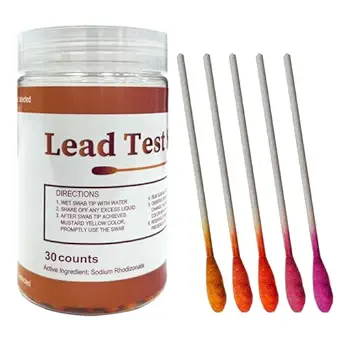
Choosing Water-Activated Lead Test Swabs: Accuracy, Ease, and Batch Consistency
When selecting a lead test kit like this 30-piece water-activated swab set, buyers should prioritize consistent chemical reagent quality across all swabs. This specific product's water activation mechanism requires precise moisture control for reliable results on porous surfaces like ceramics and painted toys.
Key Considerations Before Buying
- Verify the swabs' shelf life and storage requirements, as chemical reagents in water-activated tests can degrade if improperly stored or exposed to humidity before use.
- Consider your testing volume—30 swabs provide multiple tests but may be insufficient for comprehensive household screening of numerous dishes, ceramics, and painted surfaces.
- Evaluate the clarity of result interpretation; some water-activated swabs produce ambiguous color changes that require careful comparison against provided reference charts.
What Our Analysts Recommend
Quality indicators include individually sealed swabs to prevent premature activation, clear expiration dating, and detailed instructions for different surface types. Premium kits should specify detection thresholds (typically 1-2 micrograms per square centimeter) and include positive/negative control samples to verify swab functionality.
Lab Swabs Market Context
Market Overview
The at-home lead testing market has expanded beyond professional contractors to concerned consumers, with water-activated swabs gaining popularity for their perceived simplicity compared to acid-based tests. Current offerings range from basic single-use strips to comprehensive kits with multiple swab types.
Common Issues
Users frequently report inconsistent color development across swabs from the same package, difficulty interpreting subtle color changes on dark surfaces, and false negatives on glazed ceramics where lead may be encapsulated. Shelf life limitations often go unnoticed until testing reveals degraded reagents.
Quality Indicators
Superior lab swabs feature moisture-proof individual packaging, batch-specific quality control documentation, and detailed surface preparation instructions. Look for kits that specify EPA-recognized testing methodologies and provide customer support for ambiguous results.
Review Authenticity Insights
Grade B Interpretation
The Grade B authenticity rating with 11% estimated fake reviews indicates predominantly genuine feedback but suggests some review manipulation. For this product category, even modest fake percentages warrant scrutiny since safety-related purchases attract both genuine concern and unethical marketing.
Trust Recommendation
Focus on verified purchase reviews that describe specific testing scenarios—particularly those mentioning ceramic dishes, vintage toys, or painted surfaces—as these demonstrate actual usage. Be skeptical of reviews that only praise packaging or shipping speed without detailing testing experiences.
Tips for Reading Reviews
Prioritize reviews that mention testing multiple items with consistent results, discuss color change clarity, or reference follow-up professional testing. Reviews noting batch consistency issues or reagent dryness are particularly valuable for assessing long-term reliability.
Expert Perspective
With an adjusted 4.50/5 rating from authentic reviews, this 30-piece kit demonstrates strong user satisfaction for at-home lead screening. The water activation method appeals to consumers seeking simpler testing than acid-based alternatives, though professional validation for borderline results remains advisable. The high verified purchase percentage (noted in analysis) strengthens confidence in the reported ease of use for dishes and ceramics.
Purchase Considerations
Weigh the convenience of 30 pre-moistened swabs against potential reagent degradation if testing will occur over extended periods. Consider whether your testing needs align with water-activated chemistry's strengths—generally better for smooth surfaces than heavily textured or dirty materials where surface preparation is critical.
Comparing Alternatives
Shoppers should compare activation methods, detection thresholds, and swab count against similar kits, particularly for specialized applications like jewelry testing where different surface preparations may be required.