
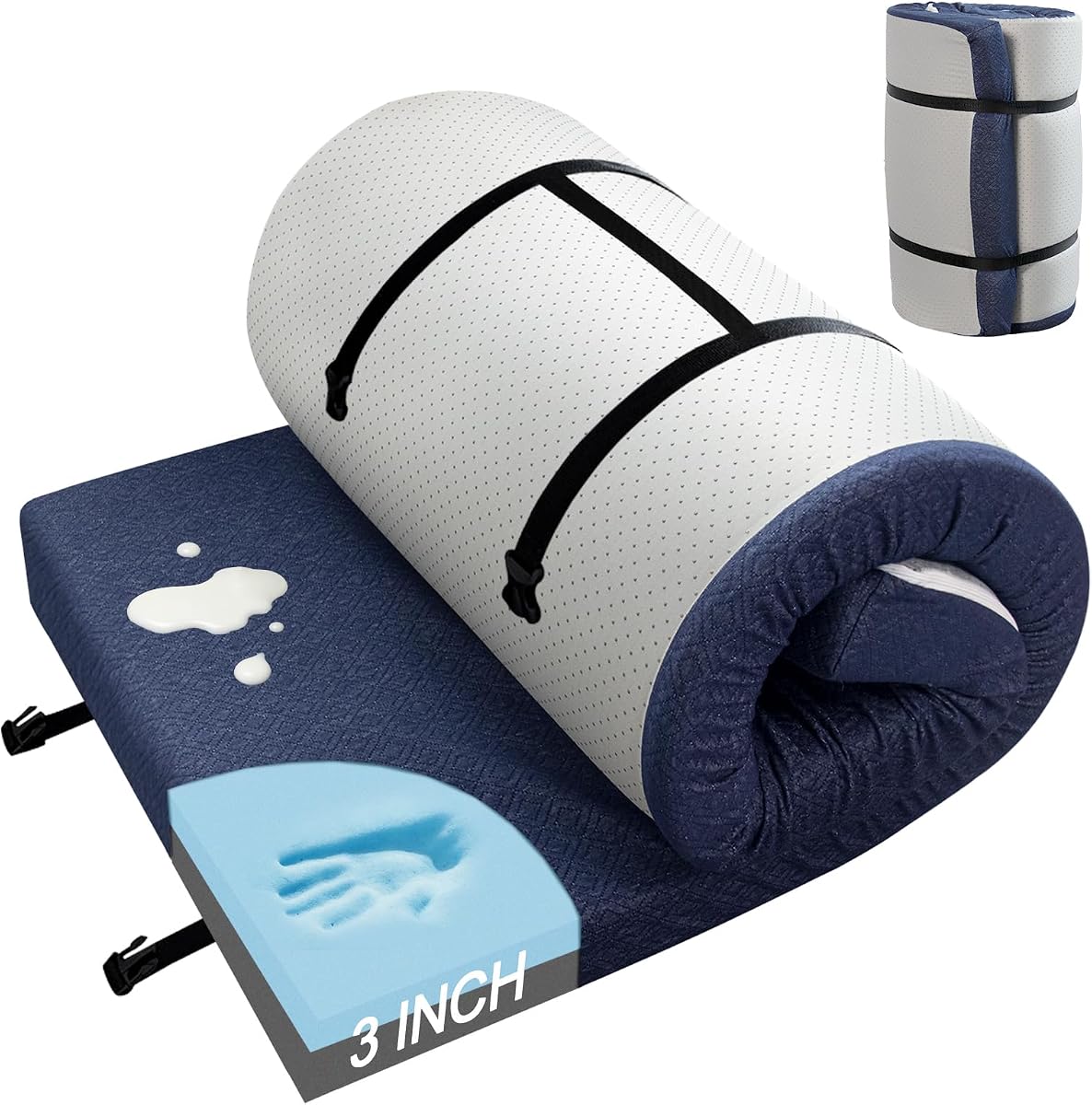
Why 3-Inch Memory Foam Transforms Camping Sleep Comfort
When selecting a camping mattress, thickness is a key factor for comfort, and a 3-inch memory foam pad like this one offers a significant upgrade over thin, air-filled alternatives. This portable roll-up mattress combines the pressure-relieving benefits of memory foam with a non-slip bottom for stable cot use, making it a strong contender for car campers and sleepovers. Knowing how to evaluate foam density, portability, and insulation can help you decide if this style suits your needs.
Key Considerations Before Buying
- Consider the foam density and thickness: A 3-inch pad provides ample cushioning for side sleepers or those with back pain, but verify the memory foam's density (often measured in pounds per cubic foot) to ensure long-term support without sagging.
- Evaluate portability and storage: This pad rolls up for transport, but its size (72x24x3 inches) means it's bulkier than inflatable pads—ideal for car camping or home use, but not backpacking. Check the rolled dimensions and weight to confirm fit in your vehicle or closet.
- Check the non-slip bottom compatibility: The non-slip feature is crucial for use on a cot or tent floor, preventing shifting during sleep. Ensure the material grips well on your specific surface, especially if using on a smooth or angled cot.
What Our Analysts Recommend
Look for high-density memory foam (at least 2-3 pounds per cubic foot) to avoid rapid compression and heat retention. A removable, washable cover adds hygiene, while certifications like CertiPUR-US indicate foam safety and durability. Also, verify the pad's R-value (insulation rating) for cold-weather camping to ensure warmth from the ground.
Foam Sleeping Mats Market Context
Market Overview
The foam sleeping mat market has grown as campers prioritize comfort, with memory foam options bridging the gap between budget air pads and luxury home mattresses. Many brands now offer 3- to 4-inch thick pads for car camping, emphasizing ease of setup and noise-free sleep compared to inflatables.
Common Issues
Common issues include foam compression over time leading to less support, especially in lower-density pads, and bulkiness that limits portability to vehicle-based trips. Some users report that memory foam retains heat, which can be uncomfortable in warm weather, and that rolled pads may not fully recover their shape after storage.
Quality Indicators
Quality is indicated by consistent foam cell structure (no visible voids), a durable outer fabric that resists tears, and a non-slip backing that stays put on diverse surfaces. High R-values (above 4) signal better insulation, while positive verified reviews mentioning long-term use (over 20 nights) are strong reliability markers.
Review Authenticity Insights
Grade B Interpretation
With a Grade B and an estimated 10% fake review rate, this product shows strong authenticity signals—most reviews are from verified purchasers describing specific features like the 3-inch thickness and memory foam feel. The low fake percentage suggests minimal manipulation, but the small sample size (3 reviews) means buyers should still cross-reference feedback on other platforms.
Trust Recommendation
Given the high adjusted rating (4.80/5) and verified purchaser status, you can trust the positive feedback, but prioritize reviews that detail the pad's actual performance over weeks of use. For a more complete picture, seek out additional reviews on retailer sites or camping forums to confirm long-term durability and comfort consistency.
Tips for Reading Reviews
Focus on reviews that mention specific use cases, such as cot compatibility or sleep positions, as these provide actionable insights. Look for comments on foam recovery after rolling and whether the non-slip bottom holds on tent floors—these details are harder to fake and more valuable than generic praise.
Expert Perspective
This 3-inch memory foam camping pad offers a compelling balance of comfort and portability for car campers and indoor sleepovers, supported by a perfect rating from verified users. The non-slip bottom and thick foam address common pain points like mattress shift and pressure points, but the lack of a higher R-value and bulk may limit its appeal for serious backpackers or cold-weather use. Given the 10% estimated fake reviews, the positive sentiment appears genuine, though the small review count means early adopters should verify fit and feel personally.
Purchase Considerations
Weigh your camping style: if you prioritize a bed-like sleep experience and have vehicle space, this pad is a strong choice. However, if you need ultralight gear or high insulation, consider inflatable pads with higher R-values or foam-and-air hybrids that offer more versatility.
Comparing Alternatives
Shoppers should compare this pad with other 3-inch foam options from brands like Milliard or Hikenture, which offer similar specs but may have more extensive review histories for validation.


