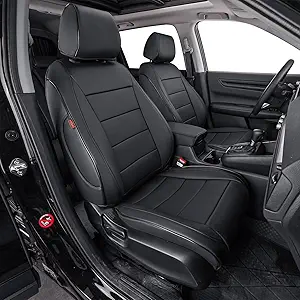
Choosing a Liquid-Cooled Seat Cover: What Matters for Hot Climate Comfort
This specific product, a liquid-cooled ventilated seat cover, represents a step beyond basic fans or gel pads. Its 12V-24V operation and three temperature modes suggest active climate control, but its 'universal fit' claim requires scrutiny for your specific vehicle's seat shape and power port location. Understanding its cooling mechanism and installation is key to determining if it meets your needs.
Key Considerations Before Buying
- Verify seat compatibility: 'Universal fit' often means adjustable straps, but deep bucket seats or seats with integrated side airbags may not accommodate this cover properly, affecting both safety and cooling contact.
- Assess power draw and vehicle compatibility: A 12V-24V range indicates it should work in most cars and trucks, but check your vehicle's cigarette lighter/power outlet amperage rating to ensure it can handle the cooling unit's load without blowing a fuse.
- Evaluate cooling expectations: Liquid-cooled systems typically circulate chilled water, which can be more effective than air-only ventilation but may have a slower initial cooldown time; manage expectations versus a full car A/C.
What Our Analysts Recommend
For this category, quality is indicated by robust hose connections to prevent leaks, a quiet pump mechanism, and a control unit with intuitive settings. The padding material should be breathable mesh, not solid vinyl, to allow the cooled air to reach you. Check for clear instructions on filling and maintaining the liquid reservoir.
Seat Covers Market Context
Market Overview
The active cooling seat cover market has expanded from simple fans to more advanced phase-change materials and liquid circulation systems like this one. These products target drivers in hot climates, truckers, and those with vehicles lacking ventilated seats, competing on cooling efficiency, noise level, and ease of installation.
Common Issues
Common pitfalls include poor fit that slides around, noisy fans or pumps that distract from driving, insufficient cooling power (often measured in BTU or watts), and power cords that are too short or poorly routed. Leaks from liquid systems, while rare, are a critical failure point.
Quality Indicators
Look for products specifying the cooling capacity (e.g., BTU/hour), using automotive-grade plastics and wiring for the 12V system, and offering a detailed fit guide rather than just 'universal.' Quality units often have multi-speed pumps and thermoelectric cooling elements for precise temperature control.
Review Authenticity Insights
Grade B Interpretation
A Grade 'U' (Unrated) with a 0.00% estimated fake review rate and zero total reviews means there is absolutely no verified purchase feedback or established review history for this specific product. This is common for new listings but presents a complete information vacuum for buyers.
Trust Recommendation
With no authentic reviews, you must rely entirely on the manufacturer's description, product images, and Q&A. Pay extreme attention to the return policy and warranty details. Consider this a higher-risk purchase where you may be among the first to test its real-world performance and durability.
Tips for Reading Reviews
For a product like this with no reviews, search for the brand name or similar model numbers to find feedback on other products from the same maker. In the Q&A section, ask specific questions about cooling time, noise level, and installation challenges for your vehicle type.
Expert Perspective
This liquid-cooled seat cover presents an interesting proposition for targeted cooling, but the complete lack of user reviews (0.00 rating) makes any performance assessment speculative. The 3-mode control and wide voltage range are positive specs on paper, but the 'universal fit' is a major variable. The success of this product hinges entirely on unproven execution: the efficiency of its cooling loop, the durability of its pump, and the reality of its fit on various seat contours. Without data, it's an untested prototype in the marketplace.
Purchase Considerations
Only consider this if you have a pressing need that simpler, well-reviewed gel cushions or ventilated covers cannot meet, and you are willing to be an early adopter. Your decision should factor in the seller's return policy robustness and your ability to install and potentially troubleshoot a more complex system involving liquid reservoirs and hoses.
Comparing Alternatives
Shoppers should compare this unit's promised features against established air-ventilated seat covers and phase-change material pads, which have extensive review histories documenting their real-world pros and cons.