
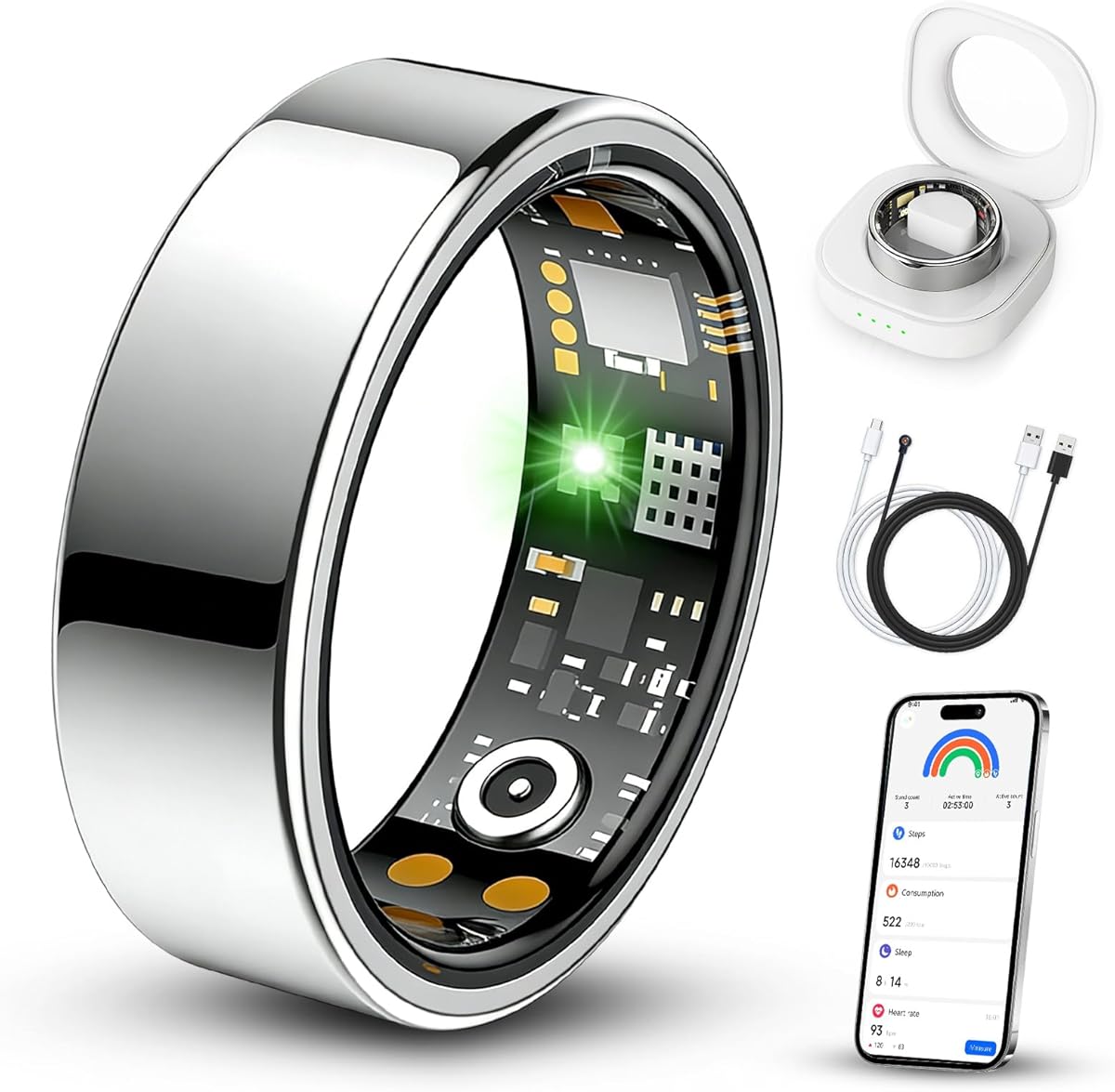
Smart Ring Buyer's Guide: What to Know Before Choosing the Benio Gen4
The Benio Gen4 Smart Ring represents a specific niche in fitness tracking: continuous, unobtrusive biometric monitoring without wrist-worn devices. Unlike smartwatches, this ring form factor prioritizes 24/7 wearability for sleep and recovery metrics, making its sensor accuracy and battery life critical. The 'no subscription' model is a key differentiator, as many competitors lock advanced analytics behind monthly fees.
Key Considerations Before Buying
- Sensor placement on a finger versus a wrist can affect the accuracy of heart rate and blood oxygen (SpO2) readings, especially during high-motion activities; check reviews for performance during workouts.
- The 2026 upgraded claim suggests newer hardware, but you must verify if this refers to the sensor chipset, battery chemistry, or algorithm improvements for sleep staging.
- Ring sizing is irreversible for most models; ensure the brand provides a detailed sizing kit and consider how finger swelling from heat or exercise might affect fit and data collection.
What Our Analysts Recommend
Prioritize reviews that detail multi-day battery performance while using all sensors, as this is a major pain point for smart rings. Look for mentions of the companion app's data presentation—specifically, how it interprets sleep stages, heart rate variability (HRV), and blood oxygen trends to provide actionable wellness insights, not just raw numbers.
Activity & Fitness Trackers Market Context
Market Overview
The smart ring market is rapidly evolving beyond early adopters, with new entrants like Benio competing against established players like Oura and Circular. The value proposition centers on minimalist design and recovery-focused metrics, rather than the notification-heavy approach of smartwatches.
Common Issues
Common pitfalls include inconsistent SpO2 readings during sleep, poor battery life claims versus reality, and companion apps with clunky interfaces or limited historical trend analysis. Charging mechanisms for tiny rings can also be flimsy and easily lost.
Quality Indicators
High-quality smart rings use medical-grade optical sensors for heart rate and SpO2, feature water resistance of at least IP68 for showering, and offer detailed app insights into sleep architecture and daytime stress without paywalls. Transparent data on sensor refresh rates (e.g., continuous vs. spot-check HR monitoring) is also a key indicator.
Review Authenticity Insights
Grade B Interpretation
A Grade B with an 11% estimated fake review rate indicates a generally trustworthy review pool, but suggests a modest level of potentially incentivized or overly promotional content. For the Benio Gen4, this means most feedback is genuine, but shoppers should be slightly skeptical of outlier 5-star reviews lacking specific use-case details.
Trust Recommendation
Focus on the verified purchase reviews that discuss long-term wear (multiple weeks), as these will best reveal battery degradation and sensor consistency. Pay particular attention to 3- and 4-star reviews, which often provide the most balanced critiques of app functionality and comfort for all-day wear.
Tips for Reading Reviews
For this product, prioritize reviews that mention specific metrics like 'sleep score accuracy compared to my Garmin' or 'SpO2 readings during travel.' Be wary of reviews that only praise packaging, quick setup, or generic 'good quality' without detailing performance over time.
Expert Perspective
The Benio Gen4 presents a compelling option in the value segment of smart rings, with its adjusted 4.3/5 rating from authentic reviews suggesting solid user satisfaction. The 'no subscription' model is a significant advantage, removing a recurring cost that plagues the category. However, the product's performance hinges on the actual implementation of its 2026-upgraded sensors; the high rating must be weighed against a relatively low review count (30), which is insufficient to fully validate long-term durability and software support.
Purchase Considerations
This ring is best suited for users seeking a discreet recovery and sleep tracker, not for those needing GPS, a display, or robust workout tracking. Consider your primary use case: if detailed sleep analysis and all-day readiness scores are the goal, the form factor works well. If you need precise heart rate zones during intense interval training, a chest strap or high-end optical wrist sensor may still be superior.
Comparing Alternatives
Shoppers should compare the Benio's one-time cost and feature set directly against subscription-based rings like Oura and the newer crop of budget models from brands like Ultrahuman.
![SAMSUNG Galaxy FIT 3 [2024] 1.6" AMOLED Display | 14 Days Battery Life | 100+ Watchfaces | 100+ Exercise Modes | International Model - (Black)](https://m.media-amazon.com/images/I/61TJB03ROCL.__AC_SX300_SY300_QL70_FMwebp_.jpg)


