
High-Output Ozone Generators: Balancing Powerful Odor Elimination with Safety Protocols
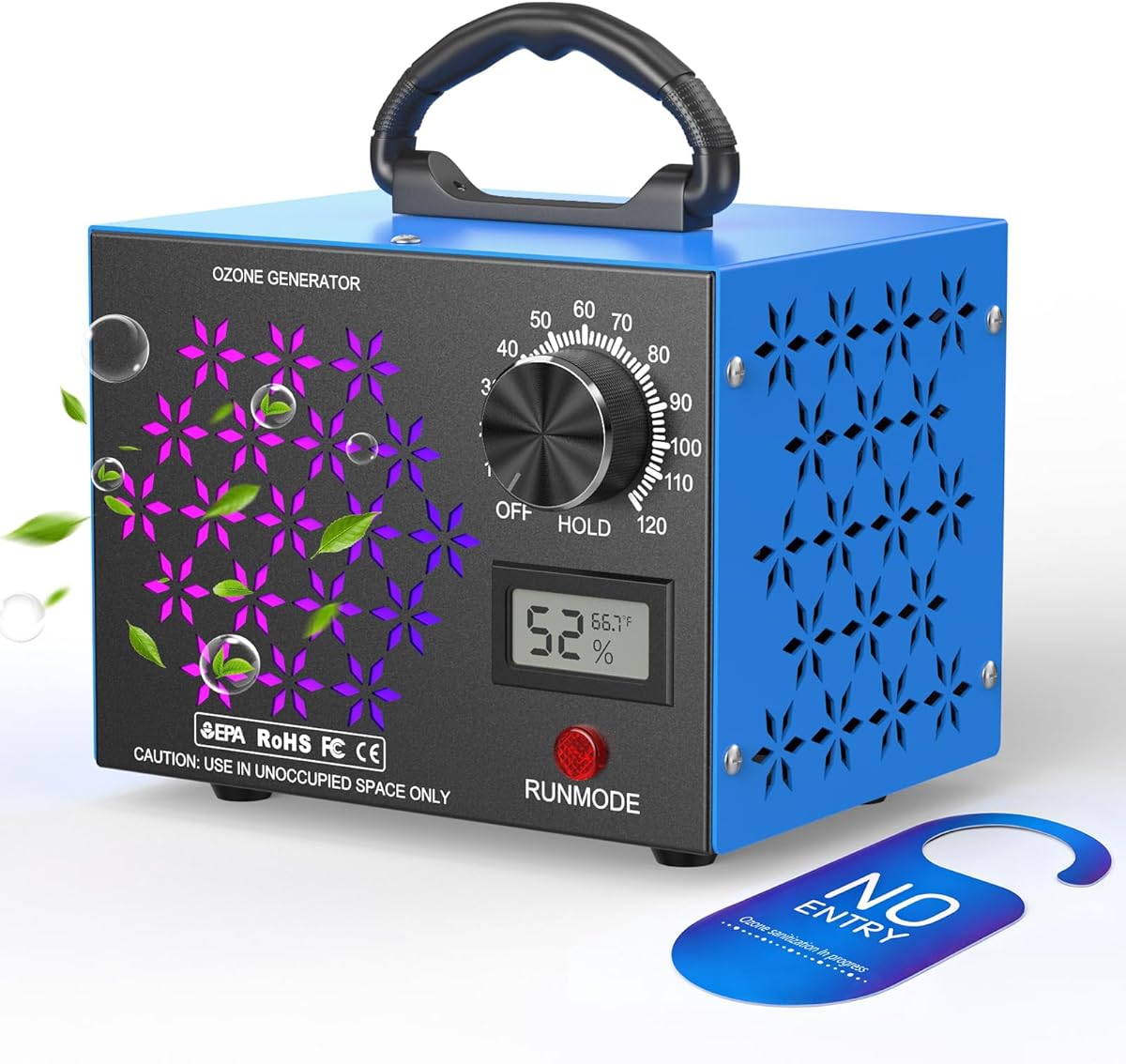
This 120,000mg/h ozone generator represents the high-power end of residential air treatment, designed for large-scale odor remediation rather than continuous air purification. The triple side vents and claimed 6000 sqft coverage indicate a focus on rapid, powerful ozone dispersion, making it suitable for specific, controlled remediation tasks rather than everyday air quality improvement.
Key Considerations Before Buying
- A 120,000mg/h output is exceptionally powerful for residential use; this device is designed for severe odor problems like smoke damage, mold remediation, or intense pet odors in unoccupied spaces, not for occupied living areas.
- The integrated temperature and humidity display is a practical feature, as ozone generation efficiency and reaction rates with contaminants can be affected by ambient environmental conditions.
- Claims of covering 6000 sqft should be interpreted as the maximum area where ozone can be distributed, not as a recommendation for continuous use in a space that size; proper application requires calculating treatment time based on cubic footage and contamination level.
What Our Analysts Recommend
For high-output ozone generators, prioritize models with clear safety timers, adjustable output settings, and robust construction for the internal corona discharge plate. The triple vent design on this model is a legitimate feature for faster room saturation, but verify the unit has adequate internal cooling to handle extended high-output cycles without premature failure.
Air Ionizers Market Context
Market Overview
The residential ozone generator market is bifurcated between low-output 'air purifier' models and high-output industrial-style units like this one, with the latter seeing increased consumer demand for post-renovation cleanup and disaster recovery. Regulatory scrutiny is growing due to safety concerns, pushing manufacturers to add more safety features and usage warnings.
Common Issues
Consumer confusion is rampant, with many users misunderstanding that ozone generators are not equivalent to HEPA or carbon filter purifiers and require strict evacuation protocols. Another common issue is unit failure from overheating during long treatment cycles, especially in poorly ventilated enclosures or when used for excessive durations.
Quality Indicators
Look for units with ceramic or quartz corona discharge plates rather than cheaper metal ones, as they offer longer lifespan and more stable ozone output. Quality is also indicated by clear, detailed operational manuals that emphasize safety protocols, not just performance claims.
Review Authenticity Insights
Grade C Interpretation
A 'C' grade and 22% estimated fake review rate suggests a mixed review landscape. While many reviews appear genuine, there is a notable portion that may be incentivized, potentially inflating the perfect 5.0 average rating down to a more realistic 4.5 adjusted score.
Trust Recommendation
Focus on reviews that detail specific, complex usage scenarios (e.g., 'used for 3 hours in a 400 sqft water-damaged basement after removing drywall') rather than generic praise. Be skeptical of reviews that don't mention strict adherence to safety measures like vacating the premises, as this indicates a lack of genuine experience with high-output ozone use.
Tips for Reading Reviews
Prioritize reviews that discuss the unit's performance over multiple sessions or for different types of odors (smoke vs. pet urine), as this indicates long-term ownership. Pay close attention to any mentions of the timer function, noise level during operation, or the durability of the physical controls, as these are seldom faked details.
Expert Perspective
This product sits in a niche category of high-power, task-specific remediation tools. Its specifications suggest it is built for severe, one-off odor problems in large spaces, not for improving daily indoor air quality. The high adjusted rating of 4.5/5, despite authenticity concerns, indicates that when used correctly for its intended purpose, it likely performs effectively. However, the lack of prominent safety warnings in the product title is a significant oversight for a device of this output level.
Purchase Considerations
Only consider this purchase if you have a severe, stubborn odor problem in an unoccupied space and have researched proper ozone concentration and exposure times. You must be prepared to follow strict safety protocols, including evacuating people and pets, removing plants, and allowing for a full ventilation period before re-entry. Assess whether your problem truly requires 120,000mg/h or if a lower-output model with longer runtime would be safer and equally effective.
Comparing Alternatives
Shoppers should compare the safety features and control granularity of this model against other high-output generators from brands like Enerzen or OdorStop, particularly looking for units with digital timers and multiple output settings.


