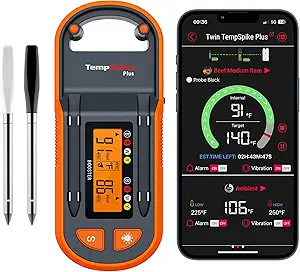
Choosing a Smart Meat Thermometer: Signal Stability and App Integration Are Critical
When evaluating this AI Smart Wireless Meat Thermometer, focus on its dual-display system and enhanced signal claims. The standalone base station with LCD and app control represents a specific design choice that separates it from simpler Bluetooth-only probes. Buyers should assess whether this particular 10X signal enhancement delivers reliable connectivity across kitchen, grill, and oven environments.
Key Considerations Before Buying
- Signal reliability matters most for wireless thermometers—this model's '10X Enhanced Signal' claim needs verification in real multi-room or outdoor BBQ scenarios where walls and distance degrade connectivity.
- The dual-display approach (base station plus app) creates redundancy but also complexity; consider whether you need both interfaces or prefer a simpler single-point control system.
- High-accuracy sensors must maintain calibration over time, especially for critical temperature ranges like poultry (165°F) and medium-rare beef (130-135°F) where precision affects safety and quality.
What Our Analysts Recommend
Quality smart thermometers demonstrate consistent connectivity without dropouts during long cooks. Check for specific mentions of the base station's display readability in sunlight for BBQ use and app responsiveness when monitoring remotely. Genuine reviews will detail actual signal range tests between kitchen and living areas.
Meat Market Context
Market Overview
The smart meat thermometer market has shifted from novelty gadgets to essential kitchen tools, with connectivity and app features becoming standard expectations. Products now compete on signal stability rather than just temperature accuracy, as consumers expect reliable monitoring from any room.
Common Issues
Wireless thermometers frequently suffer from signal interference near microwaves or ovens, app disconnections during critical cooking stages, and calibration drift after repeated high-heat exposure. Many models promise 'smart' features but deliver unreliable notifications or complicated setup processes.
Quality Indicators
Look for thermometers with dual temperature probes if cooking multiple meats, clear high-temperature warnings for probe cable safety, and apps that maintain connection during phone screen locks. Premium models offer detailed temperature graphs and customizable doneness settings for specific cuts.
Review Authenticity Insights
Grade B Interpretation
A Grade B authenticity rating with 11% estimated fake reviews indicates generally trustworthy feedback with minor manipulation concerns. For this specific thermometer, this suggests most reviews reflect genuine experiences, though some may overemphasize connectivity performance.
Trust Recommendation
Focus on reviews that mention specific cooking scenarios like 'monitored brisket from my office 30 feet away' or 'connection dropped when I closed the oven door.' These detailed accounts provide more reliable signal performance data than generic praise about 'great connectivity.'
Tips for Reading Reviews
Prioritize reviews discussing actual range tests, battery life during long smokes, and app stability during multi-hour cooks. Be skeptical of reviews that only praise packaging or unboxing without detailing cooking performance or connectivity challenges.
Expert Perspective
This thermometer's 4.30 adjusted rating (down from 4.56) suggests genuine satisfaction with some noted limitations. The signal enhancement claims warrant particular scrutiny—while potentially beneficial for backyard BBQ setups, real-world performance depends on home layout and interference sources. The dual-display system offers practical advantages for cooks who move between kitchen and other areas, providing temperature visibility without constantly checking a phone. The high-accuracy sensor specification must translate to consistent readings across the essential temperature danger zone (40°F-140°F) to ensure food safety.
Purchase Considerations
Weigh whether the standalone base station justifies additional counter space versus phone-only monitoring. Consider your typical cooking environments—this model's enhanced signal may benefit those monitoring from another room but offers less advantage for kitchen-only use. Evaluate if the app provides meaningful features like temperature history graphs or customizable alerts beyond basic notifications.
Comparing Alternatives
Compare this model's specific connectivity claims against competitors offering similar range specifications, and verify whether the 'AI' features provide actual cooking intelligence or merely basic temperature tracking.