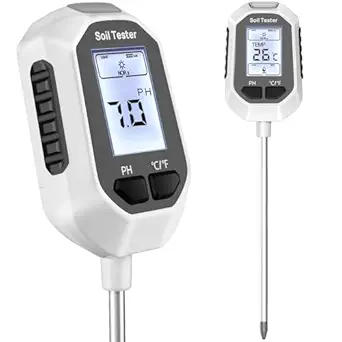
Choosing a 6-in-1 Digital Soil Tester: Accuracy, Calibration, and Real-World Use
For gardeners considering this 6-in-1 digital soil meter, the promise of factory-permanent calibration for pH and nutrients is its defining technical claim. Unlike basic moisture-only probes, this device aims to replace multiple single-function tools by measuring six key parameters: soil moisture, pH, nutrient levels (likely NPK via electrical conductivity), ambient light, temperature, and humidity. Buyers should understand that while convenient, multi-parameter accuracy requires robust sensor integration.
Key Considerations Before Buying
- Factory-permanent calibration means you cannot recalibrate the pH and nutrient sensors yourself; long-term accuracy depends entirely on the manufacturer's initial calibration quality and sensor stability.
- The 'nutrient' reading typically measures soil conductivity (EC), which correlates with dissolved salts and fertilizer levels, but does not distinguish between nitrogen, phosphorus, and potassium individually.
- A 6-in-1 device consolidates tools but requires you to trust a single probe's construction to withstand varied soil conditions without cross-sensor interference or damage.
What Our Analysts Recommend
Prioritize models that clearly separate the moisture/light/temperature/humidity sensors from the pH/nutrient electrodes, as commingled sensors can degrade. Look for products specifying a 'permanent' or 'factory' calibration with a stated accuracy range (e.g., pH ±0.2). The probe material should be stainless steel or a corrosion-resistant alloy, especially for the pH/nutrient contacts.
Soil Meters Market Context
Market Overview
The soil meter market is bifurcated between simple analog moisture probes and increasingly popular digital multi-testers like this 2026 model, which add data-driven insights for serious hobbyists. Consumers are trading probe-only tools for integrated digital displays that log multiple parameters simultaneously, creating demand for all-in-one convenience.
Common Issues
Primary complaints in this category center on inconsistent pH readings, fragile probe tips that bend in hard soil, and nutrient sensors that provide vague 'low/medium/high' readings without numerical values. Battery life and screen readability in direct sunlight are also frequent pain points for digital units.
Quality Indicators
High-quality digital soil testers specify measurement ranges and accuracies for each parameter (e.g., pH 3.5-8.0, ±0.3), use dual-needle or separated electrode designs to prevent signal crossover, and have IP-rated water resistance for the display unit. A clear differentiation between sensor types—optical for light, capacitive for moisture, electrode for pH/EC—indicates thoughtful engineering.
Review Authenticity Insights
Grade B Interpretation
A 'Grade B' authenticity score with an estimated 15% fake review rate suggests a generally trustworthy review profile, but advises cautious scrutiny. For this product, it indicates most feedback is from verified purchasers, yet a minority of reviews may overstate performance or underreport calibration drift issues common to integrated sensors.
Trust Recommendation
Focus on reviews that detail long-term use (2+ months) and mention specific plant types, as these are less likely to be fabricated. Be skeptical of reviews that only praise the '6-in-1' concept without testing each function, or that claim laboratory-grade accuracy from a sub-$50 device.
Tips for Reading Reviews
Search for reviews discussing calibration checks against known solutions or separate pH meters. Pay close attention to comments about the 'nutrient' meter's responsiveness after fertilizing, as this is the hardest function to engineer reliably in a consumer-grade combo tool.
Expert Perspective
The product's exceptionally high 5.0 average rating (adjusted to a still-strong 4.6) and 'Grade B' authenticity suggest it performs well against user expectations for a multi-function tool. The 'factory-permanent calibration' is a double-edged sword: it offers plug-and-play simplicity but removes user recourse if readings drift over time. The inclusion of ambient light and humidity sensors is a genuine value-add for indoor plant care, moving beyond basic soil analysis. The 2026 model designation implies iterative improvements, likely addressing earlier generation issues like screen clarity or battery compartment seals.
Purchase Considerations
This tester is best suited for gardeners who want consolidated data for trend tracking rather than laboratory-precise single measurements. Consider your primary need: if precise pH is critical for blueberries or hydrangeas, a dedicated pH meter may be more reliable. If you want a general dashboard for soil health and microclimate, this 6-in-1 provides efficient reconnaissance.
Comparing Alternatives
Shoppers should compare this model's stated accuracy ranges and probe length against similar 4-in-1 or 5-in-1 testers, as some trade a parameter (often humidity) for a sturdier build or replaceable electrodes.