Choosing a Mac Mini Hub: Why Dual Drive Enclosures and 10Gbps Speed Matter
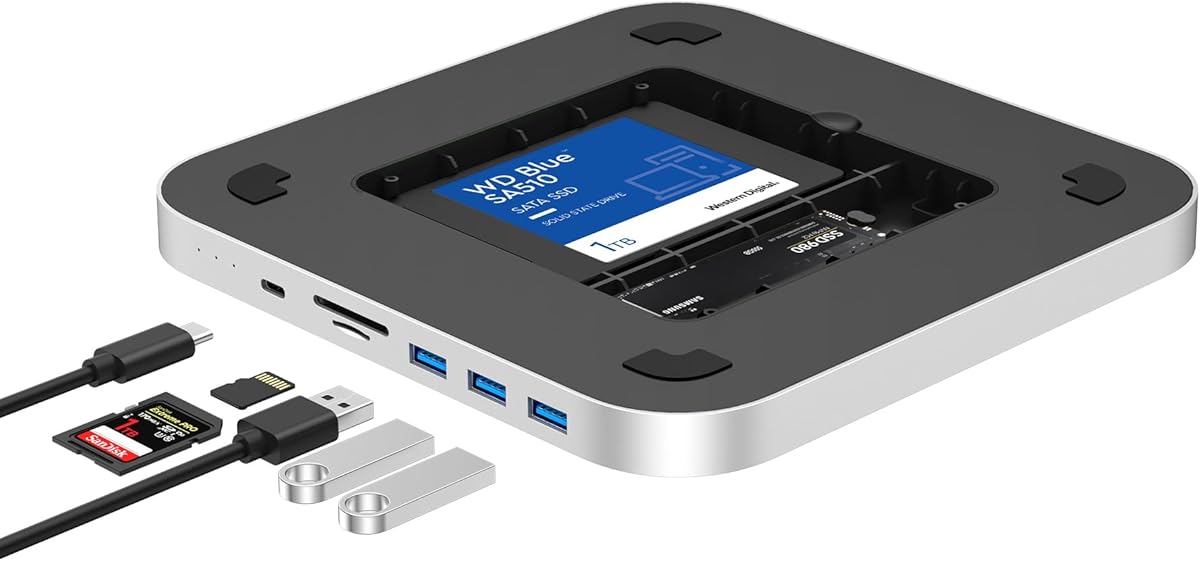
The Qwiizlab Mac mini Hub represents a specialized category of docking stations designed specifically for Apple's compact desktop computers. Unlike generic USB hubs, this product integrates both expansion ports and internal storage bays, addressing the Mac mini's inherent lack of internal upgradeability. Buyers should evaluate it based on its dual-drive enclosure capability, 10Gbps Type-C throughput, and physical compatibility with their specific Mac mini or Mac Studio model.
Key Considerations Before Buying
- Verify physical clearance: This hub sits beneath your Mac mini, so ensure your desk setup has the vertical space and that the unit's silver finish matches your Apple hardware aesthetically.
- Assess your storage needs: The dual bays support both M.2 NVMe/SATA SSDs and 2.5" SATA drives, but performance will vary—NVMe drives will leverage the 10Gbps interface best, while HDDs will be bottlenecked.
- Check port requirements against your workflow: The integrated card readers (advertised at 104MB/s) are useful for photographers, but confirm the specific SD/microSD card formats supported match your camera gear.
What Our Analysts Recommend
Quality in this niche is indicated by robust heat dissipation for the enclosed drives, a precise machining that ensures a snug, non-slip fit with the Mac mini, and a controller chipset that reliably delivers the promised 10Gbps speeds without disconnects. Look for mentions of consistent performance in reviews, as some hubs throttle speeds when multiple ports are active.
USB Hubs Market Context
Market Overview
The market for Mac mini-specific docking hubs has grown significantly with the Apple Silicon transition, as users seek to expand the limited I/O of these machines. Products now compete on a combination of port selection, integrated storage expansion, and form-factor design that complements Apple's aesthetics.
Common Issues
Common problems include thermal throttling of enclosed SSDs due to poor ventilation, unreliable compatibility with specific NVMe SSD models, and ports that fail to deliver consistent advertised speeds (like the 10Gbps or 104MB/s card reader) under simultaneous load. Physical fit issues, where the hub is slightly misaligned, also occasionally arise.
Quality Indicators
High-quality hubs use premium aluminum construction for heat dissipation, feature name-brand controller chips (like Realtek or VIA for USB, or Jmicron for SATA), and provide detailed compatibility lists for SSDs. Transparent documentation about speed limitations when using both drive bays simultaneously is another hallmark of a trustworthy manufacturer.
Review Authenticity Insights
Grade B Interpretation
A 'Grade B' authenticity rating with an estimated 10% fake review rate suggests the majority of feedback is credible, but shoppers should remain slightly cautious. This grade indicates a healthy proportion of verified purchases with specific details, though a small subset of reviews may be overly promotional.
Trust Recommendation
Focus on the verified purchase reviews that discuss long-term use, thermal performance, or specific SSD models they installed. Given the high 4.50 adjusted rating from authentic reviews, the consensus on core functionality appears strong, but pay extra attention to any critical reviews that mention technical flaws.
Tips for Reading Reviews
For technical products like this, prioritize reviews that mention the exact Mac model (e.g., M2 Mac mini) and SSD brands used. Authentic users often describe the installation process, real-world transfer speeds, and how the hub manages heat over hours of operation, not just unboxing impressions.
Expert Perspective
The Qwiizlab hub addresses a genuine pain point for Mac mini users by combining essential ports with valuable internal storage expansion in a form-fitting design. Its strong adjusted rating of 4.50/5 from authentic reviews suggests it delivers well on its core promises for most users. The integration of a 10Gbps Type-C interface is a forward-looking feature that helps avoid bottlenecks with modern NVMe drives, making it more than just a simple port replicator.
Purchase Considerations
This product is most valuable for users who need to add fast, semi-permanent storage and ports without a clutter of external drives and dongles. Consider your need for the dual-bay flexibility versus a simpler, port-only hub. The investment is justified if you plan to utilize the drive bays; otherwise, a cheaper basic hub may suffice.
Comparing Alternatives
Shoppers should compare the Qwiizlab's drive compatibility and port array against competitors like the Satechi or Anker equivalents, which may offer different port configurations or single-bay designs.