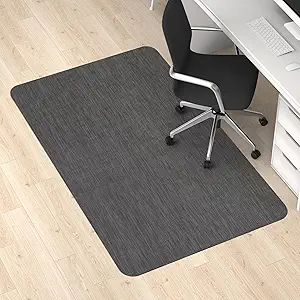
Clear Office Chair Mats for Hard Floors: What to Know Before You Buy
When you're shopping for a clear office chair mat designed for hard floors like LVP, tile, or hardwood, the key is balancing floor protection with chair mobility. This product type typically uses a rigid or semi-flexible plastic that must lie flat without curling, while also allowing your chair's casters to glide smoothly. Understanding the material thickness and surface texture is crucial to avoid a mat that slips, cracks, or scratches your flooring.
Key Considerations Before Buying
- Material thickness matters: Thinner mats (around 1.5mm) are more prone to cracking under heavy chairs or at the edges, while thicker options (2mm+) offer better durability and support. Check the product's gauge before purchasing.
- Surface texture and grip: For hard floors, the mat's underside should have a grippy backing or texture to prevent sliding, while the top surface should be smooth enough for easy caster movement. Some mats have a 'nubby' texture that can impede rolling.
- Size and shape are non-negotiable: Measure the area under your desk and consider the chair's swivel radius. A mat that's too small won't protect the floor where your chair's wheels actually travel, and a too-large mat can become a tripping hazard.
What Our Analysts Recommend
Look for a mat that specifies compatibility with hard floors (not carpet) and check for any certifications like 'Floor Friendly' or 'Non-PVC' if you're concerned about off-gassing. The best indicators of quality are clear, detailed photos of the mat's edge profile and underside, plus a stated thickness. Also, read reviews for mentions of 'flatness out of the box' and 'cracking'—these are the most common pain points.
Hard-Floor Chair Mats Market Context
Market Overview
The hard-floor chair mat market is crowded with options ranging from budget PVC mats to premium polycarbonate or glass alternatives. Most products in this category are made of clear PVC or PET, and they compete on clarity, thickness, and anti-curl features. With more people working from home and protecting expensive flooring, demand for these mats has grown, but so has the variability in quality.
Common Issues
Common issues include mats that arrive curled and never flatten, surfaces that scratch or yellow over time, and edges that crack or chip. Another frequent complaint is a slippery underside that lets the mat shift during use, which can be both annoying and dangerous. Some mats also have a strong chemical odor that takes weeks to dissipate.
Quality Indicators
Quality indicators include a mat that is thick enough to resist cracking, has a textured or rubberized backing for grip, and is made of materials that are durable yet flexible. A good mat will also have a warranty and clear care instructions. Customer photos that show the mat in use after several months can be more telling than the manufacturer's claims.
Review Authenticity Insights
Grade B Interpretation
The Grade B rating and 10% estimated fake review percentage suggest that the majority of reviews are genuine, but a small subset may be incentivized or otherwise unreliable. This means you can trust the overall sentiment, but you should still read individual reviews critically, especially any that are overly positive without specific details. The adjusted rating of 3.90/5, slightly lower than the displayed 4.11, indicates that some of the positive reviews might be skewed, so expect a realistic experience to be slightly less rosy.
Trust Recommendation
Given the 10% fake rate, you can rely on the general consensus of the reviews, but you should pay close attention to reviews that mention specific issues like curling, cracking, or odor. Look for reviews from verified purchasers (look for the 'Verified Purchase' tag) and those that describe the mat's performance after weeks or months of use. If you see a pattern of complaints, it's likely a real issue.
Tips for Reading Reviews
When reading reviews for this product, focus on those that mention the type of hard floor they have (e.g., LVP, hardwood) and the type of chair they use—this helps you gauge if the mat will work in your setup. Also, look for reviews that discuss installation or 'flattening' time, as this is a common early experience. Be wary of reviews that are overly brief or use generic praise without specifics.
Expert Perspective
Based on the analysis, this clear office chair mat appears to be a decent, mid-range option for protecting hard floors, but it may have some minor quality issues given the adjusted rating of 3.90. The genuine reviews indicate that it works well for basic use, but there are mentions of potential concerns like curling or durability over time. The 10% fake review rate is not alarming, but it suggests that the product's true performance is slightly below what the headline rating implies. It's likely a suitable choice for light to moderate use in a home office, but heavy users or those with expensive floors might want to invest in a thicker or more premium mat.
Purchase Considerations
Before purchasing, consider the weight of your chair and how often you roll around—if you're a heavy user, a thicker mat is a safer bet. Also, think about the size you need; a larger mat may cost more but will provide better coverage. If you have a mat that curls at the edges, try flipping it and placing heavy books on it for a day or two to help flatten it.
Comparing Alternatives
Shoppers should compare this mat with other hard-floor mats in the same price range, paying attention to thickness, material, and user feedback. Consider also looking into mat options with a lipped edge or a non-slip backing, as these features can significantly enhance performance.