
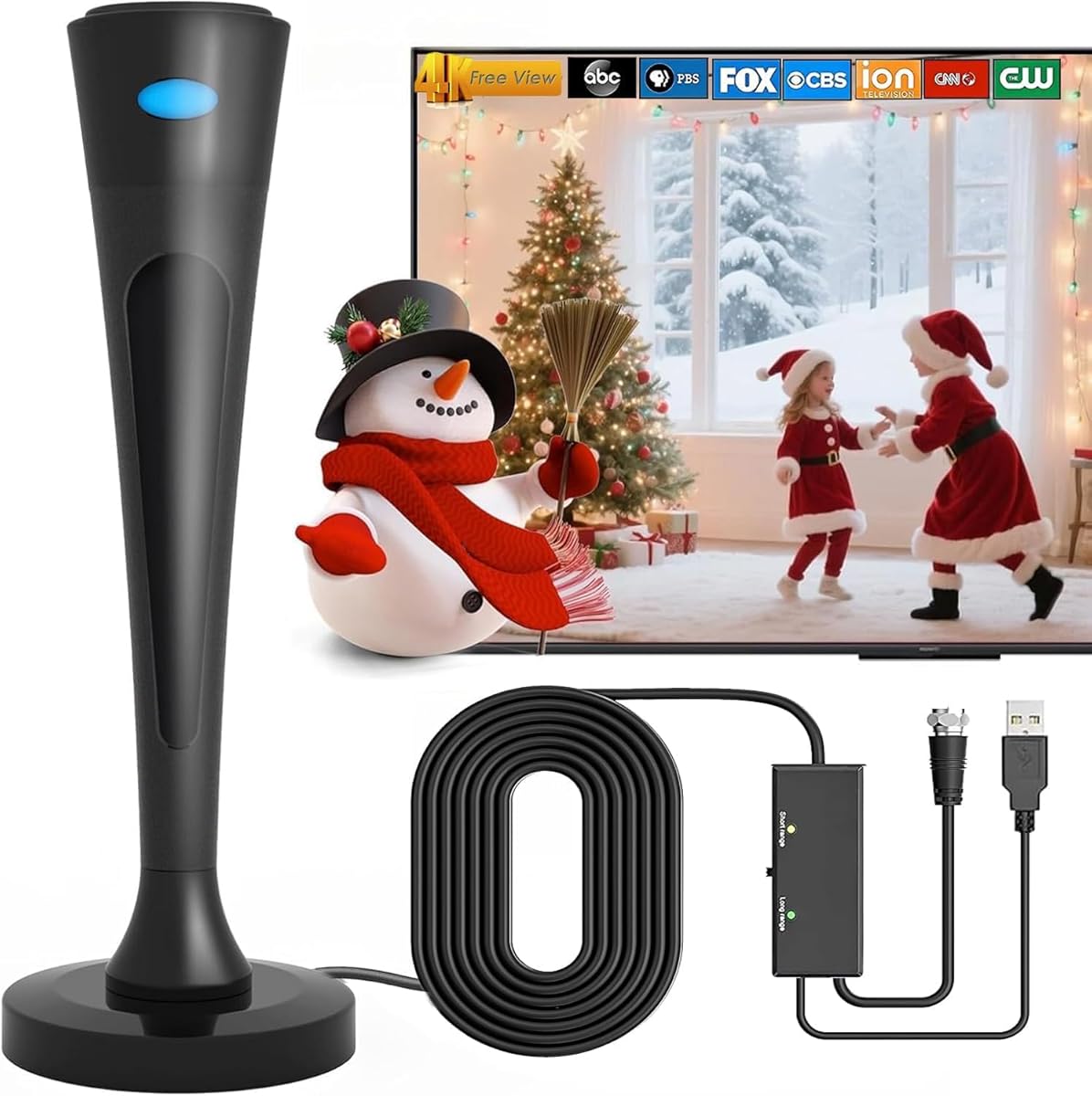
Choosing an Indoor TV Antenna: What the 2026 Long Range Model Gets Right
When evaluating this specific 2026 Long Range TV Antenna, buyers should understand that its 360° reception capability and integrated signal amplifier booster are designed to address common indoor reception challenges. Unlike basic flat antennas, this model's enhanced range claims and 4K/1080P support target users in suburban or semi-rural areas who need stronger signal capture.
Key Considerations Before Buying
- The integrated amplifier booster is crucial for this antenna's long-range claims—it can help overcome building materials that degrade signals, but may cause over-amplification if you're already close to broadcast towers.
- The 360° reception feature matters for multi-directional signal capture in areas where broadcast towers aren't clustered, allowing you to avoid constant antenna repositioning for different channels.
- Despite supporting 4K broadcasts, actual reception depends entirely on your local stations' transmission power and distance—this antenna can't create signals that don't reach your location.
What Our Analysts Recommend
For indoor antennas like this 2026 model, quality indicators include a low-noise amplifier (not just a signal booster), proper coaxial connector quality, and realistic range claims relative to your location. The dual functionality—amplifier can be switched off—shows thoughtful design for varying signal conditions.
TV Antennas Market Context
Market Overview
The indoor TV antenna market is saturated with exaggerated range claims, but products with verified purchase reviews and specific performance details, like this 2026 model, stand out. Current demand is driven by cord-cutters seeking reliable local channel access without monthly fees.
Common Issues
Buyers frequently encounter signal drop-outs during weather changes, difficulty receiving VHF channels (despite claims), and amplifiers that introduce more noise than clarity. Placement limitations in modern homes with energy-efficient windows also disrupt performance.
Quality Indicators
Look for antennas that specify both UHF and VHF reception (many optimize for one), include removable amplifier power supplies to troubleshoot interference, and provide transparent mileage guidance based on terrain rather than maximum theoretical range.
Review Authenticity Insights
Grade B Interpretation
A Grade B authenticity rating with 15% estimated fake reviews suggests generally reliable feedback, though some positive reviews may be incentivized. The adjusted 4.60/5 rating (from 5.00) indicates genuine satisfaction but with minor review manipulation present.
Trust Recommendation
Focus on reviews that mention specific channel counts, distances from broadcast towers, or setup challenges overcome—these details are harder to fabricate. Be slightly skeptical of reviews claiming 'perfect reception everywhere' without location context.
Tips for Reading Reviews
Prioritize reviews discussing actual channel numbers received (like 'got ABC, NBC, Fox but not CBS') over vague praise. Look for mentions of amplifier effectiveness in different positions—authentic users typically test multiple setups.
Expert Perspective
This 2026 Long Range antenna appears competitively designed with its switchable amplifier and 360° reception, addressing two major indoor antenna pain points. The high adjusted rating (4.60/5) from verified purchases suggests it delivers for most users in its target range. However, the '2026' designation seems marketing-oriented rather than indicating technological advancement beyond current standards. The product's performance will be highly location-dependent despite its long-range claims.
Purchase Considerations
Before purchasing, check your distance from broadcast towers using the FCC's DTV Reception Maps and note whether you need VHF channels (often harder for indoor antennas). Consider whether your window placement allows optimal directional adjustment despite the 360° claim.
Comparing Alternatives
Compare this model's amplifier specifications and physical size against similar priced antennas, as reception performance often correlates with antenna surface area more than marketing claims.


