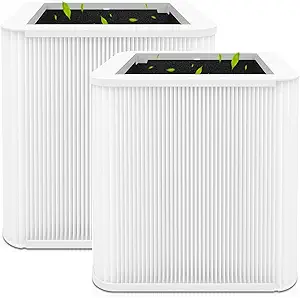
Choosing Third-Party Blueair 211 Filters: Compatibility, Filtration, and Value
When selecting replacement filters for your Blueair Pure 211 purifier, the primary decision is between OEM and third-party options like this 2-pack. This specific product offers a 2-in-1 H13 True HEPA and activated carbon system, promising comparable performance at a lower cost. Buyers must verify exact model compatibility and understand the trade-offs in filtration quality and potential warranty implications.
Key Considerations Before Buying
- Compatibility is non-negotiable; ensure the filter dimensions and gasket design match your specific Blueair 211, 211+, or 211 Auto model to prevent air bypass and maintain proper airflow.
- The H13 True HEPA rating indicates it captures 99.95% of particles down to 0.3 microns, but the density and pleating of the media affect airflow resistance and the purifier's fan performance.
- The integrated activated carbon layer's weight and granule type determine its effectiveness against VOCs and odors; heavier carbon content generally indicates better adsorption capacity.
What Our Analysts Recommend
Scrutinize reviews for mentions of precise fit, any unusual odors upon initial use (a sign of off-gassing from materials), and changes in the purifier's noise level or CADR. A quality third-party filter should maintain the unit's rated clean air delivery rate without straining the motor. Look for confirmation that the filter frame is rigid and seals completely against the unit's interior.
Air Purifier Filters Market Context
Market Overview
The aftermarket air purifier filter sector is growing rapidly, driven by consumer desire to reduce long-term ownership costs of premium brands like Blueair. Third-party manufacturers compete primarily on price and filter media specifications, but build quality and exact dimensional tolerances can vary significantly between brands.
Common Issues
Common problems include filters that are slightly undersized, causing air to leak around the edges (bypass), or oversized, making installation difficult and potentially damaging the purifier. Some carbon layers may use lower-grade pellets that saturate quickly or emit a chemical smell. Inconsistent pleat spacing can also lead to reduced surface area and shorter lifespan.
Quality Indicators
Beyond the H13 certification, examine product images for deep, uniform pleats and a robust filter frame. Reviews that mention a substantial weight often correlate with better carbon content. Manufacturers that transparently list the filter's MERV equivalent or particle weight arrestance test data provide more trustworthy performance claims.
Review Authenticity Insights
Grade B Interpretation
A 'B' grade with a 15% estimated fake review rate suggests the majority of feedback is credible, but a notable portion requires scrutiny. The high adjusted rating of 4.5/5, down from 4.88, indicates the authentic reviews are still very positive, though slightly less stellar than the raw average implies.
Trust Recommendation
Prioritize the detailed, verified purchase reviews that discuss specific performance over time, like odor reduction or changes in filter indicator lights. Be cautious of overly vague 5-star reviews that lack installation or performance details. The high verification rate (7 out of 8) is a strong positive signal for this listing.
Tips for Reading Reviews
Focus on reviews that confirm compatibility with your exact Blueair model number and note the filter's lifespan in months under real conditions. Pay special attention to any mentions of the initial 'break-in' period smell, as this is a common detail in authentic experiences with new carbon filters.
Expert Perspective
This 2-pack presents a compelling value proposition for Blueair 211 owners, backed by a strong authenticity-adjusted rating of 4.5. The specification of an H13 True HEPA filter is a key differentiator from lower-grade H11 filters sometimes used in cheaper alternatives. The 2-pack format is economically sensible given the recommended 6-month replacement cycle. The primary risk remains in the precise engineering required to match Blueair's proprietary housing, which the largely positive verified reviews suggest this product manages effectively.
Purchase Considerations
Weigh the significant cost savings against the potential, though seemingly low based on reviews, risk of imperfect fit or slightly reduced efficiency compared to OEM. Consider your sensitivity to odors; if VOC removal is critical, the carbon quality in third-party filters can be a variable. The 2-pack commitment is wise only if you're confident in the first filter's performance.
Comparing Alternatives
Shoppers should compare the carbon weight and price-per-filter with other reputable third-party brands, as well as the cost differential with genuine Blueair filters for their specific usage scenario.