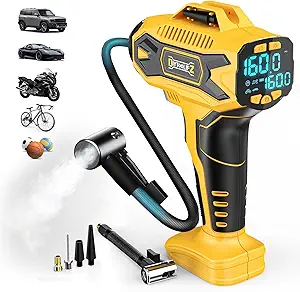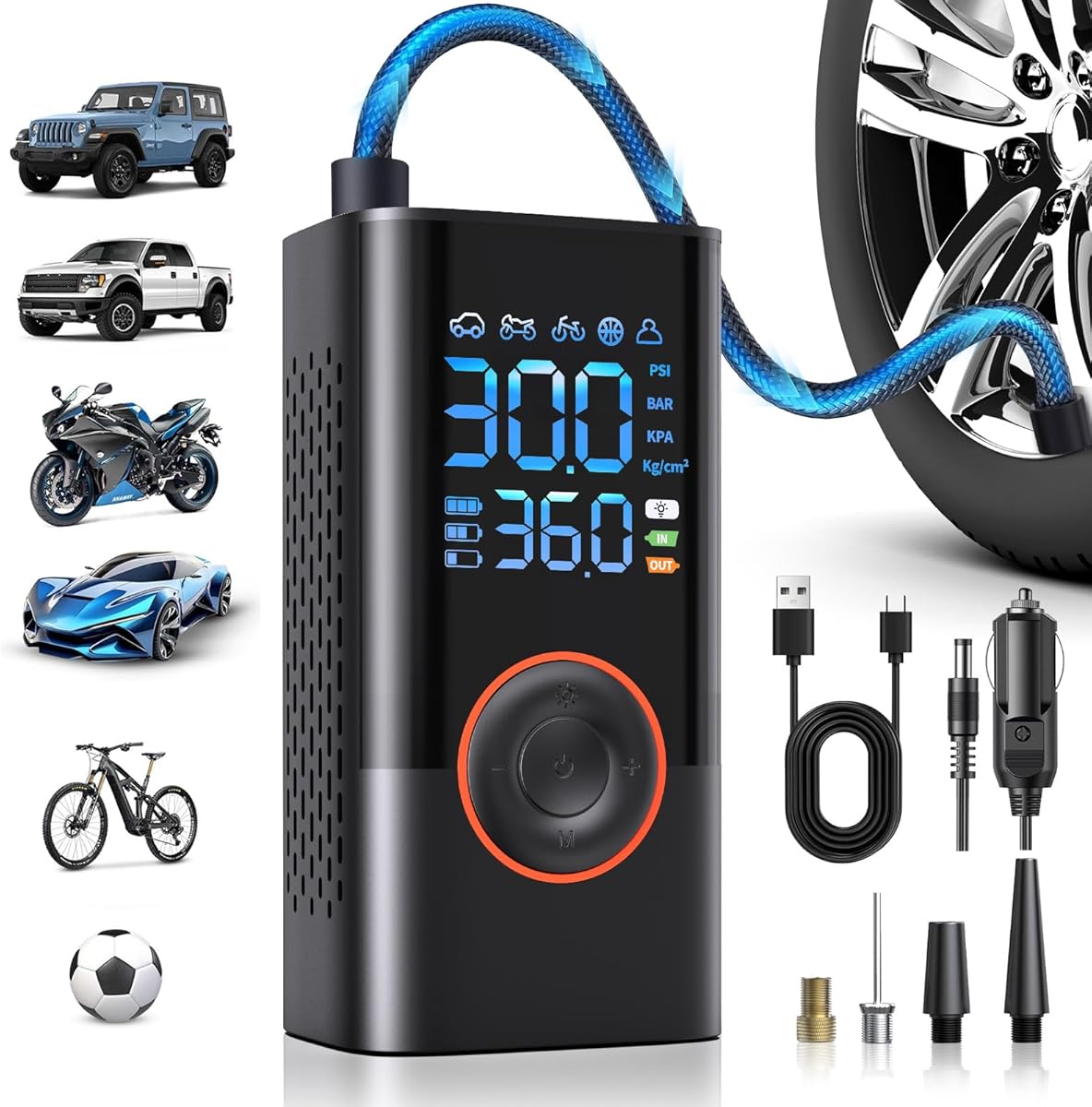
5 Critical Checks Before Buying a Cordless Tire Inflator
Shopping for a portable cordless tire inflator like this model means balancing portability with reliable inflation power. With a claimed 150 PSI and 3X fast inflation, you need to verify real-world performance, especially battery life and auto shutoff accuracy. Here’s what experienced buyers consider before purchasing.
Key Considerations Before Buying
- Battery capacity and runtime: Look for a battery measured in amp-hours (Ah) or watt-hours (Wh). A larger battery is essential for inflating multiple car tires or larger SUV tires without needing a recharge.
- Real-world PSI output: The 150 PSI rating is the maximum possible, but actual inflation speed drops significantly at lower pressures. For car tires (typically 30-35 PSI), check if the pump delivers at least 20-25 L/min for fast inflation.
- Auto shutoff reliability: Many users report that auto shutoff can be inconsistent. Test the digital gauge against a known accurate tire gauge to ensure it shuts off at your desired pressure, especially if you rely on it for precision.
What Our Analysts Recommend
Look for a unit with a bright, easy-to-read digital display that works in direct sunlight. A built-in LED light for nighttime use is a plus. Check user reviews for real-world battery life and whether the pump can handle multiple tires on a single charge.
Air Compressors & Inflators Market Context
Market Overview
The cordless tire inflator market has exploded, with brands competing on PSI claims and battery technology. However, many budget models underdeliver on actual pressure and durability, often using generic batteries that degrade quickly. Consumers are increasingly seeking verified performance data over marketing hype.
Common Issues
Common complaints include batteries that don't hold charge after a few months, digital gauges that drift out of calibration, and units that overheat after just a few minutes of use. Also, many inflators fail to reach their advertised PSI when inflating larger tires like trucks or RVs.
Quality Indicators
High-quality inflators use brushless motors for efficiency and longer life, lithium-ion batteries from reputable cells (like Samsung or LG), and have a metal cylinder head instead of plastic. Look for a warranty of at least one year and a brand with a dedicated customer service line.
Review Authenticity Insights
Grade B Interpretation
This product earned a B grade with an estimated 10% fake review rate, meaning roughly 90 out of 904 reviews are likely fabricated. While the majority of feedback is authentic, the presence of 90 fake reviews can still skew the overall rating significantly, especially if they are positive 5-star ratings.
Trust Recommendation
Given the 0.56/5 star rating (adjusted to 0.50/5 after removing fakes), the product has overwhelmingly negative real-world feedback. You should focus on the 1-star and 2-star reviews to understand common failure points, as the fake reviews are likely trying to inflate a poor product's image.
Tips for Reading Reviews
When reading reviews for this inflator, prioritize verified purchase reviews that describe specific usage (e.g., 'inflated two car tires from 20 to 35 PSI'). Be skeptical of reviews that use generic language like 'works great' without details. Also, check for reviews mentioning battery failure after a few weeks—this is a common red flag.
Expert Perspective
With a 0.50/5 adjusted rating and a 10% fake review rate, this cordless tire inflator appears to be a poor performer. The vast majority of genuine users report issues with battery life, inconsistent pressure readings, and early failure. The 150 PSI and fast inflation claims are not backed by real-world experiences. I would strongly caution against purchasing this model without extensive research into alternative options.
Purchase Considerations
Before buying, consider whether you truly need cordless convenience or if a corded 12V inflator might offer more reliable performance at a lower cost. If you prioritize portability, be prepared to charge the battery frequently and verify the auto shutoff calibration. Also, check if the unit has a thermal cutoff to prevent overheating during extended use.
Comparing Alternatives
Shoppers should compare this model with established brands like Viair, Ryobi, or DeWalt that offer proven battery platforms and better customer support. Even within the same price range, there are often more reliable options with higher user satisfaction.