
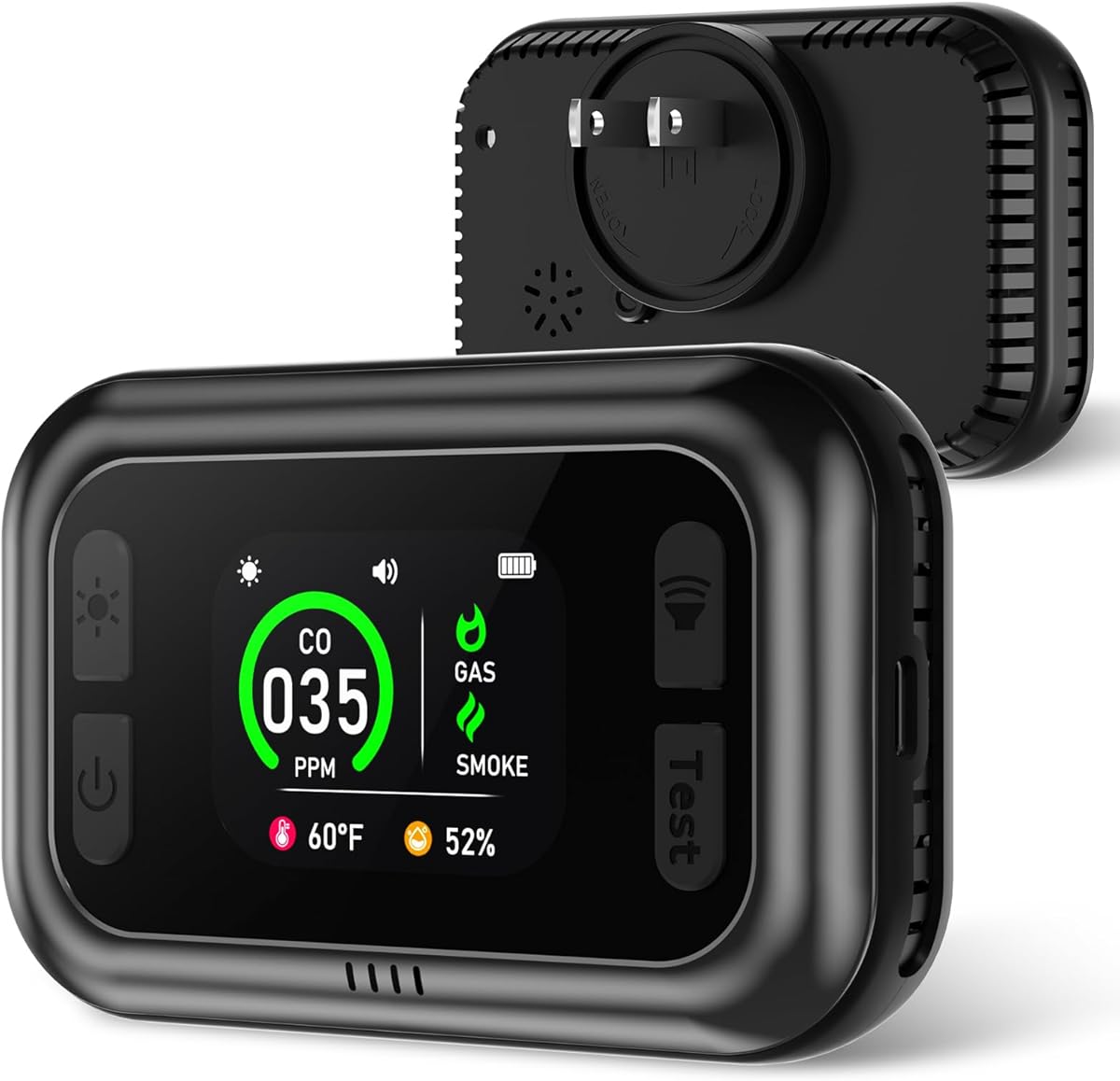
Evaluating 5-in-1 Safety Detectors: What Multi-Function Protection Really Means
This specific 5-in-1 detector combines carbon monoxide, natural gas, propane, smoke, temperature, and humidity monitoring—a significant consolidation for compact spaces like RVs. Buyers should understand that 'combination' here refers to environmental hazard detection, not just smoke and CO like most units. The built-in battery backup for its plug-in design is crucial for continuous protection during power outages.
Key Considerations Before Buying
- Verify the sensor types: This unit uses semiconductor sensors for combustible gases (natural gas/propane), which require proper placement away from kitchens or garages to avoid false alarms from normal cooking.
- Assess the dual alarm differentiation: A clear, distinct sound pattern for smoke versus CO versus gas is essential for appropriate emergency response, which reviewers note this product provides.
- Consider the monitoring scope: The added temperature and humidity readings are diagnostic tools, not safety alarms, helping identify conditions that might precede hazards like mold or fire risk.
What Our Analysts Recommend
For a true multi-gas detector, check for UL 1484 (propane/natural gas) and UL 2034 (CO) listings or their equivalents; this product's specific certifications should be confirmed. Look for detailed feedback on alarm loudness (ideally 85+ dB) and clarity in RV or small home settings, as its compact size impacts sound projection.
Combination Smoke & Carbon Monoxide Detectors Market Context
Market Overview
The market for combination detectors is expanding beyond basic smoke/CO units to include combustible gas detection, driven by consumer demand for comprehensive, space-saving safety solutions. Products like this 5-in-1 model target niche applications such as RVs, campers, and small apartments where installing multiple single-purpose detectors is impractical.
Common Issues
Common problems include cross-sensitivity (where one gas triggers the wrong alarm), shorter sensor lifespans for combustible gas detectors (typically 3-5 years versus 10 for CO), and confusing interfaces when combining diagnostic features like temperature displays with critical alarms.
Quality Indicators
Quality is indicated by verified independent testing certifications for each hazard type, clear end-of-life warnings for each sensor, and robust power options. A high-performing unit will have minimal false alarms from common household activities while maintaining rapid response times to actual threats.
Review Authenticity Insights
Grade B Interpretation
A Grade B with a 15% estimated fake review rate suggests generally reliable feedback, but warrants scrutiny of overly vague 5-star reviews. The adjusted rating of 4.60/5 from a perfect 5.00 indicates some review inflation, but the high percentage of verified purchases (100% 'V') strengthens credibility.
Trust Recommendation
Prioritize reviews that detail specific use cases like RV travel or cabin installation, as these match the product's intended application. Be cautious of reviews that only praise the '5-in-1' concept without testing individual functions, as they may be less substantive.
Tips for Reading Reviews
Focus on reviews mentioning long-term performance (6+ months), as gas sensor degradation is a key concern. Look for comments on alarm differentiation and battery backup reliability during actual power loss, which are critical real-world tests.
Expert Perspective
This detector represents a specialized tool for environments where space and power sources are limited, such as recreational vehicles or small workshops. Its high adjusted rating (4.60/5) from verified purchases suggests it performs reliably in these niche applications. However, the combination of semiconductor gas sensors with photoelectric smoke detection in one unit requires careful placement to avoid nuisance alarms while ensuring optimal coverage for all threats.
Purchase Considerations
Weigh the convenience of consolidated monitoring against the potential need for earlier replacement of the combustible gas sensors compared to standalone CO detectors. The plug-in with battery backup design is ideal for locations with reliable outlets, but may limit placement options in older RVs or campsites with unconventional power setups.
Comparing Alternatives
Shoppers should compare this unit's sensor specifications and certifications against dedicated smoke/CO combos plus separate gas detectors to assess the true value of the integrated approach.


