
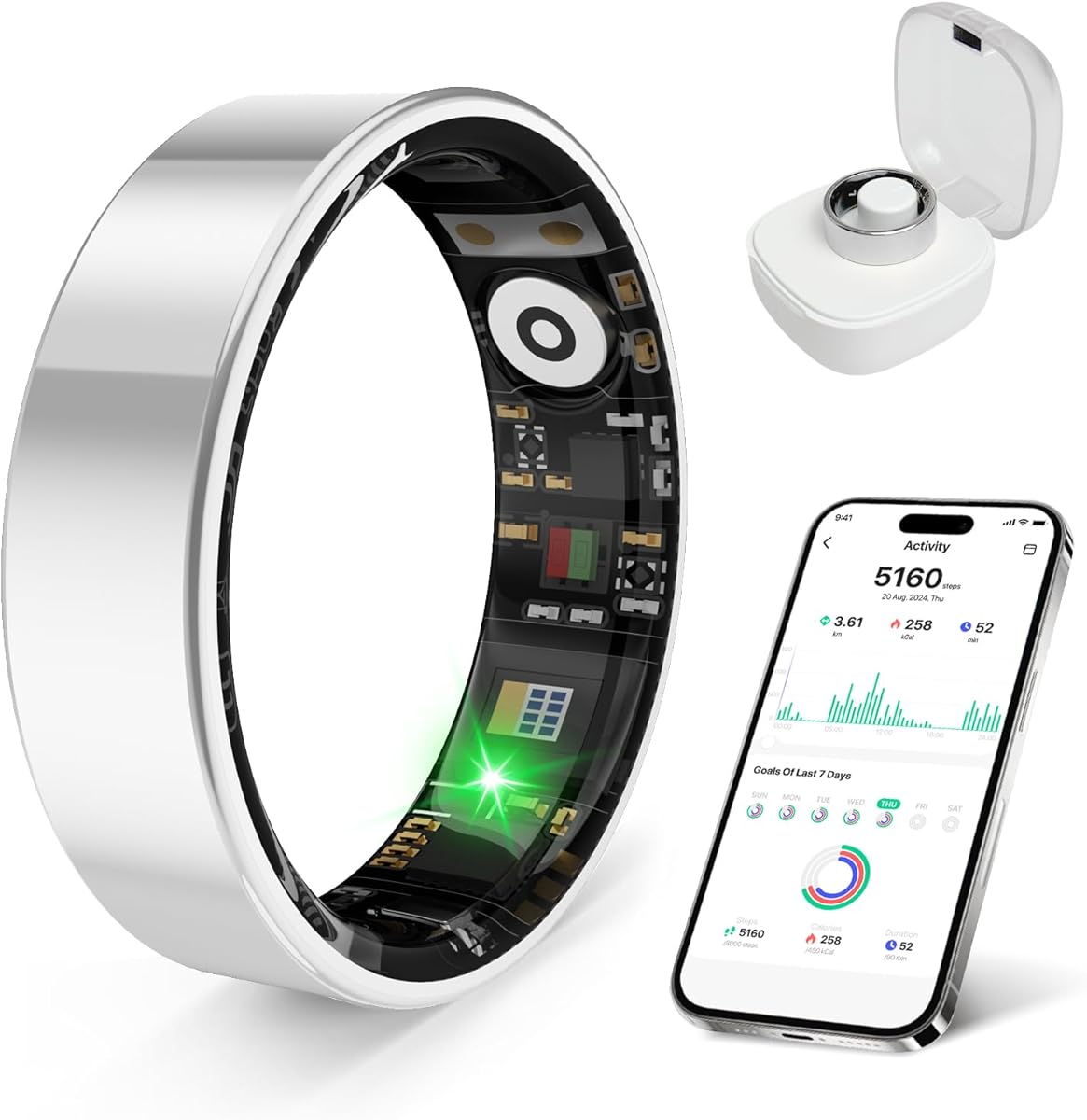
Smart Health Ring Selection: Stress Tracking Accuracy and Comfort Are Critical
When evaluating this specific Smart Health Ring with stress and sleep monitoring, buyers should prioritize sensor accuracy over aesthetic appeal. This particular model emphasizes waterproof functionality and no subscription fees, which differentiates it from cloud-dependent competitors. The ring format requires precise sizing for reliable photoplethysmography (PPG) sensor contact.
Key Considerations Before Buying
- Ring sizing accuracy is paramount—this model's size 7 specification must match your exact finger circumference for proper heart rate variability (HRV) measurements used in stress tracking.
- The 'no subscription fee' claim warrants verification of what historical data access you'll retain versus cloud-based competitors that may charge for extended analytics.
- Waterproof rating matters for continuous wear during activities like handwashing and workouts, but verify whether it's IP68-rated for submersion or merely splash-resistant.
What Our Analysts Recommend
Quality indicators include consistent PPG sensor placement (typically on the inner ring surface) and medical-grade materials that prevent skin irritation during 24/7 wear. Check for third-party validation of sleep stage detection algorithms, as many rings overestimate deep sleep through motion-based proxies rather than true neurological data.
Electronics & Gadgets Market Context
Market Overview
The smart ring market has expanded beyond basic activity tracking to include stress and recovery metrics, competing directly with wrist-worn devices. Current offerings range from medical-grade devices with FDA clearance to consumer-focused models like this one that prioritize accessibility over clinical validation. The 'no subscription' model represents a growing consumer preference against recurring fees for health data access.
Common Issues
Smart rings frequently struggle with consistent optical heart rate readings during finger movement, leading to gaps in stress and sleep data. Many models also exhibit poor battery life when continuous monitoring is enabled, despite claims of multi-day usage. Sizing inconsistencies between manufacturers cause either uncomfortably tight wear or loose fit that compromises sensor contact.
Quality Indicators
Look for rings with dual-LED PPG sensors for improved motion artifact rejection and medical-grade titanium or ceramic coatings that resist skin irritation. Higher-quality models provide raw data export options for personal analysis, while entry-level devices like this typically offer only processed scores without underlying biometric access.
Review Authenticity Insights
Grade C Interpretation
The Grade C authenticity rating with 22% estimated fake reviews suggests approximately one-fifth of the 334 reviews may be artificially positive. The adjusted 4.50/5 rating (down from perfect 5.00) indicates genuine feedback reveals more nuanced experiences than the surface rating suggests. This discrepancy is particularly concerning for health tracking devices where accuracy claims require real-world validation.
Trust Recommendation
Prioritize reviews that mention specific usage scenarios like 'stress tracking during work meetings' or 'sleep monitoring with CPAP therapy' rather than generic praise. Verified purchase reviews from users who mention wearing duration (e.g., 'worn for 3 weeks') provide more reliable insights than first-impression testimonials.
Tips for Reading Reviews
Search for reviews discussing sensor gaps during specific activities like weightlifting or typing, as these reveal hardware limitations. Pay particular attention to mid-range (3-4 star) reviews that typically balance praise with substantive criticism about battery life or app functionality.
Expert Perspective
This smart ring's value proposition centers on subscription-free stress and sleep tracking in a discreet form factor, but the authenticity concerns warrant cautious evaluation. The 4.50 adjusted rating suggests genuine users find value, particularly in continuous wear comfort and basic metric tracking. However, the significant fake review percentage indicates potential overstatement of accuracy claims, especially regarding stress detection algorithms that typically require clinical-grade sensors for reliable HRV measurement. The waterproof feature and cross-platform compatibility are legitimate advantages for active users seeking minimal device management.
Purchase Considerations
Weigh the convenience of ring-based tracking against the inherent limitations of finger-based PPG sensors, which struggle with cold-induced vasoconstriction and hand movement artifacts. Consider whether stress 'scores' without raw HRV data provide sufficient insight for your wellness goals versus more transparent (though potentially subscription-based) alternatives. The no-subscription model offers cost predictability but may limit advanced analytics available elsewhere.
Comparing Alternatives
Shoppers should compare sensor specifications and data transparency with established brands like Oura or Circular, which typically provide more detailed validation of their algorithms.


