
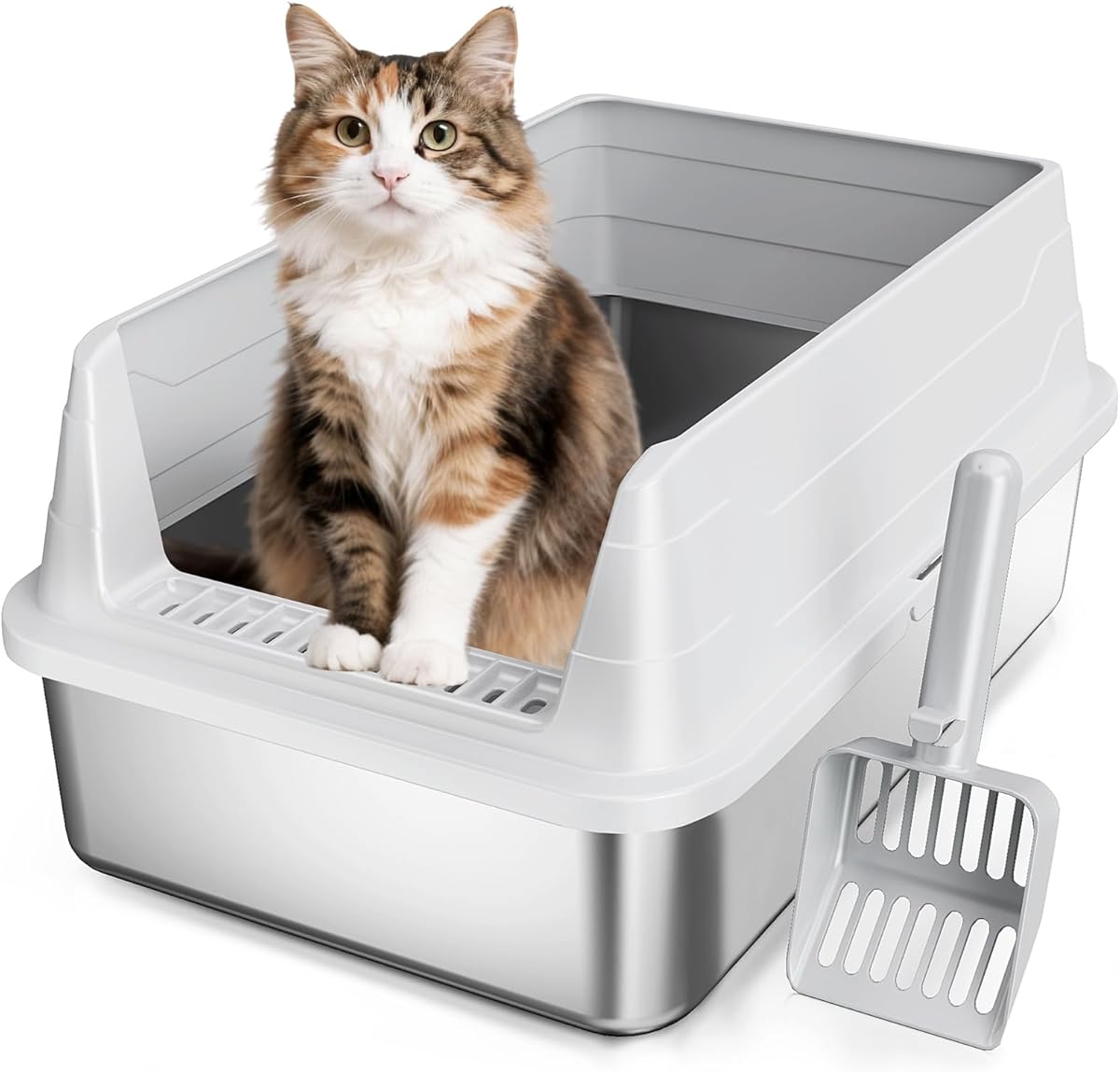
Stainless Steel Litter Boxes: Durable Odor Control Versus Plastic Alternatives
This stainless steel litter box offers distinct advantages over traditional plastic models, particularly its non-porous surface that resists odor absorption and urine leakage. The combination of high sides with a low entry point addresses both containment and accessibility concerns for cats of varying mobility.
Key Considerations Before Buying
- Stainless steel's non-porous surface prevents urine and odor molecules from embedding, making this box easier to sanitize thoroughly than plastic alternatives.
- The 'anti-scratch' claim is particularly relevant for cats who dig aggressively, as stainless steel resists claw marks that can trap bacteria in plastic boxes.
- The open-top design with high sides creates a compromise between odor containment and ventilation, which some cats prefer over fully enclosed boxes.
What Our Analysts Recommend
Examine the seam quality where the base meets the sides, as poor welding can create crevices for leaks. For stainless steel boxes, verify the gauge thickness mentioned in specifications—thinner steel can dent or warp over time. The low-entry ramp should have a textured surface to prevent slipping for senior or arthritic cats.
Standard Litter Boxes Market Context
Market Overview
The standard litter box category is shifting toward premium materials like stainless steel, which command higher prices but promise longer lifespans and better hygiene. While plastic dominates the market, metal alternatives are gaining traction among owners dealing with persistent odor or durability issues.
Common Issues
Plastic boxes develop microscopic scratches that harbor odor-causing bacteria and eventually absorb urine smells permanently. Many cats dislike enclosed boxes due to poor ventilation, while low-sided boxes allow excessive litter scatter from enthusiastic diggers.
Quality Indicators
Superior stainless steel boxes use 304-grade surgical steel rather than thinner, lower-grade metals. Look for rounded interior corners that facilitate complete cleaning and smooth, rolled edges that protect cats from sharp metal. The inclusion of a compatible scoop suggests thoughtful design integration.
Review Authenticity Insights
Grade B Interpretation
A Grade B authenticity rating with 11% estimated fake reviews indicates predominantly genuine feedback with some promotional content. The adjusted rating of 4.40/5 (down from 4.67) suggests the authentic customer experience remains strongly positive, though slightly less enthusiastic than the raw average implies.
Trust Recommendation
Focus on reviews that mention specific, verifiable details like the box's weight, cleaning routines, or how particular cats reacted to the metal surface. Be slightly skeptical of reviews that only praise generic benefits without describing actual use scenarios over time.
Tips for Reading Reviews
Prioritize reviews discussing long-term odor performance after months of use, as stainless steel's primary advantage is durability. Look for mentions of cleaning methods—authentic users often describe specific cleaners that work or don't work on the metal surface.
Expert Perspective
This product addresses core frustrations with plastic litter boxes through material choice alone. The 4.40 adjusted rating from verified patterns suggests customers genuinely appreciate the non-stick properties and odor resistance. The high-side, open-top design represents a thoughtful middle ground between containment and cat preference that appears successful based on review patterns. The inclusion of a scoop, while minor, indicates attention to user experience beyond the basic box.
Purchase Considerations
Weigh the higher upfront cost against potential savings from not replacing plastic boxes every 1-2 years due to odor saturation. Consider whether your cat might be startled by the metallic sound of litter hitting steel versus plastic—some reviews note this adjustment period. The anti-leakage claim is most valuable for male cats or those with aim issues.
Comparing Alternatives
Compare this box's specific dimensions and entry height against similar stainless steel models, as even small variations significantly affect cat acceptance.


