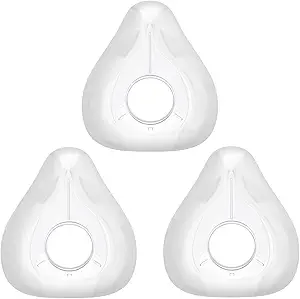
Choosing Replacement F20 Cushions: Memory Foam Comfort vs. Seal Integrity
When selecting replacement cushions for your ResMed AirTouch F20 or AirFit F20 full-face mask, you're balancing two critical factors: the plush comfort of memory foam and the consistent seal required for effective CPAP therapy. These third-party cushions promise optimized performance but must precisely match your mask frame's geometry and your facial contours.
Key Considerations Before Buying
- Verify compatibility with your specific mask frame—the AirTouch F20 uses a magnetic clip system, while the AirFit F20 uses a traditional plastic clip, and not all aftermarket cushions accommodate both perfectly.
- Assess your priority: memory foam (like the AirTouch original) offers superior initial comfort and conforms to facial movements, while silicone (like the AirFit) typically provides a more durable, consistent seal over time.
- Consider the replacement cycle—these 2-pack cushions may wear differently than OEM parts, with some users reporting compression of the memory foam material after several weeks of nightly use.
What Our Analysts Recommend
Examine reviews mentioning the cushion's edge bevel and the foam's density; a proper seal relies on a tapered edge that collapses evenly under headgear tension. Quality indicators include consistent cell structure in the memory foam (visible in product images) and precise cutouts for the frame connection points, which prevent air leaks at the forehead bridge.
CPAP Accessories Market Context
Market Overview
The CPAP cushion aftermarket is growing rapidly, with numerous manufacturers offering alternatives to expensive OEM replacements, particularly for popular masks like ResMed's F20 series. These third-party options often compete on price and material innovation, with memory foam becoming a common comfort-focused alternative to medical-grade silicone.
Common Issues
Users frequently report fit inconsistencies where aftermarket cushions don't replicate the exact dimensions of ResMed's originals, leading to seal leaks at the nasal bridge or chin. Another concern is foam durability, as some memory foam formulations break down faster with nightly use and cleaning, losing their conforming properties.
Quality Indicators
Look for cushions that specify their foam density (often measured in kg/m³) and whether they use open-cell or viscoelastic memory foam, which affects breathability and pressure response. Premium aftermarket options will include detailed compatibility charts and may offer different firmness levels to match user preference.
Review Authenticity Insights
Grade B Interpretation
A Grade B authenticity rating with an 11% estimated fake review percentage suggests mostly genuine feedback with minimal manipulation. For this product category, this indicates that the mixed experiences—both positive and negative—likely reflect real user outcomes rather than coordinated promotion.
Trust Recommendation
Focus on reviews that discuss specific technical details like seal performance at higher pressures (e.g., 12-15 cm H₂O) or foam behavior after 30+ days of use. Be cautious of reviews that only praise the low price without mentioning performance comparisons to ResMed OEM cushions.
Tips for Reading Reviews
Prioritize reviews from users who specify their mask model (AirTouch vs. AirFit F20) and frame size, as fit issues often stem from these variables. Look for detailed accounts of the break-in period and how the cushion conforms during side sleeping, which tests seal integrity.
Expert Perspective
With an adjusted rating of 3.70/5 from verified reviews, these replacement cushions present a cost-effective but inconsistent alternative to ResMed OEM parts. The memory foam construction appears to deliver on initial comfort for many users, mirroring the AirTouch experience, but durability and precise fit emerge as recurring concerns. The authentic review distribution—showing genuine debate between users who achieve perfect seals and those experiencing leaks—suggests individual facial anatomy plays a significant role in success with this product.
Purchase Considerations
Weigh the substantial cost savings against the potential for trial-and-error fitting, particularly if you rely on CPAP for severe sleep apnea. These cushions may work best for users whose original AirTouch cushions provided good seals but who want to reduce replacement expenses, rather than for those struggling with fit issues on OEM parts.
Comparing Alternatives
Shoppers should compare these with ResMed's genuine AirTouch Foam Cushions and consider whether silicone AirFit cushions might offer more predictable performance despite different comfort characteristics.