
Choosing a 4000W Pure Sine Wave Inverter for RV, Solar, and Off-Grid Power Needs
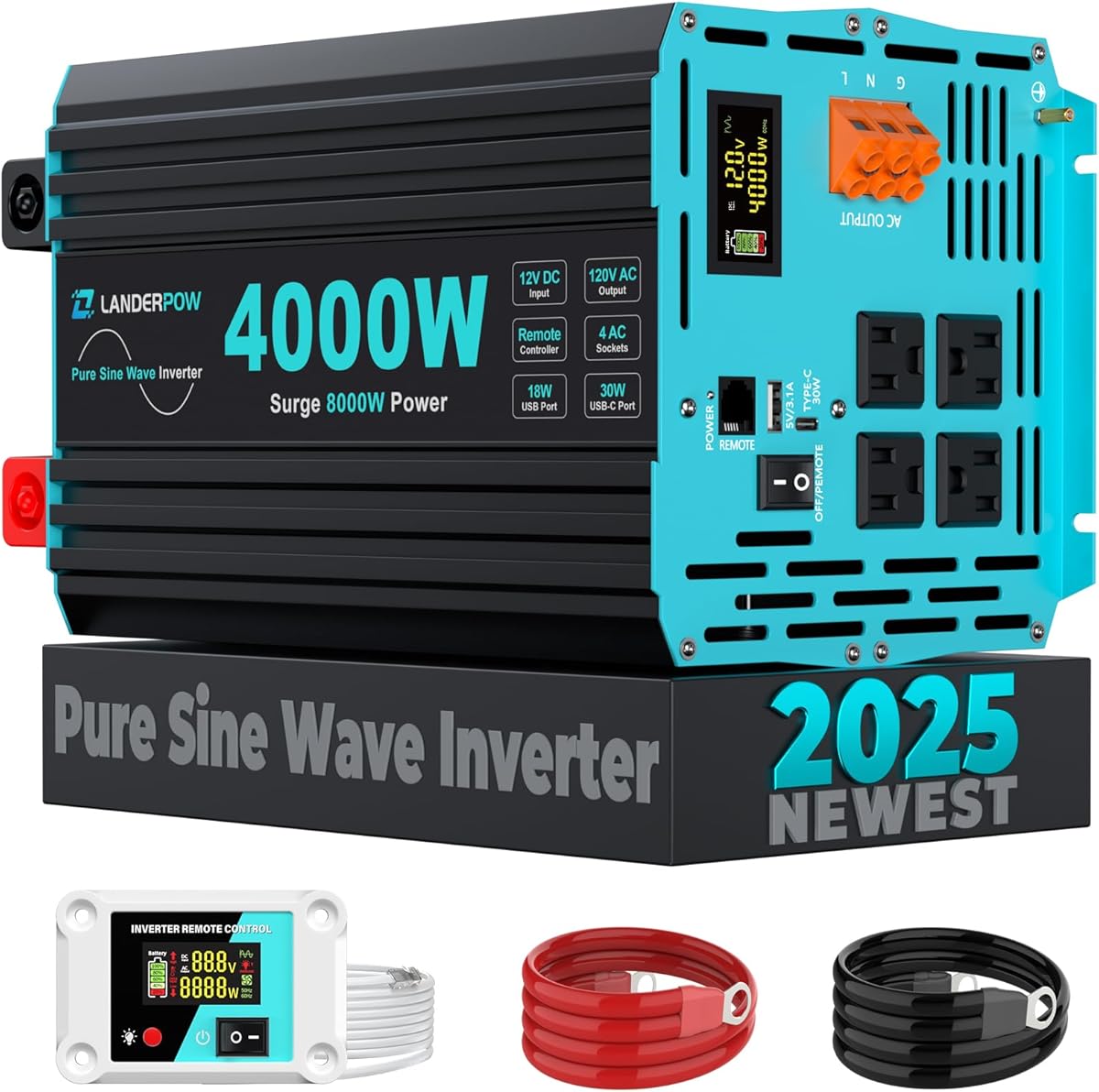
This 4000W continuous/8000W surge pure sine wave inverter represents a versatile power solution bridging automotive, solar, and home backup applications. With its 12V DC input and 120V AC output, it's designed to convert battery power to clean household electricity for sensitive electronics, making it particularly relevant for RV enthusiasts, truck owners, and off-grid solar setups.
Key Considerations Before Buying
- Verify your battery bank capacity—a 4000W inverter at 12V draws approximately 333 amps continuously, requiring robust cabling and sufficient battery capacity (typically 400+ amp-hours) to avoid rapid depletion.
- Assess your actual surge needs—the 8000W surge rating handles motor startups for refrigerators or power tools, but ensure your battery and cables can deliver this brief high-current demand without voltage drop.
- Evaluate connectivity requirements—this unit's four AC outlets, 30W Type-C, USB ports, hardwire port, and remote control offer flexibility for both portable and permanent installations in various environments.
What Our Analysts Recommend
For pure sine wave inverters in this power range, examine cooling fan quality and heat sink design, as thermal management is critical during sustained high-load operation. Check for proper protection features like low-voltage shutdown, overload protection, and short-circuit safeguards, which are essential for protecting both the inverter and connected equipment.
Solar & Wind Power Inverters Market Context
Market Overview
The 3000W-5000W pure sine wave inverter market has expanded significantly, driven by growing RV, van life, and home backup power demand, with products increasingly integrating USB-C PD and remote monitoring capabilities. Competition focuses on efficiency ratings (typically 85-92% for quality units), noise levels, and multi-application versatility across automotive and stationary uses.
Common Issues
Users frequently encounter voltage drop from undersized DC cabling, premature shutdown from inadequate battery capacity, or fan noise complaints in living spaces. Some units struggle with maintaining clean sine wave output under variable loads, which can affect sensitive medical equipment or variable-speed motors.
Quality Indicators
Look for certifications like UL or ETL listing, clear efficiency specifications at various load levels (not just peak), and robust construction with aluminum enclosures for heat dissipation. Quality units provide detailed installation guidelines addressing proper gauge wiring distances and fuse requirements specific to their amperage draw.
Review Authenticity Insights
Grade B Interpretation
The Grade B authenticity rating with 15% estimated fake reviews indicates generally reliable feedback, though shoppers should remain discerning. The adjusted 4.50/5 rating (from 4.89/5) suggests some review inflation but still reflects strong genuine satisfaction.
Trust Recommendation
Focus on reviews discussing specific installation scenarios—RV power systems, solar integrations, or particular equipment runs—as these contain verifiable technical details. Be cautious of overly emotional reviews lacking technical substance or those repeating marketing phrases verbatim.
Tips for Reading Reviews
Prioritize reviews mentioning actual runtime experiences with specific appliances (like 'ran my RV air conditioner for 2 hours'), installation details (wire gauge used, fuse sizes), or thermal performance during sustained use. These provide actionable insights beyond generic praise.
Expert Perspective
This inverter's combination of 4000W continuous power, pure sine wave output, and multiple connectivity options positions it well for users needing to power sensitive electronics in mobile or off-grid environments. The high genuine rating (4.50/5 adjusted) suggests most users achieve their intended applications successfully, though the 15% fake review rate warrants careful evaluation of specific use-case matches. The remote control and hardwire port add installation flexibility that distinguishes it from basic portable-only models.
Purchase Considerations
Consider whether your application truly requires pure sine wave output—essential for electronics with active PFC power supplies, medical devices, or variable-speed tools—versus modified sine wave alternatives. Calculate your typical and peak loads carefully, as running this inverter below 20% capacity for extended periods can reduce efficiency compared to a properly sized unit.
Comparing Alternatives
Compare efficiency curves at partial loads, idle power consumption (important for solar systems), and warranty terms with similar 4000W pure sine wave inverters from brands like AIMS Power or Renogy.


