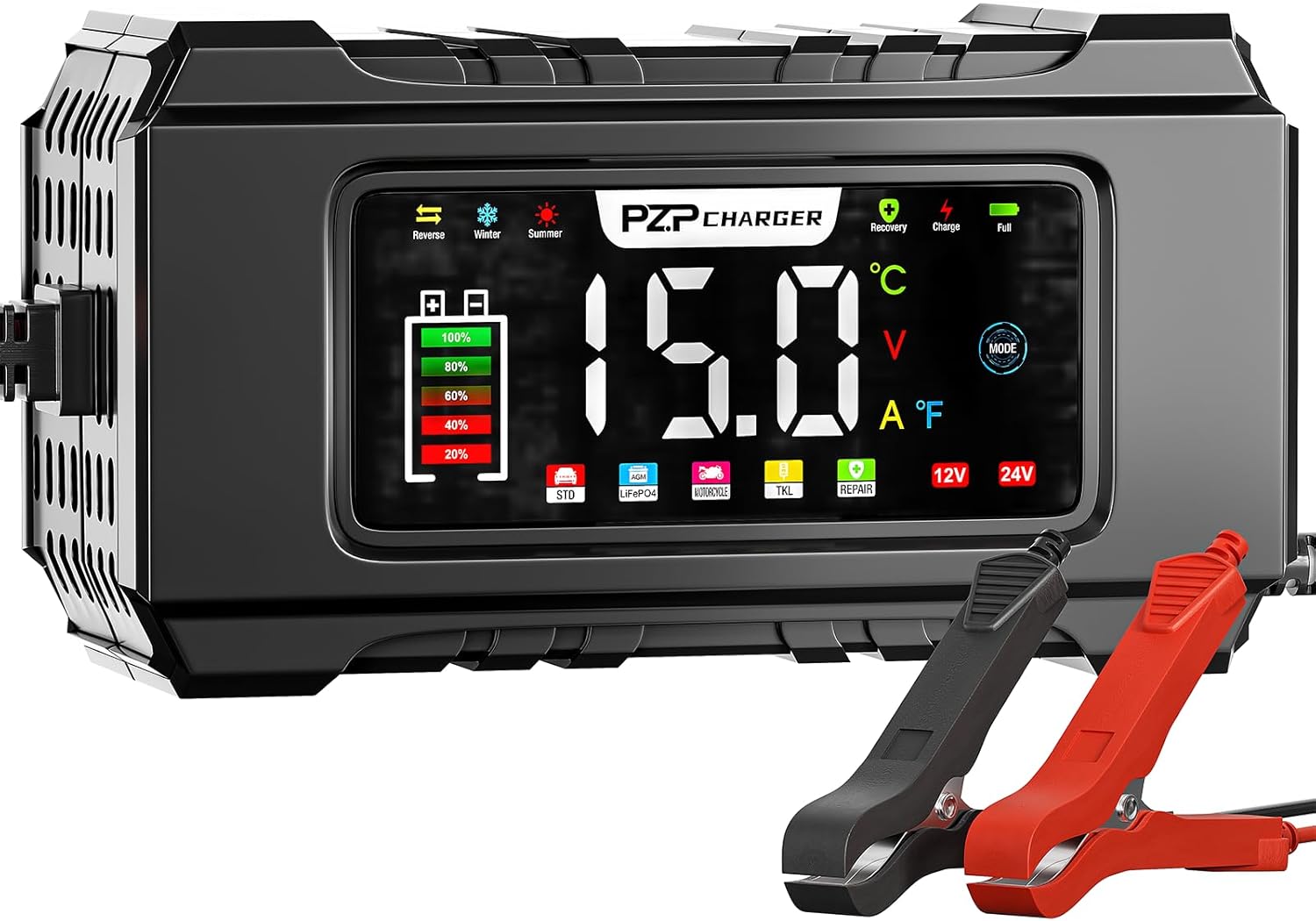
What to Know Before Buying a 12V 10A Smart Battery Charger
A 12V 10A automatic smart charger and maintainer sits in a sweet spot: enough amperage to recharge a depleted car battery overnight, yet gentle enough to leave connected for long-term float maintenance. Unlike basic trickle chargers, smart units like this one use multi-stage charging algorithms to avoid overcharging—a critical feature if you park vehicles seasonally or own a boat, RV, or riding mower.
Key Considerations Before Buying
- Match amperage to your battery: 10A is well-suited to standard automotive and marine batteries (roughly 40–100Ah), but it's overkill for small motorcycle or lawn-tractor batteries, where a 1–2A charger is safer and gentler.
- Confirm battery chemistry compatibility: this class of charger typically supports lead-acid types including flooded, AGM, and gel. Verify the listing explicitly names your battery type—lithium (LiFePO4) support is not universal and requires a dedicated charging profile.
- Think about your use case: if you need occasional overnight recharging, 10A gets you back on the road faster; if you want a permanent maintainer for a stored classic car, look for automatic float mode and reverse-polarity and short-circuit protection.
What Our Analysts Recommend
Quality smart chargers advertise a clear multi-stage charging sequence (typically desulfation, bulk, absorption, and float), explicit safety protections, and a readable display showing voltage and charge percentage. Look for claims backed by specific specs—charging stages, amperage output, and supported battery capacities—rather than vague 'smart technology' language. A sturdy clamp connection and adequate cable length also matter more than most buyers expect.
Battery Chargers Market Context
Market Overview
The battery charger market has shifted decisively from heavy transformer-based units to compact switch-mode smart chargers, which are lighter, more efficient, and safer for unattended use. At the 10A/12V tier, competition is intense, with dozens of near-identical designs sold under different brand names—so differentiation often comes down to build quality, documentation, and real-world reliability.
Common Issues
The most frequent complaints in this category involve chargers that fail to detect deeply discharged batteries (some smart units won't initiate charging below a voltage threshold), inaccurate or missing voltage readouts, and flimsy alligator clamps that loosen over time. Buyers also report confusion when a charger's 'repair' or desulfation mode doesn't deliver the revival results advertised.
Quality Indicators
Reliable units typically carry safety certifications, specify their charging stages and voltage cutoffs, and include clear troubleshooting guidance for error codes. Consistent reviewer reports of multi-season durability—not just first-use success—are a stronger quality signal than feature lists. A responsive seller and a warranty of at least one year are also meaningful indicators in this crowded segment.
Review Authenticity Insights
Grade B Interpretation
A Grade A authenticity rating with an estimated 5% fake review rate is about as clean as this category gets; only one very short review raised minor suspicion, and every review is a verified purchase. That matters here because battery charger reviews are easy to fake with generic praise—this product's reviews instead contain specifics like battery types, charging durations, and storage scenarios, which are hard to fabricate at scale.
Trust Recommendation
You can treat the 4.78 rating (4.70 adjusted) as broadly trustworthy, but weight it alongside the review content rather than the number alone. The verified-purchase status of all reviews is the strongest signal—it means reviewers actually bought and used the unit. Focus on reviews describing long-term maintainer use, since that's where durability problems surface.
Tips for Reading Reviews
Prioritize reviews that name a specific battery type, vehicle, or charging scenario—these reveal whether the charger suits your use case. Watch for clusters of complaints about the same failure (e.g., clamps breaking or error codes on cold batteries), and discount one-line five-star reviews regardless of authenticity grade. Reviews mentioning months of maintainer use are the most valuable for judging this product's core purpose.
Expert Perspective
This 12V 10A smart charger and maintainer combines a practical amperage for automotive batteries with the automatic multi-stage control that separates modern smart chargers from old trickle units. The authenticity analysis is genuinely reassuring: a 4.70 adjusted rating across nearly 5,000 verified reviews, with only 5% estimated fake content, suggests the satisfaction is real rather than manufactured. For a category where cheap units often disappoint, that review profile is a meaningful differentiator. The main caveat is that 10A is a general-purpose middle ground—excellent for cars and marine batteries, but mismatched to small powersport batteries or high-capacity lithium banks.
Purchase Considerations
Weigh your battery inventory: if you're maintaining a car, truck, or boat battery, this amperage and feature set fit well; if you primarily own motorcycles or lithium batteries, a lower-amp or chemistry-specific charger is the better buy. Also consider whether you need a permanent maintainer or occasional recharger—both are covered here, but confirm the listing's float and storage modes before committing. Price is competitive in this segment, so factor in warranty terms and clamp quality as tiebreakers.
Comparing Alternatives
Compare this unit against other 10A smart chargers from established brands, checking for explicit battery-chemistry support and safety certifications. Reviewers' long-term durability reports are the best way to separate this from lookalike competitors.