
Choosing a 65W Laptop-Capable Power Bank: What High-Wattage Users Need to Know
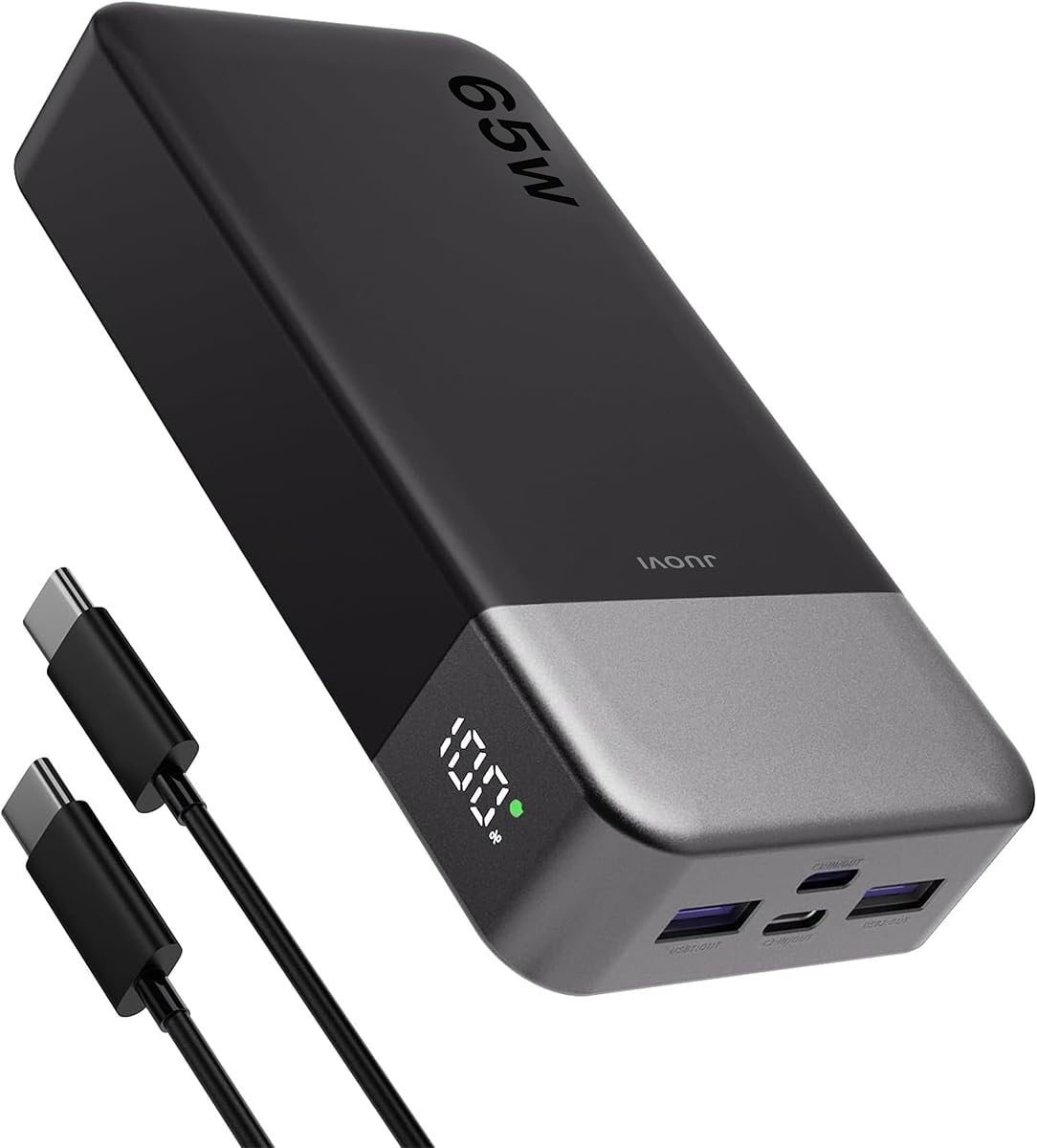
This 65W, 20000mAh power bank with PD and QC fast charging represents a specific tier for users who need to charge demanding devices like laptops and the Steam Deck. Unlike smaller banks, its primary value is delivering enough sustained wattage (65W) to power or charge a modern laptop while on the go, a feature that dictates its size, weight, and price. The inclusion of four total ports, including a high-power USB-C PD port, makes it a multi-device hub for a mobile workstation.
Key Considerations Before Buying
- Verify your laptop's exact USB-C Power Delivery (PD) input requirements; while 65W covers many ultrabooks and MacBook Air models, some high-performance laptops require 90W or 100W.
- Understand the real-world capacity: 20000mAh at 3.7V translates to roughly 74Wh, which, after efficiency loss, may only fully charge a 13-inch MacBook Pro (58Wh battery) once with some leftover for a phone.
- Consider the physical trade-off: A bank capable of 65W output and 20000mAh capacity will be substantial (likely over 1 lb). Its portability is for a backpack, not a pocket.
What Our Analysts Recommend
For a bank in this class, prioritize clear specifications on the supported PD protocols (e.g., PD 3.0) and the exact output profile of the main USB-C port (e.g., 5V/3A, 9V/3A, 12V/3A, 15V/3A, 20V/3.25A). Quality is indicated by robust thermal management noted in reviews, minimal self-discharge when idle, and the use of high-grade Li-Polymer cells for better energy density and safety.
Portable Power Banks Market Context
Market Overview
The market for high-wattage (45W+) portable power banks is rapidly expanding, driven by the proliferation of USB-C charged laptops, gaming handhelds like the Steam Deck and ROG Ally, and professional cameras. This segment competes on sustained high-wattage output stability, port selection, and overall energy density, not just maximum capacity.
Common Issues
Common pitfalls include manufacturers overstating sustained wattage (a bank may peak at 65W but throttle quickly under load), using poor quality cells that degrade quickly losing capacity, and omitting essential safety features like over-current and temperature protection. Another frequent issue is slow recharging of the power bank itself, which for a 20000mAh unit can take 4-6 hours even with a compatible high-wattage wall charger.
Quality Indicators
Look for certifications from reputable testing labs (UL, CE, FCC), transparent listing of the cell manufacturer (e.g., LG, Samsung, Panasonic), and detailed real-user reviews that mention consistent performance over multiple charge cycles. A quality bank will maintain its rated output without overheating until nearly depleted.
Review Authenticity Insights
Grade B Interpretation
A 'Grade B' with an estimated 11% fake review rate suggests a generally trustworthy review corpus with a minor layer of potentially inauthentic praise. The adjusted rating of 4.60/5 (down from 4.89) is still exceptionally strong for this category, indicating that genuine customer satisfaction is high, but the raw average is slightly inflated.
Trust Recommendation
Focus on the detailed, mid-length reviews that mention specific device pairings (e.g., 'charged my Dell XPS 13 from 20% while using it' or 'powers my Steam Deck for an extra 3 hours'). Be slightly more skeptical of brief, hyperbolic 5-star reviews that lack these operational details, as they may constitute the estimated inauthentic portion.
Tips for Reading Reviews
For technical products like this, prioritize reviews that discuss real-world recharge counts (e.g., 'got 1.7 charges on my MacBook Air'), mention the recharging time of the power bank itself, or note performance over several months of use. These specifics are hallmarks of authentic, experienced users.
Expert Perspective
The analysis data paints a picture of a product that performs well against its core promises. The minimal downgrade from the raw to adjusted rating (4.89 to 4.60) and the 'B' authenticity grade indicate that the overwhelmingly positive sentiment is rooted in real user experiences. For a shopper whose primary need is reliable, laptop-capable portable power, this unit's verified performance and positive authentic feedback make it a compelling contender. The high wattage and multi-port design directly address the pain points of mobile professionals and power users.
Purchase Considerations
Your decision should hinge on whether your device ecosystem requires a full 65W of USB-C PD power. If you only need to fast-charge phones and tablets, a smaller, cheaper bank is sufficient. However, if you own a USB-C laptop, gaming handheld, or mirrorless camera, this bank's specific output profile becomes a justifiable investment. Weigh its physical size against your daily carry needs.
Comparing Alternatives
Shoppers should compare this model's specifications—particularly the 65W PD output profile and 20000mAh capacity—directly against similar offerings from brands like Anker, UGREEN, and INIU to assess value.


![LISEN CCC Certified [Metal Alloy] 20000mAh Power Bank for 40+ Hours of Extra Power, TSA Approved Airplane Travel Essentials, 35W Fast Charging for iPhone 17 16 15 Pro Max Samsung Galaxy S26 Ultra iPad](https://m.media-amazon.com/images/I/71kjjVSg5JL._AC_SY300_SX300_QL70_FMwebp_.jpg)


