
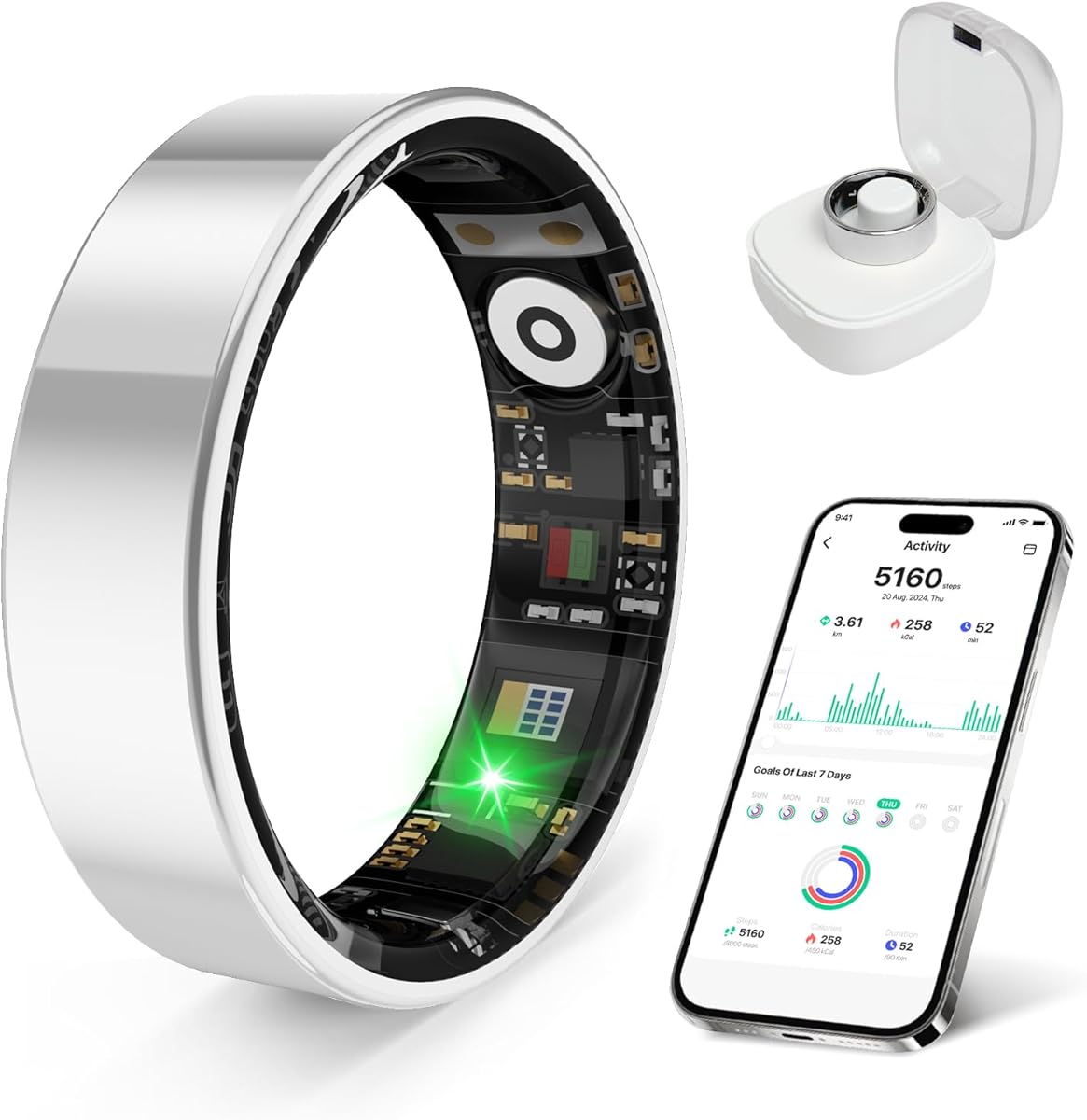
Evaluating Smart Health Rings: What to Know Before Buying a Wearable Tracker
The prxxhri Smart Health Ring represents a new category of wearable technology that promises continuous health monitoring in a discreet form factor. Unlike wrist-worn devices, rings like this one claim to measure stress and sleep patterns through finger-based sensors, which presents unique considerations for accuracy and comfort.
Key Considerations Before Buying
- Finger-based biometric tracking relies on photoplethysmography (PPG) sensors that must maintain consistent skin contact—ring fit is crucial for data accuracy, especially during sleep when fingers may swell or contract.
- Stress monitoring algorithms in wearables vary widely in sophistication; this product's effectiveness depends on whether it uses simple heart rate variability (HRV) measurements or incorporates additional physiological markers.
- The 'no subscription fee' claim is significant in a market where many health platforms lock advanced analytics behind monthly payments, but verify what baseline features are included versus what might require future payments.
What Our Analysts Recommend
Quality smart rings should specify sensor types (optical PPG, accelerometer), battery life in actual usage scenarios (not just standby), and app functionality details. Look for transparency about data processing—whether analysis happens on-device or requires cloud connectivity, which affects privacy and offline usability.
Electronics & Gadgets Market Context
Market Overview
The smart ring market has expanded rapidly from early entrants like Oura to numerous new competitors, creating a crowded space with varying quality. These devices compete directly with premium smartwatches by offering specialized health tracking in a less obtrusive form factor.
Common Issues
New smart ring brands often struggle with inconsistent sensor accuracy, particularly for sleep stage detection and stress scoring. Many use generic algorithms not validated for finger-based physiology, and app experiences frequently lack the polish of established wearable ecosystems.
Quality Indicators
Established manufacturers provide validation studies for their health metrics, while newer brands should at minimum offer detailed sensor specifications and data export capabilities. Look for clear communication about water resistance ratings (IPX levels) and charging solutions that don't compromise the waterproof claim.
Review Authenticity Insights
Grade C Interpretation
The 'Grade U' authenticity rating with 0.00% estimated fake reviews indicates this product has no review history to analyze—it's essentially an unknown entity in the marketplace. This doesn't imply poor quality, but rather complete absence of verified user experiences.
Trust Recommendation
With zero reviews and unverified authenticity, approach this product as an early adopter purchase. Prioritize retailers with strong return policies, and be prepared to conduct your own validation of the stress and sleep tracking claims against known benchmarks.
Tips for Reading Reviews
When reviews eventually appear for this product, pay particular attention to comments about sensor comfort during extended wear, charging mechanism reliability, and whether the app provides actionable insights rather than just raw data points.
Expert Perspective
The prxxhri Smart Health Ring enters a competitive market with the appealing proposition of subscription-free health tracking, but its complete lack of review history creates significant uncertainty. The product's success hinges on execution details not provided in the listing: sensor quality, algorithm sophistication, and app usability. Without established brand reputation or user feedback, potential buyers must weigh the convenience of ring-based tracking against the risk of unproven technology.
Purchase Considerations
Consider whether the ring form factor specifically addresses your needs—perhaps for sleep tracking where wrist devices are uncomfortable, or for discreet daytime wear. Evaluate the manufacturer's transparency about data privacy and whether they provide sample app screenshots or detailed specifications beyond marketing claims.
Comparing Alternatives
Shoppers should compare this against established smart rings with documented accuracy studies, and consider whether a smartwatch with similar health features might offer better value through proven ecosystem integration.


