
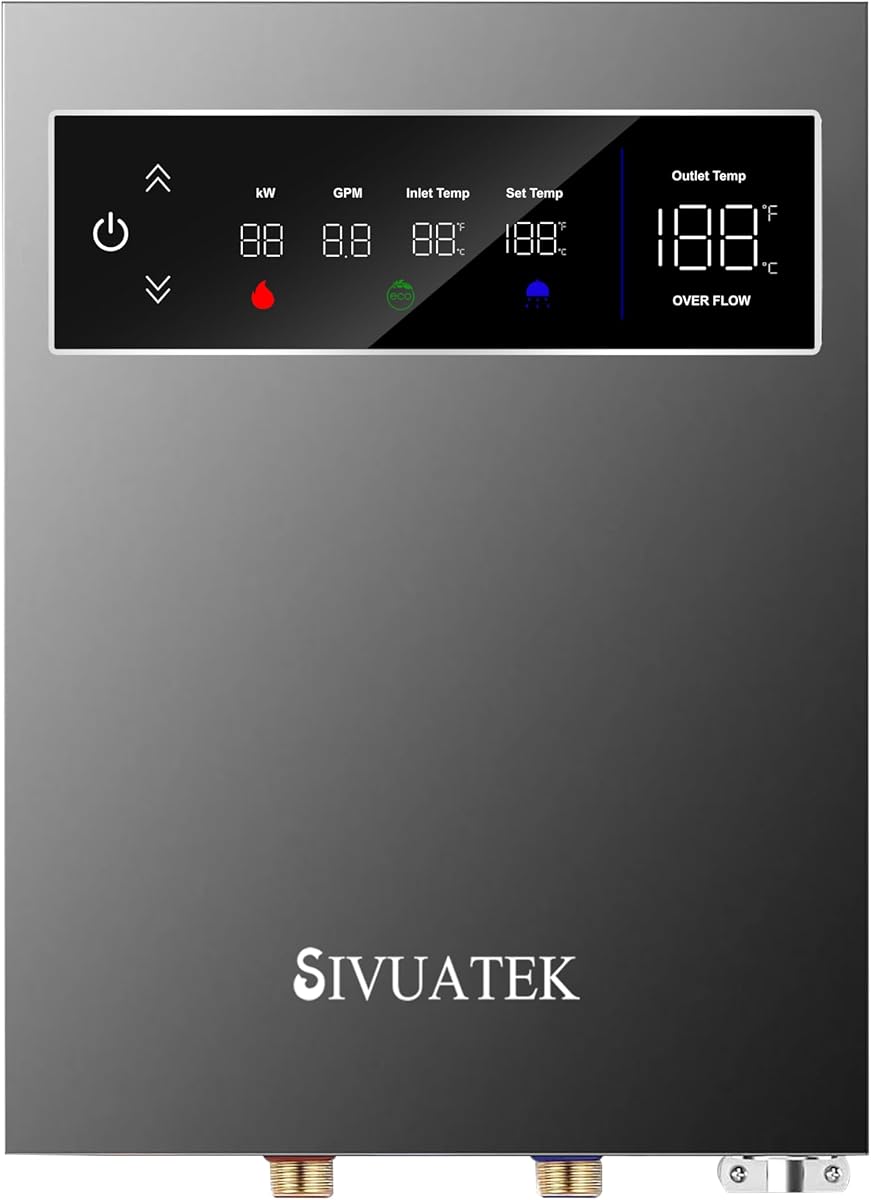
Choosing an 18kW Electric Tankless Heater: Power Requirements vs. Whole-House Performance
The SIVUATEK 18kW electric tankless heater represents a specific class of whole-house solutions requiring careful electrical planning. Unlike gas models, this 240V electric unit's performance hinges entirely on your home's electrical capacity and simultaneous hot water demands. The self-modulating power feature attempts to optimize efficiency by adjusting energy consumption based on flow rate.
Key Considerations Before Buying
- Electrical infrastructure is non-negotiable: This 18kW unit requires a dedicated 240V circuit with appropriate amperage (typically 75-80A) and proper gauge wiring, which may necessitate a costly panel upgrade if your service is older or near capacity.
- Flow rate and temperature rise determine real-world performance: At 18kW, expect a realistic temperature rise of approximately 45-50°F at 2.0-2.5 gallons per minute; this means incoming groundwater temperature critically impacts whether it can supply multiple fixtures simultaneously in winter.
- The LED display and self-modulating technology are practical features for monitoring operation and potentially reducing standby losses, but they don't compensate for insufficient electrical supply or extreme climate demands.
What Our Analysts Recommend
For electric tankless units, prioritize ETL certification (like this SIVUATEK model has) as a baseline safety standard, and scrutinize specifications for minimum and maximum flow activation rates. Genuine whole-house capability is less about maximum kW and more about consistent performance at your region's groundwater temperatures; look for detailed performance charts, not just peak output claims.
Water Heaters Market Context
Market Overview
The electric tankless water heater market is increasingly competitive, with 18kW models positioned as entry-level whole-house solutions that often compete with high-output point-of-use units. Unlike the gas tankless segment dominated by established brands, the electric segment sees more variability in build quality and support from newer brands like SIVUATEK.
Common Issues
Premature failure due to hard water scaling is a frequent concern with all tankless heaters, but electric elements are particularly vulnerable. Installation headaches, especially underestimating the electrical requirements for 18kW+ units, lead to the most negative reviews, followed by complaints about inadequate hot water during simultaneous use in colder climates.
Quality Indicators
Beyond certifications, look for copper heating chambers (superior corrosion resistance to stainless steel in many water conditions), robust internal component layouts visible in product images, and clear warranty terms that cover both parts and labor. Brands that provide detailed installation manuals and technical support contact information typically indicate better post-purchase support.
Review Authenticity Insights
Grade B Interpretation
A Grade B authenticity rating with a 10% estimated fake review rate for this SIVUATEK model suggests a generally trustworthy review corpus, but warrants cautious scrutiny of overly effusive 5-star reviews. The adjusted rating of 4.40/5 (down from 4.67/5) after filtering indicates that while most feedback is genuine, the raw average is slightly inflated.
Trust Recommendation
Focus on verified purchase reviews that mention specific installation details (wire gauge, breaker size, groundwater temperature) and long-term performance over several seasons. Be particularly skeptical of reviews that don't address the electrical upgrade process or that claim implausible performance for an 18kW unit in cold climates.
Tips for Reading Reviews
For tankless water heaters, prioritize reviews that discuss performance 3-6 months post-installation to assess scaling issues and real-world efficiency. Pay special attention to mid-range (3-4 star) reviews, which often provide the most balanced assessment of trade-offs between installation cost and hot water performance.
Expert Perspective
The SIVUATEK 18kW model's strong adjusted rating (4.40/5) from verified purchasers suggests it delivers on core promises for buyers with adequate electrical infrastructure. The self-modulating feature is a legitimate efficiency advantage over fixed-power models, potentially saving 10-15% on standby costs. However, the 'whole house' claim is climate-dependent; in regions with groundwater below 50°F, this unit is better suited for moderate simultaneous use rather than running multiple showers plus appliances.
Purchase Considerations
Before purchasing, obtain three critical data points: your home's available electrical capacity for a new 80A circuit, your coldest monthly groundwater temperature, and your maximum simultaneous hot water flow rate (add up fixture GPMs). If any of these factors are borderline, consider either a higher-output electric unit or reassessing if a gas tankless or hybrid heat pump model might be more suitable.
Comparing Alternatives
Shoppers should compare this 18kW model against similar units from brands like EcoSmart and Stiebel Eltron, paying particular attention to flow rate specifications at your specific temperature rise and warranty service networks.


