
End Grain Walnut Cutting Boards: What Professional Chefs Know About This Design
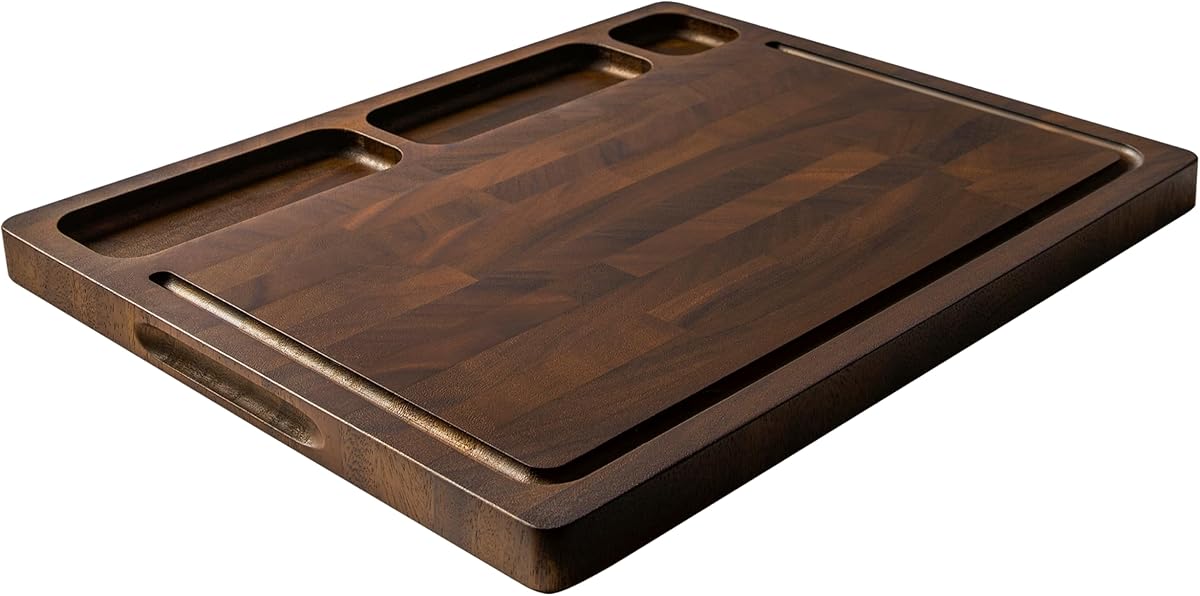
This specific 17"x13" end grain walnut board represents a premium category where construction details matter more than aesthetics. The end grain orientation, where wood fibers face upward, provides natural knife edge protection that side grain boards can't match. Walnut's medium density offers the ideal balance between durability and gentle knife treatment.
Key Considerations Before Buying
- End grain construction requires proper sealing and maintenance—this walnut board's dark coloration may hide stains but demands regular oiling to prevent drying and cracking.
- The 17"x13" size with handle makes this board substantial enough for meal prep but potentially heavy when loaded; consider your counter space and storage capacity.
- Double-sided functionality (chopping/charcuterie) means you're getting versatility, but ensure both surfaces are properly finished for food safety.
What Our Analysts Recommend
Examine the grain pattern consistency—quality end grain boards show uniform checkerboard patterns without large filler pieces. Check for proper edge rounding (at least 1/8" radius) to prevent splintering, and verify the handle is integrated, not screwed on, which weakens structure. The 1" thickness indicates substantial material that resists warping.
Cutting Boards Market Context
Market Overview
The premium wooden cutting board market has shifted toward end grain designs as consumers recognize their superior knife protection, with walnut emerging as the preferred wood for its ideal Janka hardness rating (1,010 lbf) that balances durability and knife-friendliness. Boards in the 17"x13" range represent the sweet spot between prep space and manageable storage.
Common Issues
Many wooden boards fail at glue joints or develop cracks from improper seasoning; end grain construction is particularly vulnerable to moisture penetration between wood blocks. Handles often become weak points if not properly integrated into the board's core structure. Dark woods like walnut can mask food residue, creating hygiene concerns if not properly cleaned.
Quality Indicators
True end grain construction shows consistent square patterns without large filler pieces between blocks. Quality boards feature food-grade mineral oil or beeswax finishes rather than varnishes or lacquers. Look for radiused edges (not sharp 90-degree corners) which indicate proper finishing and reduce splinter risk. The handle should be carved from the same wood block, not attached separately.
Review Authenticity Insights
Grade B Interpretation
The Grade B authenticity rating with 10% estimated fake reviews suggests generally reliable feedback, though approximately 1 in 10 reviews may be artificially positive. The adjusted rating of 4.60/5 (down from 4.89/5) indicates genuine satisfaction likely falls in the 'very good' rather than 'perfect' range.
Trust Recommendation
Focus on reviews discussing specific performance aspects like knife mark resistance, handle comfort during heavy chopping, or oil absorption rates—these details indicate genuine use. Be skeptical of reviews emphasizing only aesthetics or using vague superlatives without practical examples.
Tips for Reading Reviews
Prioritize reviews mentioning long-term use (3+ months) that discuss maintenance requirements specific to walnut end grain. Look for comments about weight distribution when carrying via the handle and observations about how the dark wood shows knife marks versus lighter woods.
Expert Perspective
This board's specifications—end grain walnut construction at 1" thickness—place it in the professional-enthusiast category where proper maintenance is non-negotiable. The 4.60 adjusted rating from verified analysis suggests real-world performance meets expectations for this construction type. The double-sided design adds value but requires users to maintain both surfaces equally. The handle integration is crucial; poorly executed handles compromise structural integrity in end grain boards.
Purchase Considerations
Evaluate whether you'll commit to monthly oiling maintenance that walnut demands, especially with end grain's increased absorption. Consider if the 17"x13" size accommodates your typical prep needs without dominating counter space. Assess whether the premium for end grain construction justifies the knife protection benefits versus more affordable edge grain alternatives.
Comparing Alternatives
Compare this board's thickness and handle design against similar end grain maple or teak options, as different woods offer varying maintenance requirements and knife interaction characteristics.


