
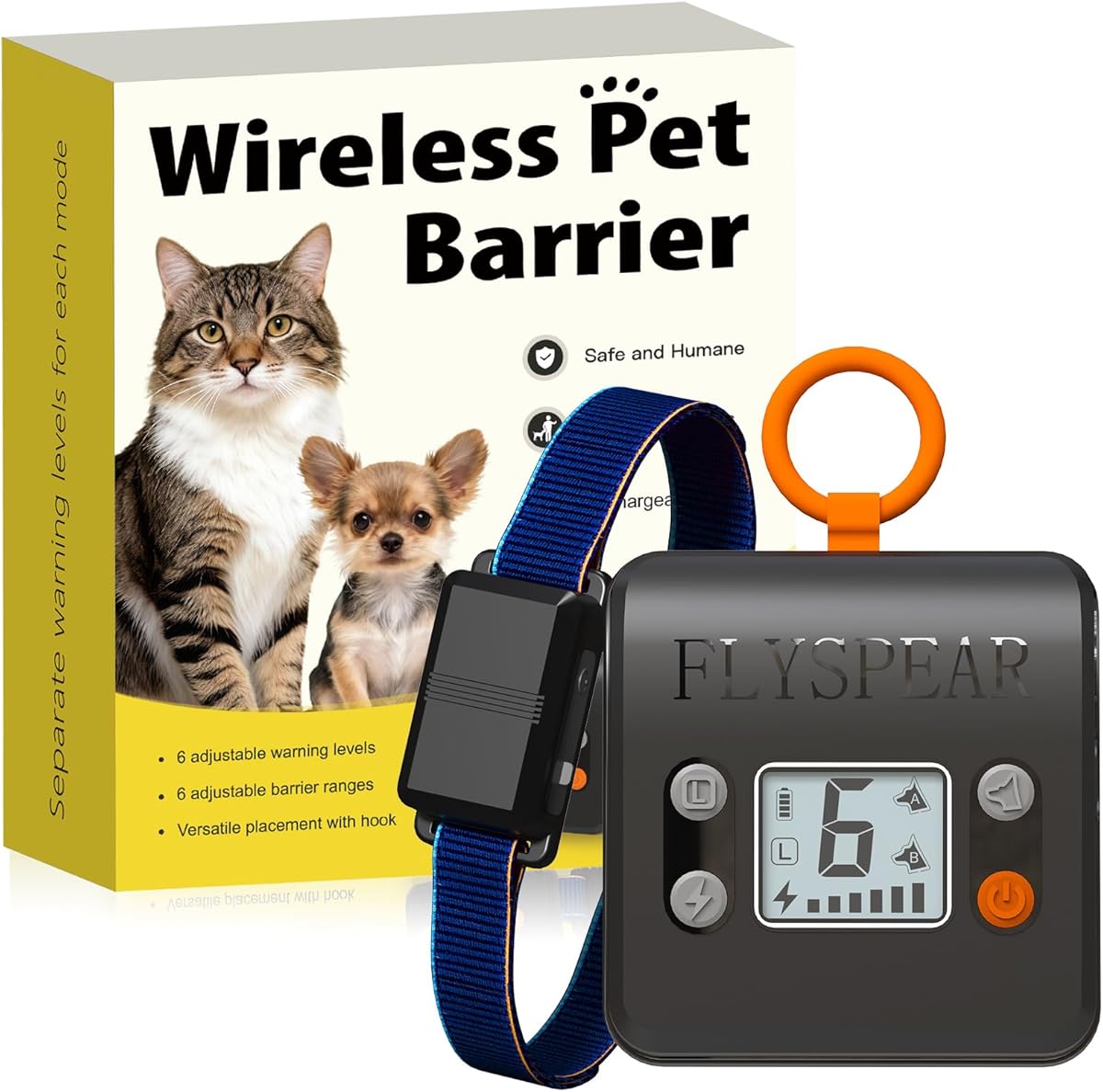
Choosing a Wireless Indoor Barrier: Key Factors for Cat and Small Dog Containment
The FLYSPEAR Wireless Cat Barrier represents a specific type of indoor containment system that uses adjustable static correction rather than physical barriers. Buyers should understand this device creates an invisible circular boundary up to 7 feet in radius, with six intensity levels to deter pets from crossing. Unlike outdoor wireless fences, this indoor version is designed for temporary, portable use in specific rooms or doorways.
Key Considerations Before Buying
- The 6 adjustable range settings (up to 7 ft radius) determine how large your containment circle will be—measure your intended space to ensure the maximum range meets your needs.
- Six static intensity levels allow customization for different pet temperaments; sensitive animals may respond to level 1-2, while stubborn pets might require 4-5, but never use the highest setting initially.
- The rechargeable battery offers convenience but requires monitoring; unlike plug-in models, you'll need to establish a charging routine to prevent unexpected power loss during training.
What Our Analysts Recommend
Quality indicators for wireless indoor barriers include clear boundary consistency (no 'dead zones' within the circle), adjustable static that delivers consistent correction without spikes, and a receiver collar that fits securely but comfortably on small necks. The included hook for wall mounting should be sturdy enough to prevent the transmitter from being knocked over, which would disrupt the circular boundary.
Radio & Wireless Fences Market Context
Market Overview
The indoor wireless pet barrier market has expanded significantly, with most products now offering rechargeable systems instead of disposable batteries. Current models typically feature range adjustments and multiple static levels, competing primarily on reliability of signal transmission and comfort of receiver collars.
Common Issues
Common problems include inconsistent boundary signals due to household interference (Wi-Fi routers, microwaves), receiver collars that are too bulky for cats or very small dogs, and batteries that degrade quickly after repeated charging cycles. Some pets learn to 'run through' the correction if the static isn't properly calibrated.
Quality Indicators
Superior products maintain consistent signal strength throughout the entire circular zone, offer truly gradual intensity increments (not jumps between levels), and include receiver collars with contact points that maintain skin contact without excessive pressure. Look for systems that clearly indicate low battery status before complete failure.
Review Authenticity Insights
Grade B Interpretation
A Grade B authenticity rating with 15% estimated fake reviews suggests most feedback is genuine but requires careful reading. The adjusted rating of 3.90/5 (down from 4.22/5) indicates some positive reviews may be inflated, making the true performance likely closer to the lower score.
Trust Recommendation
Focus on reviews that mention specific training timelines, how their particular pet (cat vs. small dog) responded, and details about battery life per charge. Verified purchase status adds credibility, but still look for reviews discussing both setup challenges and long-term results beyond the first week.
Tips for Reading Reviews
Prioritize reviews that describe the adjustment process—how many intensity levels they tried before finding the right one. Be skeptical of reviews claiming 'immediate perfect results' without mentioning any training period, as most wireless barriers require consistent conditioning over days or weeks.
Expert Perspective
The FLYSPEAR system's 3.90 adjusted rating reflects a product that works adequately for many but has notable limitations. The six range and intensity settings provide necessary customization, but the 7-foot maximum radius restricts it to smaller containment areas. The rechargeable feature is convenient but requires diligence—several authentic reviews mention forgetting to charge the unit. This product appears most effective for cats and very small dogs in controlled indoor environments where traditional gates aren't practical.
Purchase Considerations
Consider your pet's temperament—anxious animals may respond better to lower static levels, while determined pets might test boundaries repeatedly. Also evaluate your home layout: the circular containment zone works best in open spaces without large metal objects that can interfere with signal transmission. The included hook suggests wall mounting is recommended for consistent performance.
Comparing Alternatives
Shoppers should compare this model's 7-foot maximum range against competitors offering 10-12 foot radii, and examine collar receiver sizes if containing very petite pets.


