
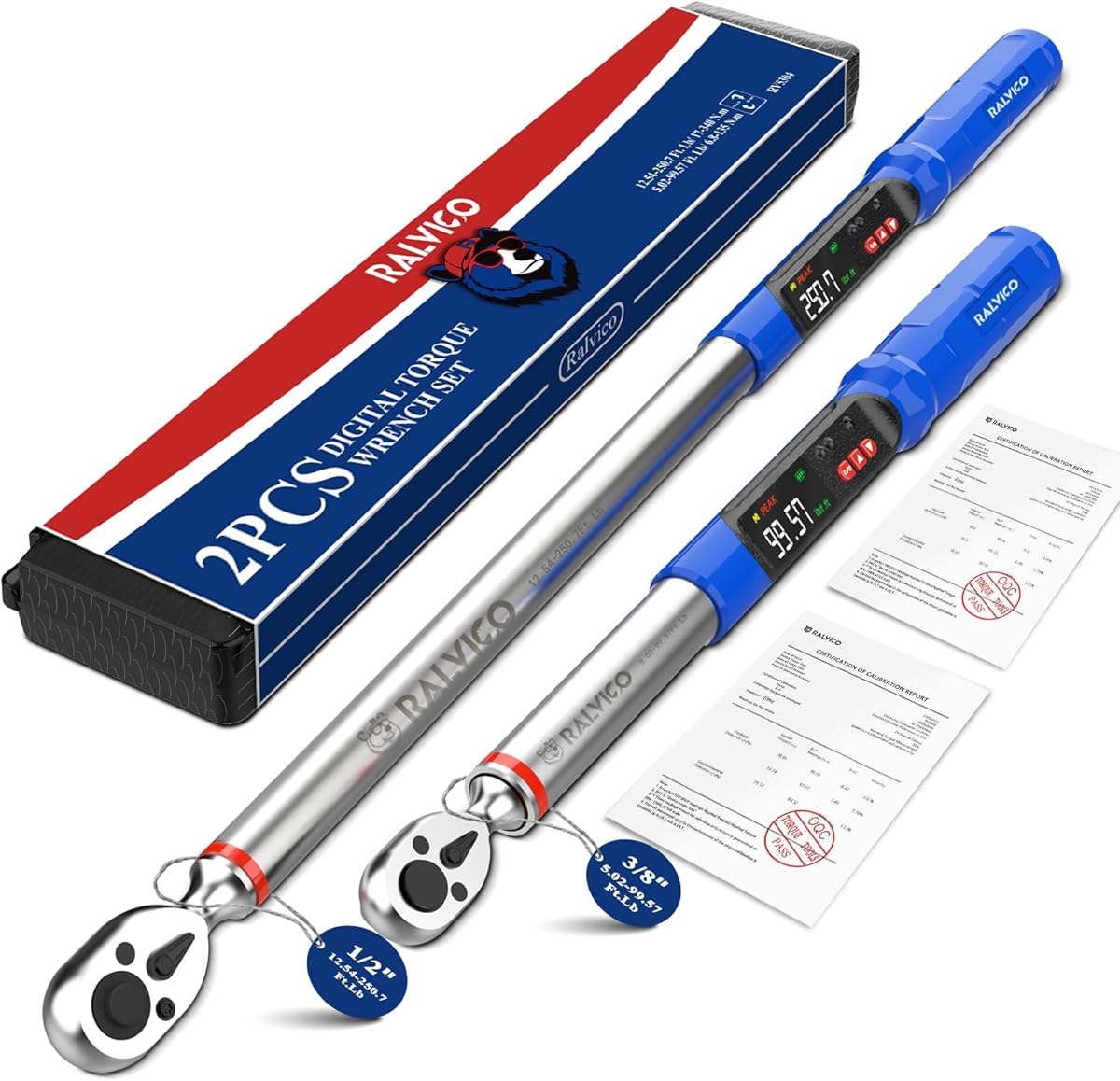
Choosing a Dual-Range Digital Torque Wrench for Precision Automotive and Bike Work
This digital torque wrench set offers two distinct measurement ranges (5.02-99.57 ft-lb and 12.54-250.7 ft-lb) with ±2% accuracy, making it versatile for both delicate bike components and heavier automotive applications. The buzzer and LED flash feedback system provides immediate confirmation when target torque is reached, which is particularly valuable in noisy workshops or low-light conditions.
Key Considerations Before Buying
- The dual-range capability means you can handle everything from delicate motorcycle engine components requiring 6.8 N.m precision to automotive lug nuts needing 340 N.m torque without switching tools.
- ±2% accuracy is industry-standard for professional-grade digital torque wrenches, but maintaining calibration is crucial—look for products with accessible recalibration services or clear calibration instructions.
- The 3/8" and 1/2" drive combination covers most common socket sizes, but verify your existing socket collection compatibility before purchasing to avoid additional adapter expenses.
What Our Analysts Recommend
Quality digital torque wrenches should have clear calibration documentation and a robust construction that withstands workshop drops. Check for IP ratings indicating dust and moisture resistance, as this model's workshop use exposes it to contaminants. The display should remain readable in direct sunlight, a common issue with cheaper LCD screens.
Torque Wrenches Market Context
Market Overview
The digital torque wrench market has expanded significantly with affordable options now competing with traditional mechanical click-type wrenches, particularly appealing to DIY enthusiasts who value precise digital readouts over auditory feedback. Products in the $50-150 range, like this model, increasingly offer features previously found only in professional $300+ tools.
Common Issues
Budget digital torque wrenches often suffer from battery compartment failures, display visibility problems in bright light, and calibration drift after minimal use. The dual-range mechanism on some models creates weak points at the range selector, potentially affecting long-term accuracy.
Quality Indicators
Look for torque wrenches with clearly stated calibration procedures and access to calibration services—quality manufacturers provide this information prominently. Higher-grade models use hardened steel drive gears rather than plated components, and feature over-torque protection to prevent damage when maximum ratings are exceeded.
Review Authenticity Insights
Grade B Interpretation
A Grade B authenticity rating with 10% estimated fake reviews indicates generally trustworthy feedback with minor manipulation concerns. For this torque wrench, this suggests most reviews reflect genuine user experiences, though you should be slightly skeptical of extreme positive claims about durability beyond 6-12 months of regular use.
Trust Recommendation
Focus on reviews discussing specific applications like motorcycle valve adjustments or automotive wheel installations rather than generic praise. Given the 4.00 adjusted rating (down from 4.22), pay particular attention to critical reviews mentioning calibration issues or display problems—these likely represent authentic concerns.
Tips for Reading Reviews
Prioritize reviews that mention using the wrench for specific torque-sensitive tasks like cylinder head bolts or carbon fiber bike components. Reviews discussing the buzzer volume in noisy environments or LED visibility in daylight provide more actionable insights than general satisfaction comments.
Expert Perspective
This digital torque wrench presents strong value for enthusiasts working across multiple vehicle types, thanks to its dual-range design covering both delicate and heavy-duty applications. The ±2% accuracy meets industry standards for most non-certified applications, though professional mechanics requiring certified tools would need documentation this model likely lacks. The 4.00 adjusted rating from verified authentic reviews suggests reliable performance at its price point, with the dual-drive system being a particular advantage over single-drive competitors.
Purchase Considerations
Consider whether you truly need both torque ranges—if you primarily work on cars, a single higher-range wrench might offer better durability. The buzzer/LED system adds value for shared workshops but may be unnecessary for solo mechanics. Budget for potential calibration costs every 12-18 months with regular use to maintain accuracy.
Comparing Alternatives
Compare this model's specific range divisions against competitors—some offer more gradual transitions between ranges, which matters for applications requiring mid-range torque values.


