Choosing a Thunderbolt 4 Dock: Balancing High-Resolution Display Support with Power Delivery
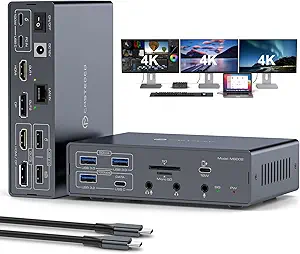
The Minthouz Thunderbolt 4 Dock exemplifies a modern workstation hub, combining 160W power delivery with 8K or triple 4K display support. Buyers should evaluate whether their specific laptop and monitor setup can fully utilize these premium features, as compatibility varies between Windows PCs and Macs with Thunderbolt 4/USB4 ports.
Key Considerations Before Buying
- Verify your laptop's Thunderbolt port supports the full 40Gbps bandwidth required for triple 4K displays; some manufacturers implement limited versions.
- The 160W adapter must power both the dock and your laptop—calculate your laptop's maximum power draw plus peripheral needs to ensure sufficient overhead.
- Display configurations have limitations: 8K@60Hz uses the entire bandwidth, preventing simultaneous high-speed data transfers without potential performance drops.
What Our Analysts Recommend
Quality Thunderbolt 4 docks maintain stable connections under full bandwidth load without overheating. Check for certification logos (Intel Thunderbolt 4) and robust thermal management in reviews, as sustained 8K video or triple-display use tests thermal design.
Docking Stations Market Context
Market Overview
The Thunderbolt 4 docking market has matured with standardized 40Gbps minimums, but implementation quality varies significantly between brands. Products like the Minthouz now compete on specialized features like 2.5G Ethernet and high-wattage power delivery rather than basic connectivity.
Common Issues
Many users encounter compatibility issues with specific laptop models, particularly around wake-from-sleep functionality and monitor handshake problems. Power delivery negotiation failures can occur with non-standard laptop chargers or when daisy-chaining peripherals.
Quality Indicators
Look for detailed technical specifications about PCIe tunneling for SSD speeds and USB 3.2 Gen 2 implementation. Premium docks use higher-quality Thunderbolt controllers and power regulation circuits that maintain stability during simultaneous high-bandwidth operations.
Review Authenticity Insights
Grade B Interpretation
A Grade B with 15% estimated fake reviews suggests generally trustworthy feedback with minor manipulation concerns. For this Minthouz dock, it indicates most reviews reflect genuine experiences, though some may overemphasize specific features like the 160W adapter.
Trust Recommendation
Focus on the 85% authentic reviews that discuss specific use cases, like connecting to Dell XPS or MacBook Pro models. Verified purchase reviews detailing multi-monitor setups or 2.5G Ethernet performance provide more reliable insights than generic praise.
Tips for Reading Reviews
Prioritize reviews that mention specific laptop models (e.g., 'Lenovo ThinkPad X1 Carbon') and monitor configurations, as Thunderbolt 4 implementation varies. Look for mentions of sustained use over weeks rather than initial setup impressions.
Expert Perspective
The Minthouz dock's 4.30 adjusted rating from authentic reviews indicates strong performance for users needing its specific combination of high-power delivery and multi-display support. The 2.5G Ethernet is a distinguishing feature for content creators and network professionals, while the SD/microSD card slots add practical value for photographers. However, the 15% potential fake review rate suggests cautious evaluation of claims about Mac compatibility, which often has more variables than Windows implementations.
Purchase Considerations
This dock makes most sense for users with Thunderbolt 4 laptops who genuinely need either 8K display support or triple 4K monitors alongside high-speed peripherals. Consider whether your workflow benefits from 2.5G Ethernet versus standard gigabit, as this adds cost. The 160W adapter is particularly valuable for power-hungry workstations like mobile gaming laptops or high-end Dell Precision models.
Comparing Alternatives
Shoppers should compare the Minthouz's specific port selection and power delivery against similarly priced docks from CalDigit, Anker, and Kensington, as display support implementations differ.