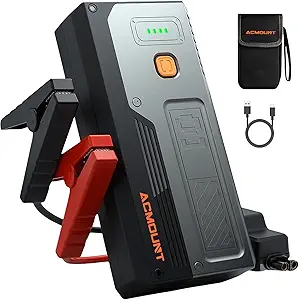
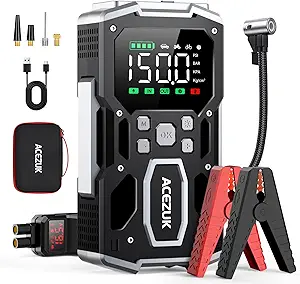
What to Know Before Buying a Jump Starter with Air Compressor
A combo jump starter and tire inflator like this 8000A, 180PSI unit promises to replace two separate emergency tools, but the specs can be misleading. Buyers should understand how peak amps, inflation speed, and battery chemistry affect real-world performance before committing.
Key Considerations Before Buying
- Peak amp ratings like 8000A are marketing figures; what matters is whether the unit can deliver enough cranking current for your engine size, especially the 12L diesel claim, which demands substantially more power than a typical gas four-cylinder.
- The 180PSI compressor rating tells you the maximum pressure, not how quickly it inflates; a large truck tire or fully deflated SUV tire can take several minutes, and the compressor may need cool-down periods between uses.
- Battery capacity and self-discharge rate determine how long the unit holds a charge in your trunk; lithium units typically retain charge longer than lead-acid, but extreme heat and cold still degrade any jump starter over time.
What Our Analysts Recommend
Check for a clear stated engine displacement limit (gas and diesel) rather than a vague 'all gas' claim, and look for a compressor with an auto-stop set pressure to prevent overinflation. Build quality matters too: heavy-gauge jumper cables, a sturdy clamp design, and a housing that won't crack when tossed in a trunk are signs of a unit built to last.
Jump Starters Market Context
Market Overview
The jump starter market has exploded with multi-function units that combine battery boosting, tire inflation, USB power, and LED lighting, often at prices that undercut traditional brands. This convergence is convenient but means shoppers are often comparing inflated peak-amp numbers and compressor specs that aren't standardized across brands.
Common Issues
Frequent complaints in this category include units that arrive with low charge, compressors that overheat during a single tire inflation, and jump starters that fail after a few months of storage. Another common problem is misleading capacity claims: a unit rated for 12L diesel may struggle with a cold, large-displacement engine in practice.
Quality Indicators
Reputable units typically specify both peak and cranking amps, list a realistic operating temperature range, and include a compressor with a thermal protection cutoff. A clear warranty (12 months or more) and replaceable fuse or cable design also signal a manufacturer that expects the product to be used, not just sold.
Review Authenticity Insights
Grade B Interpretation
A Grade B authenticity rating with an estimated 15% fake reviews means most reviews are genuine, but a meaningful minority may be incentivized or copied. The adjusted rating of 3.50 versus the displayed 3.78 suggests that removing suspicious reviews lowers the score, so the product's true customer satisfaction is likely closer to average than the headline rating implies.
Trust Recommendation
Focus on reviews that describe specific use cases, such as jump-starting a particular vehicle or inflating a specific tire size, and be skeptical of short, effusive five-star reviews posted in clusters. Look for reviewers who mention both pros and cons; those tend to be more reliable indicators of real performance.
Tips for Reading Reviews
When reading reviews for this jump starter, pay attention to mentions of the compressor's duty cycle and the unit's ability to hold a charge over weeks or months. Also note whether negative reviews cite a failure after the return window, which can reveal durability issues that don't show up in initial testing.
Expert Perspective
This jump starter with air compressor offers a lot of functionality for the price, but the 8000A peak rating and 12L diesel claim deserve scrutiny. With an adjusted rating of 3.50 from 358 reviews, the product appears to satisfy many buyers for light-duty gas engines and occasional tire inflation, while a notable share report limitations or failures. The 15% estimated fake review rate means you should weigh the adjusted score more heavily than the displayed 3.78.
Purchase Considerations
Before buying, confirm that your vehicle's engine size falls comfortably within the unit's real-world capability, and consider whether you need a compressor that can handle multiple tires without overheating. If you drive a large diesel truck or frequently tow, a dedicated jump box and separate inflator may be more reliable than a combo unit at this price point.
Comparing Alternatives
Shoppers should compare this model with other combo jump starters that publish cranking amps and compressor duty cycles, as well as with separate jump packs and tire inflators that may offer better performance for specialized needs.