
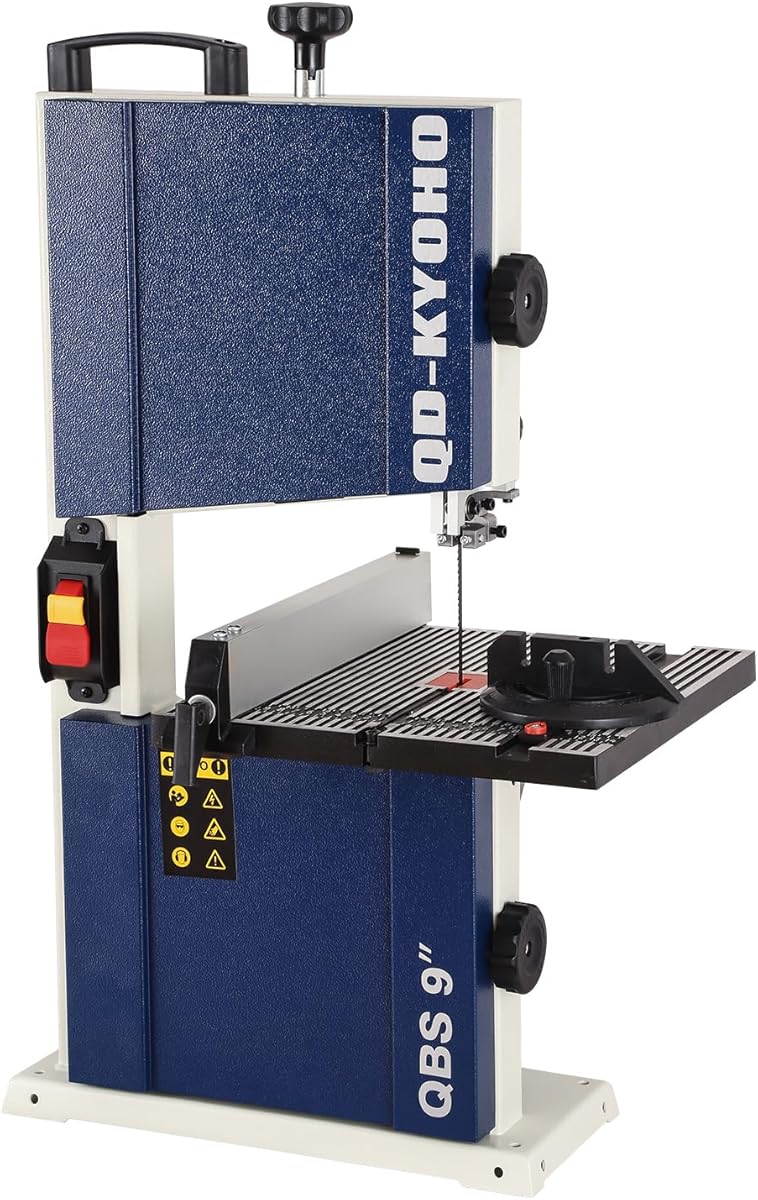
Choosing a 9-inch benchtop bandsaw: balancing portability with woodworking precision
This 9-inch benchtop bandsaw offers a specific blend of portability and workshop capability with its 2526 FPM blade speed and 1/3 HP motor. Buyers should understand that this class of saw is designed for lighter-duty woodworking, detailed cuts, and smaller stock, not for heavy resawing or production work. The cast-aluminum worktable with scale and included miter gauge are key features for precision.
Key Considerations Before Buying
- Motor Power vs. Application: The 1/3 HP (output) motor is adequate for cutting thinner hardwoods and softwoods but may struggle with dense hardwoods or cuts deeper than its 4-5 inch typical capacity; assess your primary material thickness.
- Table and Fence System: The cast-aluminum table provides a stable surface, but its size limits workpiece support for larger projects; check if the scale and miter gauge are sufficiently precise for your required angle cuts.
- Portability Trade-offs: The 'portable' and 'benchtop' design means lighter construction; ensure the steel frame and overall weight (typically 30-40 lbs for this class) provide enough vibration dampening for your desired cut quality.
What Our Analysts Recommend
For a saw in this category, examine the rigidity of the frame where the upper and lower wheels are mounted, as flex here causes blade tracking issues. Quality is also indicated by a smooth, precise blade tensioning mechanism and a table trunnion that locks securely without shifting. The blade guide system—often block or bearing style—should be adjustable and robust.
Band Saws Market Context
Market Overview
The 9-inch benchtop bandsaw market is crowded with value-oriented models targeting hobbyists and small workshops, where the WEN 9-inch model is a notable competitor. These saws prioritize footprint and price over raw power, creating a segment distinct from larger 10-inch or 14-inch stationary models.
Common Issues
Common problems include inadequate motor torque stalling in thicker stock, difficulty achieving and maintaining perfect blade tracking, and miter gauges or fences that lack precision, leading to inaccurate cuts. Vibration can also be an issue if the frame isn't sufficiently rigid.
Quality Indicators
Look for a saw with a solid, non-flexing door on the blade housing, a table that remains square to the blade after tilting, and a blade guide assembly that uses sealed bearings rather than just ceramic blocks. A clear, well-marked tension scale and easy-access dust ports are additional signs of thoughtful design.
Review Authenticity Insights
Grade B Interpretation
A 'B' grade with an 11% estimated fake review rate suggests the review corpus is largely reliable but requires careful reading. The high adjusted rating of 4.5/5 is a strong signal, indicating that even after accounting for potential manipulation, genuine customer satisfaction remains high.
Trust Recommendation
Focus on the verified purchase reviews that detail specific projects (like cutting curves in 2x4s or making small crafts), as these provide the most actionable data. Be slightly more skeptical of overly vague 5-star reviews that lack project context, as they may constitute the estimated 11%.
Tips for Reading Reviews
For tools, prioritize reviews that discuss setup (e.g., 'tracking was tricky to adjust'), long-term performance over months, and cuts on specific materials like '3/4 inch oak' or 'poplar.' Reviews mentioning the cast-aluminum table's smoothness or the miter gauge's fit are particularly valuable for this model.
Expert Perspective
This bandsaw presents a compelling value proposition for its niche. The 4.5 adjusted rating from verified buyers indicates it reliably meets expectations for light-to-medium duty woodworking. The 2526 FPM blade speed is appropriate for general wood cutting, and the 2.5-amp motor aligns with typical 1/3 HP output for this class. The inclusion of a scale and miter gauge addresses common omissions in budget saws. Its primary limitation is inherent to its size: it's a precision tool for smaller work, not a powerhouse.
Purchase Considerations
Weigh the saw's portability and benchtop footprint against your need for cutting capacity and power. If your projects involve frequent resawing of 6-inch hardwood or cutting thick metal, this is not the right tool. However, for detailed scroll work, cutting small stock, model building, or as a dedicated second saw for curves, it is well-suited.
Comparing Alternatives
Shoppers should compare this model's blade speed, table size, and guide system directly against competitors like the WEN 9-inch or Skil 9-inch bandsaws to assess value.


