
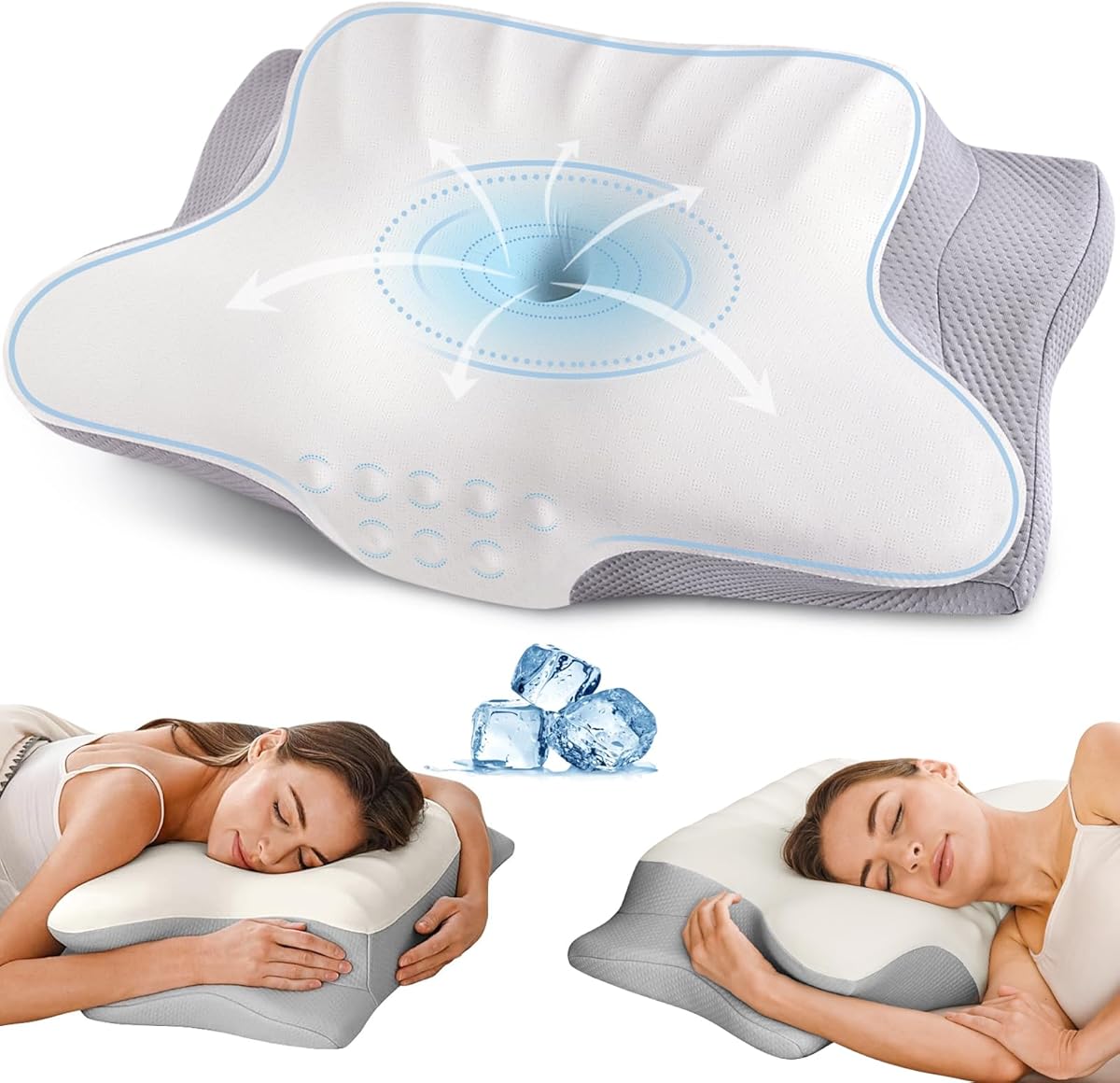
Choosing a Cervical Pillow: How This Contour Memory Foam Design Addresses Pain Relief
This specific pillow combines an orthopedic contour shape with a cooling pillowcase, targeting both neck alignment and temperature regulation. Buyers should understand that its dual-height design aims to accommodate side and back sleepers, but the firmness of the memory foam is a critical factor for pain relief. The advertised versatility for stomach sleepers is unusual in this category and warrants close examination.
Key Considerations Before Buying
- Evaluate the depth of the neck cradle contour; a too-shallow curve won't provide support, while one that's too deep can create uncomfortable pressure points.
- Assess your primary sleep position: the pillow's dual-loft design suggests it's for side/back sleepers, but using it for stomach sleeping often requires a very low profile to avoid neck strain.
- Consider the cooling cover's material and maintenance; a removable, washable bamboo or Tencel blend is ideal for hygiene and sustained cooling effect.
What Our Analysts Recommend
High-quality cervical pillows feature a dense, slow-rebound memory foam that maintains its shape through the night. Look for precise contouring that matches the cervical spine's natural curve, not just a wavy shape. The cover should be breathable, non-slip, and have a smooth zipper to prevent irritation.
Neck & Cervical Pillows Market Context
Market Overview
The cervical pillow market is saturated with generic contour shapes, but differentiation comes from foam density, cover technology, and ergonomic research. Products like this one compete by adding features like cooling covers and claiming multi-position suitability. There's a growing consumer focus on therapeutic benefits beyond basic comfort.
Common Issues
Many contour pillows are too firm or have exaggerated curves that cause new pressure points. Another frequent complaint is that memory foam retains heat, making the advertised 'cooling' feature a key battleground. Pillows that claim to suit all sleeping positions often compromise on optimal support for each.
Quality Indicators
Superior products specify foam density (ideally 4.0 lbs/ft³ or higher for durability) and use phase-change materials or highly breathable fabrics in their covers. Authentic orthopedic design is evidenced by a graduated contour that supports the neck without lifting the head excessively.
Review Authenticity Insights
Grade B Interpretation
A 'B' grade with a 15% estimated fake review rate indicates generally reliable feedback, but suggests a moderate level of incentivized or biased reviews are present. The adjusted rating of 4.60/5, down from a perfect 5.00, is a more realistic performance indicator for this pillow.
Trust Recommendation
Prioritize reviews that detail specific pain conditions (e.g., 'herniated C5-C6') or mention a break-in period for the memory foam, as these are harder to fabricate. Be skeptical of reviews that only praise the cooling feature without discussing support or shape over multiple weeks.
Tips for Reading Reviews
For therapeutic pillows, seek out reviews from users with similar body types or specific ailments like cervical spondylosis. Pay close attention to comments about pillow height and firmness after several nights of use, as initial impressions can be misleading for adaptive foam.
Expert Perspective
The high adjusted rating (4.60) suggests this pillow delivers satisfactory results for most buyers seeking cervical pain relief. The combination of contour memory foam and a cooling case addresses two major consumer pain points: alignment and overheating. However, the claim of suitability for stomach sleepers is atypical for a contoured design and may not provide the flat, soft surface stomach sleepers typically need. The product's success likely hinges on whether the specific curvature matches an individual's cervical lordosis.
Purchase Considerations
Weigh the importance of the cooling feature against the core need for spinal support. If you are a dedicated stomach sleeper, this contoured design is a higher-risk choice. Consider your sensitivity to initial off-gassing from memory foam, which is common but temporary.
Comparing Alternatives
Shoppers should compare this pillow's contour depth and foam firmness to other orthopedic pillows, as a few millimeters of difference can significantly affect comfort.


