
Stop Wet Filament: How Activated Alumina Desiccants Keep 3D Prints Perfect
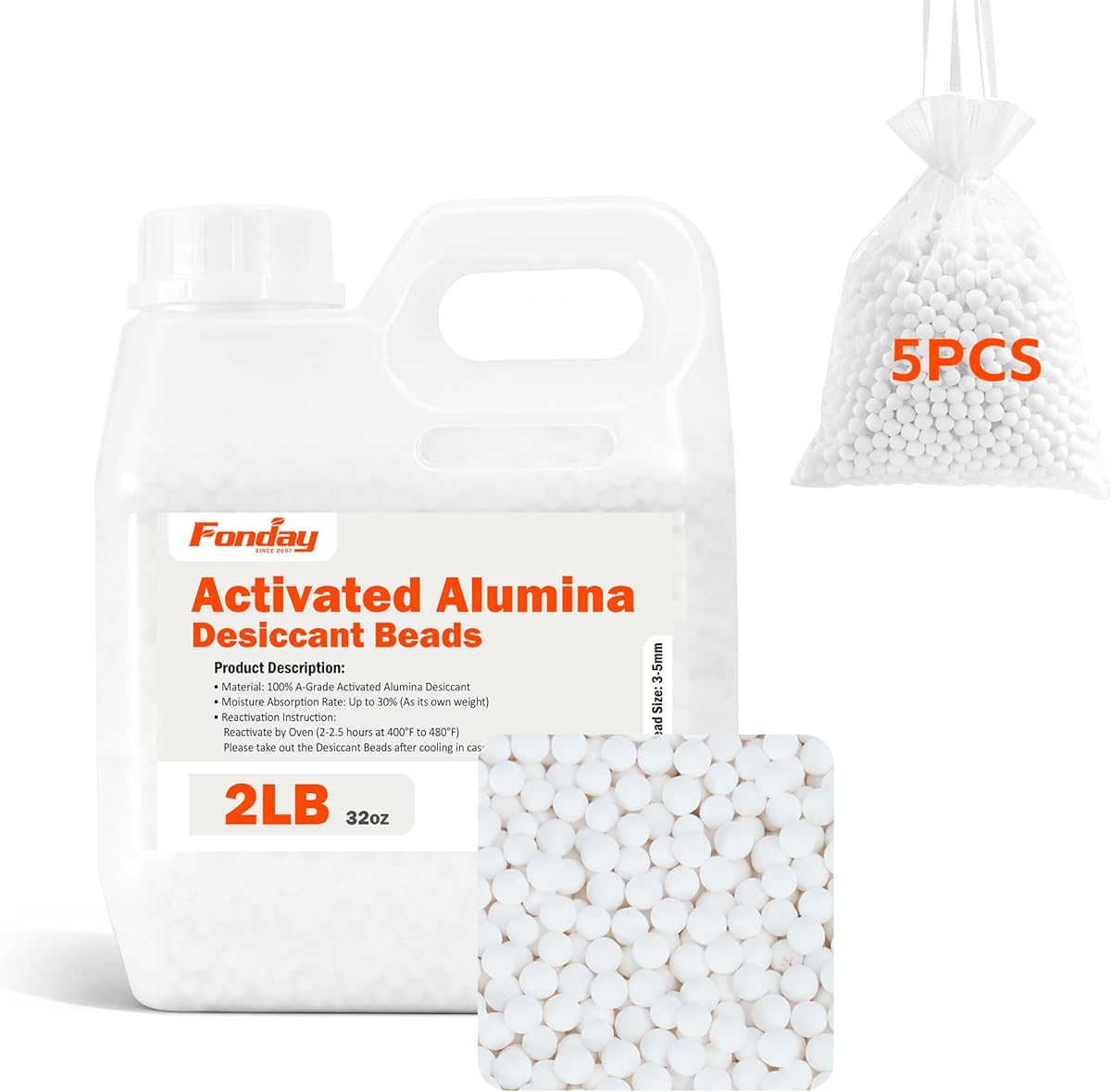
For 3D printing enthusiasts, moisture-absorbing desiccants like this 2LB Fonday activated alumina are essential for preventing filament degradation, which causes brittle prints, poor adhesion, and surface defects. Unlike silica gel, activated alumina offers higher moisture capacity and reusability, making it ideal for long-term storage of hygroscopic materials like nylon and PETG.
Key Considerations Before Buying
- Activated alumina vs. silica gel: Activated alumina absorbs up to 50% more moisture by weight than standard silica gel, but it requires higher regeneration temperatures (350-400°F) to recharge, so ensure your oven or dryer can reach these levels without damaging the desiccant.
- Rechargeable life cycle: This product can be regenerated hundreds of times, but over time, the pore structure degrades, reducing effectiveness. Track usage cycles—if prints start showing moisture signs after recharging, it's time to replace the batch.
- Container compatibility: The 2LB bulk format works best in sealed containers or dedicated filament dry boxes, not open air. For small spools, consider dividing the desiccant into smaller mesh bags to maximize surface area contact.
What Our Analysts Recommend
Quality activated alumina should have a high surface area (typically 200-400 m²/g) and low dust content, as fines can clog pores and reduce absorption. Look for products with clear regeneration instructions and a consistent bead size (e.g., 3-5 mm) to ensure even drying without channeling in storage containers.
Desiccants Market Context
Market Overview
The desiccant market for 3D printing has exploded as hobbyists and professionals seek reliable moisture control for advanced filaments. Activated alumina is gaining traction over silica gel due to its superior performance with nylon, polycarbonate, and other engineering-grade materials, though it remains less common in consumer-focused products.
Common Issues
A frequent problem with bulk desiccants is inconsistent moisture absorption across batches, often due to manufacturing variances in pore structure. Users also struggle with regeneration—overheating can destroy the alumina's crystalline structure, while underheating leaves residual moisture, reducing future capacity.
Quality Indicators
High-quality activated alumina will have a uniform bead size and a slight blue or pink tint from moisture indicators (though many are white). Reputable sellers provide independent lab test results for surface area and adsorption capacity, and packaging should be vacuum-sealed to prevent pre-saturation during storage.
Review Authenticity Insights
Grade B Interpretation
A Grade B rating with 10% estimated fake reviews is reassuring for this product—most feedback is genuine, but a small fraction may be incentivized or biased. The 4.89 average rating (adjusted to 4.60) reflects real user satisfaction, though the slight drop suggests some reviews may overstate benefits.
Trust Recommendation
Given the high authenticity signals (verified purchases, specific product knowledge), you can trust the positive consensus that this desiccant effectively prevents wet filament. However, cross-check claims about 'more powerful' performance by comparing moisture capacity specs with other activated alumina products.
Tips for Reading Reviews
Focus on reviews that mention specific filament types (e.g., nylon, TPU) and drying conditions (oven temperature, duration), as these provide actionable insights. Ignore short, overly enthusiastic reviews without technical details—they may be the 10% suspect ones.
Expert Perspective
This 2LB Fonday activated alumina desiccant is a strong choice for 3D printing enthusiasts needing bulk moisture control, backed by mostly genuine reviews and a high rating. Its rechargeable nature and superior absorption over silica gel make it cost-effective for frequent users, though the 4.60 adjusted rating suggests minor performance variability. The product's specific focus on filament drying aligns well with its category, but buyers should verify compatibility with their storage setup.
Purchase Considerations
Weigh the upfront cost against long-term savings from reduced filament waste—this 2LB pack can last years with proper regeneration. Also, consider if you need moisture indicators (most activated alumina lacks them) or if a pre-bagged desiccant might be more convenient for small-scale use.
Comparing Alternatives
Compare with silica gel bead options for lower regeneration temperatures or molecular sieve desiccants for extreme drying needs, though activated alumina often offers the best balance for 3D printing.
