
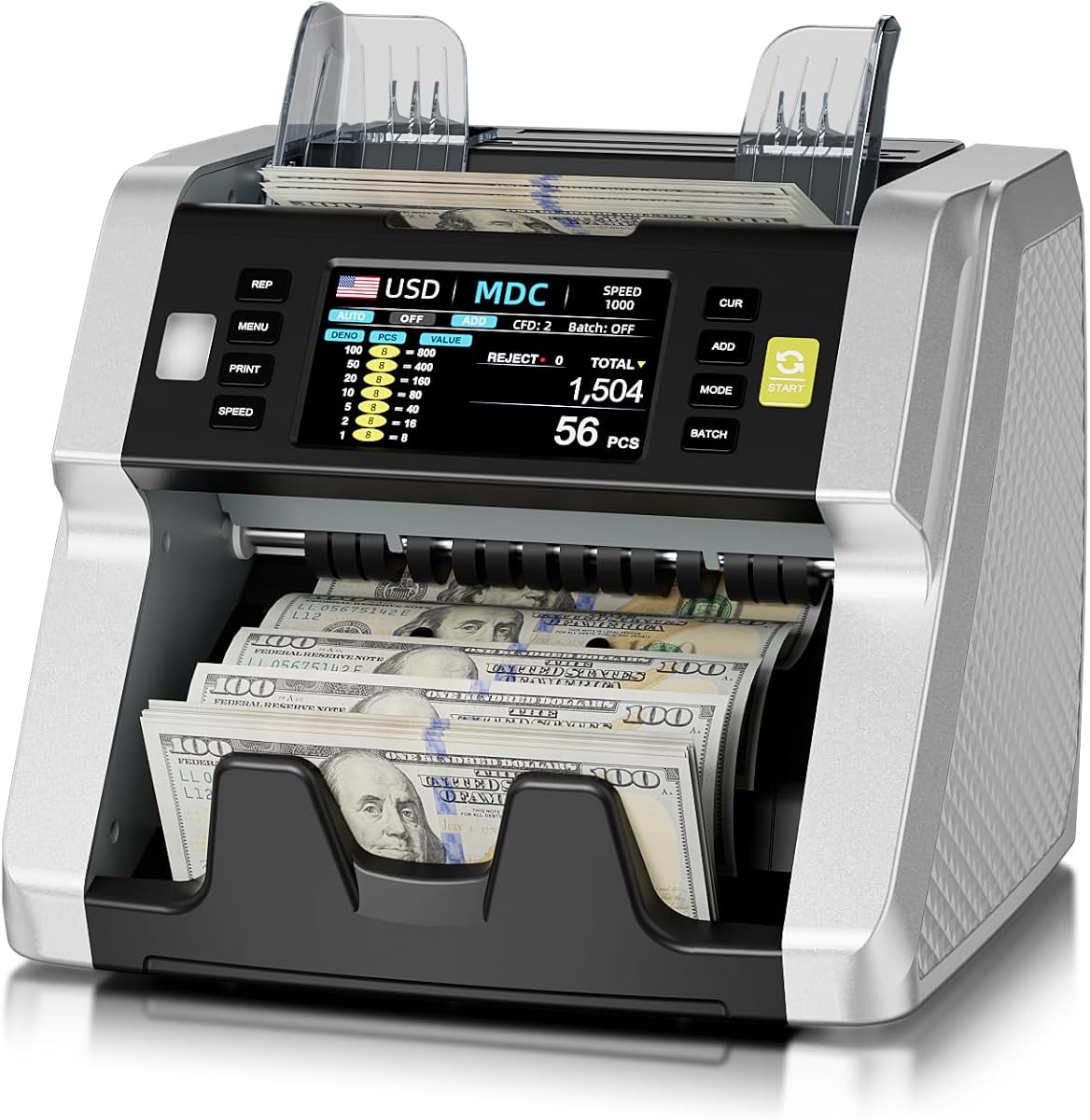
Smart Value Counting: What to Know Before Buying a Mixed Denomination Counter
If you're managing cash-heavy operations like a retail store, church offering, or PTA fundraiser, a mixed denomination money counter like the LOLARAN AL-923 can save hours of manual sorting. This machine stands out by automatically tallying the total value of mixed bills using CIS technology, rather than just counting pieces. Understanding its specific detection modes—UV, MG, IR, DD, DBL, HLF, CHN—and 120 currency programs is key to matching it to your workflow.
Key Considerations Before Buying
- Detection coverage matters: The AL-923 uses seven counterfeit detection methods (CIS, UV, MG, IR, DD, DBL, HLF, CHN), but not all are equally effective for every currency type. For U.S. bills, UV and MG are standard, while IR adds a layer for older notes.
- Mixed denomination value counting is a premium feature: This model automatically calculates total value from a mixed stack, which is ideal for deposit preparation but requires you to pre-sort by denomination if you need a per-denomination breakdown.
- Touch screen interface can simplify operation: The AL-923's touch screen makes it easy to switch between currency programs and adjust settings, but some users report that the screen's responsiveness varies in bright light or with greasy fingers.
What Our Analysts Recommend
Look for a machine with multiple detection points (at least UV, MG, and IR) and a proven track record for accuracy on worn or older bills. A high hopper capacity (the AL-923 holds 300+ notes) and a fast count speed (1,000+ bills per minute) are signs of a robust unit. Also check that the manufacturer provides regular firmware updates for currency program updates.
Bill Counters Market Context
Market Overview
The mixed denomination money counter market has expanded rapidly as small businesses and nonprofits seek to automate cash handling. Machines now range from basic piece counters under $100 to advanced value-counters over $500, with the LOLARAN AL-923 positioned in the mid-tier. Most models now include touch screens and multi-currency support, but reliability and detection accuracy vary significantly.
Common Issues
Common issues include false positives from counterfeit detection on worn bills, jamming with crumpled or taped notes, and value calculation errors when bills are fed in the wrong orientation. Some users also report that the touch screen interface can lag or become unresponsive over time, especially in dusty environments.
Quality Indicators
Quality indicators include the number and type of detection sensors (CIS is a plus for image-based scanning), a metal rather than plastic chassis for durability, and a brand with responsive customer support. Verified reviews that mention specific use cases (e.g., 'used for church collections for 6 months') are more reliable than vague praise.
Review Authenticity Insights
Grade B Interpretation
With a Grade B rating and an estimated 10% fake review rate, the LOLARAN AL-923's review set is mostly trustworthy but not pristine. The 10% suspicious reviews likely include a few overly positive five-star ratings lacking detail, which could inflate the average slightly. The adjusted rating of 4.20 out of 5 is a more realistic benchmark than the displayed 4.44.
Trust Recommendation
You can generally trust the majority of reviews, especially those from verified purchasers describing real-world scenarios like balancing registers or managing event cash. However, pay extra attention to three- and four-star reviews, as they often highlight specific pros and cons that the five-star ratings gloss over.
Tips for Reading Reviews
For this product category, focus on reviews that mention specific detection modes (e.g., 'UV caught a fake $20') or jamming issues with particular bill conditions. Look for patterns across multiple reviews—if several users note the same problem with the touch screen or value counting accuracy, it's likely a genuine concern.
Expert Perspective
The LOLARAN AL-923 is a capable mixed denomination counter with strong detection features and a user-friendly touch screen, but it's not without trade-offs. Its 4.20 adjusted rating suggests solid performance for most small-business and nonprofit needs, though the 10% fake review rate hints at some marketing hype. The seven detection methods are comprehensive for U.S. currency, but the value counting feature works best with crisp, uniformly oriented bills. For organizations handling high volumes of worn or mixed-condition cash, the AL-923 may require occasional manual intervention.
Purchase Considerations
Weigh the convenience of automatic value counting against the need to occasionally re-feed crumpled notes. If you handle multiple foreign currencies regularly, the 120 program support is a plus, but verify that your specific currencies are included. Consider the warranty and return policy, as counterfeit detection machines can be finicky out of the box.
Comparing Alternatives
Compare the AL-923 with models like the Cassida 6600 or AccuBANKER D series, which offer similar features but may have better track records for durability. Read recent reviews on each to see which handles worn bills best for your specific use case.


