
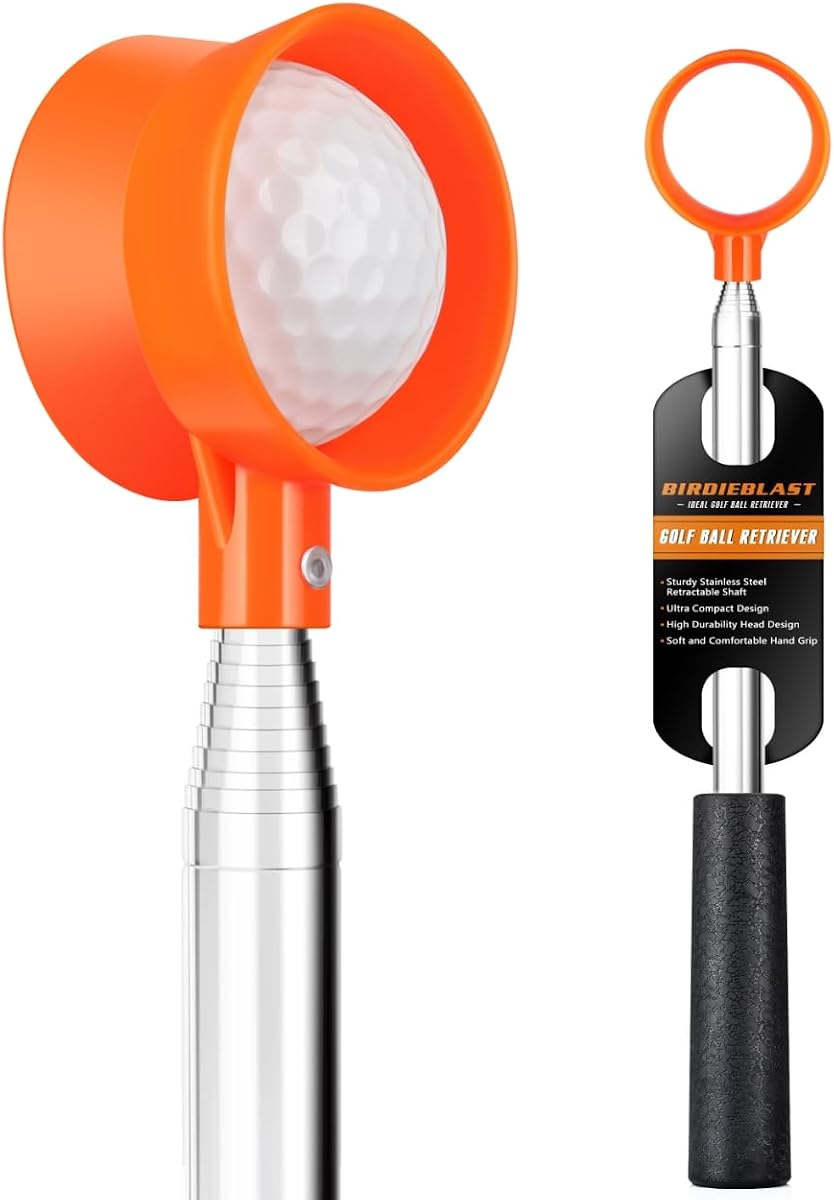
Telescopic Golf Ball Retrievers: Extend Your Reach, Save Your Game
When you're fishing balls out of water hazards, the right retriever can save you strokes and money. This stainless steel model, available in lengths from 9 to 20 feet, is designed to handle the most stubborn water balls without bending or breaking. Here’s what to consider before you buy.
Key Considerations Before Buying
- Length matters: Choose a retriever that matches the water hazards you typically face. A 9-foot model is great for cart-path-only courses, while 16-20 feet gives you the reach to snag balls from the far side of ponds without risking a wet lie.
- Telescoping mechanism: Look for a smooth, locking extension that stays put when you're reaching out. A flimsy lock can cause the retriever to collapse mid-scoop, sending your ball back into the drink.
- Stainless steel construction: The head and shaft should resist corrosion, especially if you play in coastal areas or on courses with mineral-heavy water. This model's stainless steel build is a clear plus.
What Our Analysts Recommend
A quality retriever should have a sturdy, rust-resistant head with a wide basket to scoop balls easily. The telescopic joints should be snug and secure, and the grip should be comfortable even when wet. Check the weight—lighter models are easier to carry, but a bit of heft often indicates a more durable build.
Ball Retrievers Market Context
Market Overview
The golf ball retriever market has evolved from simple wire baskets to sophisticated telescopic tools that can extend up to 20 feet. Modern designs prioritize portability and ease of use, with many golfers keeping one in their bag for quick access on the course.
Common Issues
The most common complaints about ball retrievers are weak locking mechanisms that slip, heads that detach or break after a few uses, and corrosion from repeated exposure to water. Some cheaper models also have poor reach-to-weight ratios, making them unwieldy.
Quality Indicators
High-quality retrievers feature solid stainless steel construction, a positive-locking telescopic system, and a head that is angled for efficient scooping. Look for brands that offer warranties or replacement parts, and check reviews for mentions of durability over time.
Review Authenticity Insights
Grade B Interpretation
With a Review Authenticity Grade of B and an estimated fake review percentage of 10%, you can trust the vast majority of the 734 reviews. The adjusted rating of 4.60/5 remains strong, indicating that even when you strip away potentially inauthentic reviews, this product still performs well.
Trust Recommendation
Given the high volume of verified purchases and consistent feedback about the telescoping length and build quality, you can confidently rely on the overall positive sentiment. However, be aware that a small portion of reviews may be incentivized or overly positive, so focus on detailed, critical reviews that mention specific pros and cons.
Tips for Reading Reviews
For this type of product, pay special attention to reviews that mention the retriever's performance in real-world conditions—like how it handles a ball in thick mud or heavy reeds. Also, look for comments about the locking mechanism's reliability after months of use, as this is a common failure point.
Expert Perspective
This telescopic golf ball retriever offers excellent value, with a sturdy stainless steel build and multiple length options to suit different needs. The high customer rating, even after adjusting for potential fakes, suggests that it delivers on its promises. The main trade-off is the weight of the longer models, which may be a consideration for golfers who prefer to walk the course.
Purchase Considerations
Consider your typical playing environment and how often you actually fish balls out of water. If you're a high-handicapper who loses balls frequently, this retriever will pay for itself in no time. If you rarely hit into hazards, a shorter, lighter model might be more practical.
Comparing Alternatives
While this retriever stands out for its build and reach, it's worth comparing with other models that offer different head designs or locking mechanisms. Some golfers prefer a rotating head for easier scooping, while others want a compact, foldable option for minimal bag space.


