
Evaluating Third-Party Ryobi 40V Battery Packs: Performance vs. OEM Compatibility
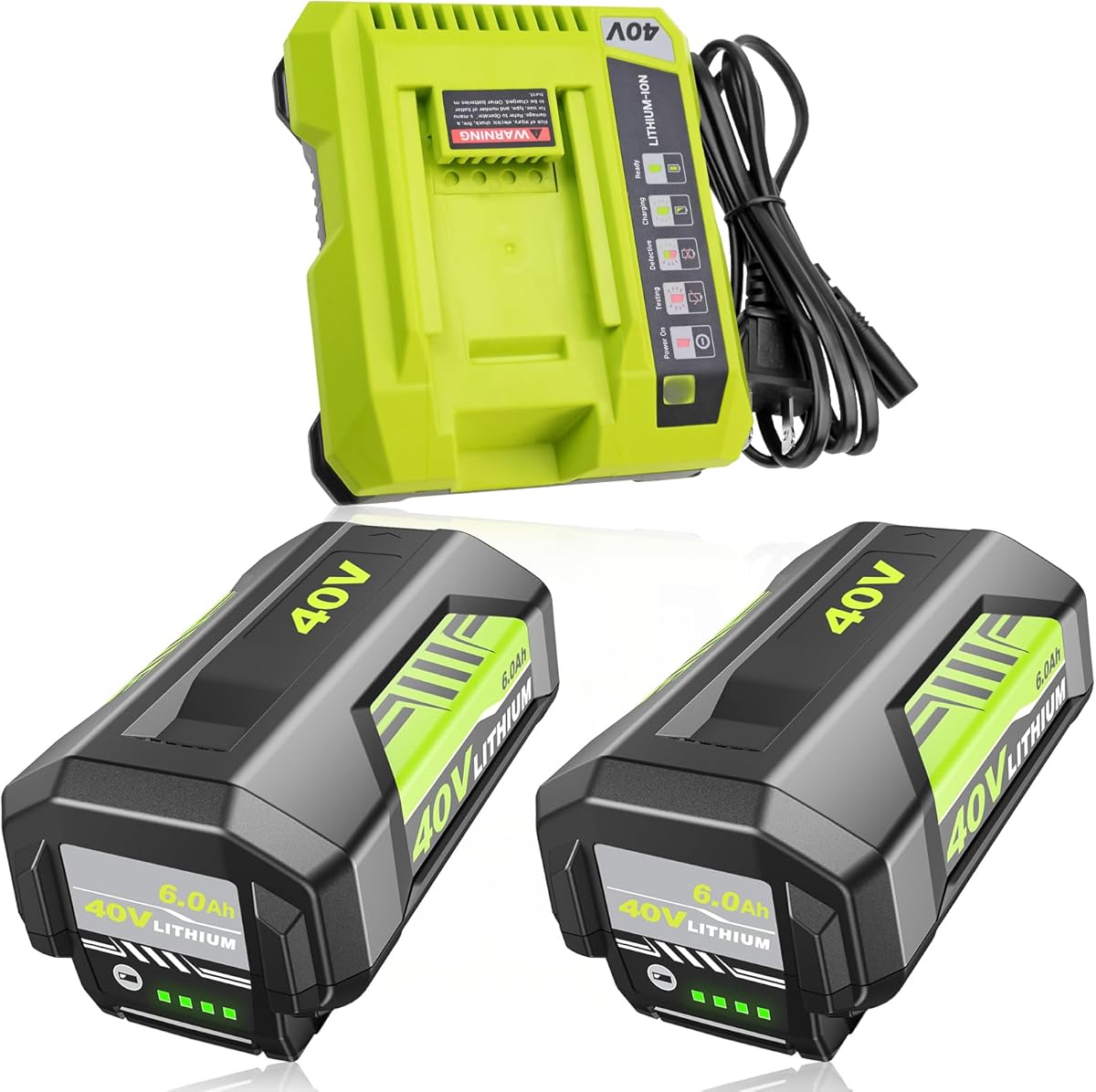
When considering this 2-pack of 6000mAh replacement batteries and charger for Ryobi 40V tools, buyers must understand they're evaluating aftermarket lithium-ion cells, not genuine Ryobi OP4026 batteries. The 6.0Ah capacity claims and green housing are designed to mimic OEM appearance, but performance characteristics like voltage stability under load and communication with Ryobi's battery management system can differ significantly.
Key Considerations Before Buying
- Runtime consistency across both batteries in the pack is crucial—some users report one battery performing markedly better than its paired counterpart, indicating potential quality control variance in cell matching.
- Charger compatibility with the OP401 designation is essential, but verify it properly terminates charging at 40V without overheating, as third-party chargers sometimes lack the precise voltage regulation of OEM units.
- Physical fit in tool battery sleds requires attention—some aftermarket packs have slightly different housing dimensions that can cause tight fits or connection issues with Ryobi's slide-and-lock mechanism.
What Our Analysts Recommend
Genuine reviews mentioning specific runtime comparisons against original Ryobi 40V batteries provide the most valuable data. Look for mentions of performance in high-drain tools like lawn mowers or leaf blowers versus lower-drain tools, as this reveals the battery's ability to maintain voltage under heavy load. Consistent reporting of the charger's LED behavior and charge completion times also indicates reliable circuitry.
Battery Packs Market Context
Market Overview
The aftermarket power tool battery market has expanded rapidly, with numerous manufacturers offering Ryobi 40V-compatible packs at 30-50% lower cost than OEM batteries. These products typically use lower-grade 18650 or 21700 lithium-ion cells arranged in 10S configurations to achieve the nominal 36V/40V peak voltage, with capacity ratings that may not reflect real-world performance.
Common Issues
Capacity inflation is widespread, where advertised 6000mAh ratings deliver closer to 4000-5000mAh in actual use. Communication protocol mismatches can cause tools to not recognize the battery, while inconsistent cell balancing leads to premature failure of individual cells within the pack. Many third-party chargers lack proper temperature monitoring during the CC/CV charging cycle.
Quality Indicators
Higher-quality aftermarket packs use name-brand cells like Samsung, LG, or Panasonic rather than unbranded lithium-ion cells. Look for products with transparent specifications about cell type and configuration (10S2P for 40V systems). Quality packs include proper battery management systems with overcharge, over-discharge, and temperature protection that matches Ryobi's protocols.
Review Authenticity Insights
Grade B Interpretation
The Grade B authenticity rating with 11% estimated fake reviews indicates predominantly genuine feedback but suggests some review manipulation. For this specific product, the 0.18-point difference between the Amazon rating (3.78) and adjusted rating (3.60) suggests inflated positive reviews rather than negative review suppression.
Trust Recommendation
Focus on verified purchase reviews that mention specific tools (RY40170 lawn mower, RY40400 leaf blower) and provide runtime measurements. Be particularly skeptical of reviews claiming 'better than OEM' performance without comparative data, as these may represent the estimated 11% questionable feedback. The high number of reviews (2050) provides sufficient data to identify consistent patterns.
Tips for Reading Reviews
Prioritize reviews discussing long-term performance over 3-6 months, as lithium-ion battery degradation patterns reveal quality. Look for technical details like voltage sag under load or charger behavior rather than generic 'works great' statements. Reviews mentioning capacity testing with battery analyzers or comparing charge cycles to failure provide the most reliable insights.
Expert Perspective
This product's 3.60 adjusted rating from authentic reviews places it in the mid-range of third-party Ryobi 40V battery options. The two-battery-plus-charger bundle offers cost efficiency but introduces variability risk—if one component fails, you're left with mismatched equipment. The substantial review volume indicates widespread trial, with patterns suggesting reasonable short-term functionality but questions about long-term cycle life compared to genuine Ryobi batteries. The charger's performance appears to be a frequent point of discussion in reviews, warranting careful evaluation.
Purchase Considerations
Calculate your cost-per-amp-hour compared to Ryobi's genuine 40V batteries during sales events—sometimes the price difference narrows significantly. Consider whether your tools are high-drain applications (lawn equipment) versus moderate-drain (trimmers, blowers), as performance gaps are most noticeable in demanding applications. Factor in whether you need immediate backup power via the two-battery configuration or if a single higher-quality battery might serve better.
Comparing Alternatives
Compare this bundle against individual higher-capacity options and other third-party brands like Wasabi or Powerextra that may use different cell suppliers, as lithium-ion cell quality varies significantly between manufacturers.


