
Evaluating Portable CO2 Monitors: Accuracy, Calibration, and Real-World Performance
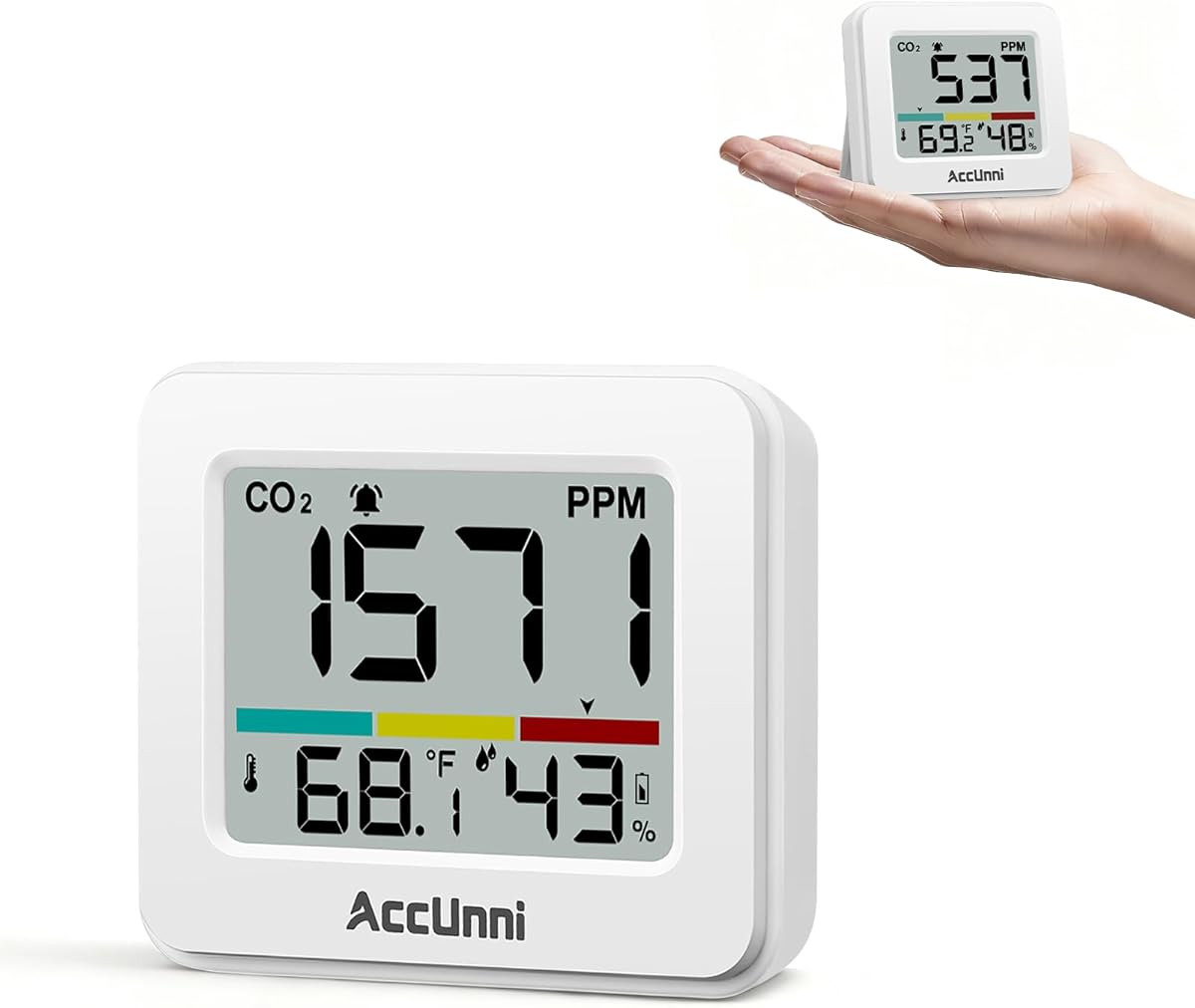
This specific CO2 monitor markets itself as a multi-environment solution for homes, offices, and vehicles, combining carbon dioxide detection with temperature and humidity readings. Buyers should understand that portable NDIR (Non-Dispersive Infrared) sensors, like those in this unit, vary significantly in baseline accuracy and long-term drift. The advertised portability suggests battery operation, which impacts sensor warm-up time and stability compared to plug-in models.
Key Considerations Before Buying
- For a device claiming use in cars, verify its response time to rapid CO2 buildup from passengers; slower sensors may not provide timely alerts.
- The inclusion of temperature and humidity suggests a multi-sensor array, but check if these readings are calibrated or merely approximate, as uncalibrated hygrometers are common in budget units.
- An 'alarm' function requires evaluating both the preset threshold (typically 1000-1200 ppm) and whether the alert is audible enough for a noisy office or car environment.
What Our Analysts Recommend
Prioritize monitors that disclose their sensor type (NDIR is standard), measurement range (this unit likely covers 0-5000 ppm), and calibration method. Look for user-accessible calibration features or documented factory calibration certificates, which are rare at this price point but critical for trustworthy CO2 data, especially in school or hotel settings where air exchange rates matter.
Indoor Air Quality Meters Market Context
Market Overview
The consumer-grade indoor air quality meter market is flooded with affordable portable units, creating a wide gap between laboratory-grade instruments and entry-level detectors. Products like this one compete primarily on multi-function displays and compact design rather than laboratory validation.
Common Issues
Budget CO2 monitors frequently suffer from sensor drift without simple recalibration options, and their temperature/humidity sensors are often unshielded, leading to readings influenced by the device's own electronics. Many units also lack proper altitude compensation, skewing CO2 readings in high-elevation areas.
Quality Indicators
Reliable units specify accuracy (e.g., ±50 ppm ±3% of reading), offer data logging capabilities, and have sensors from established manufacturers like Senseair or Winsen. A stable, non-fluctuating reading in a fresh air environment is a basic real-world test.
Review Authenticity Insights
Grade D Interpretation
A 'D' authenticity grade and a 45% estimated fake review rate indicate nearly half the glowing feedback may be inauthentic, artificially inflating the perfect 5.0 rating. This pattern is particularly concerning for a measurement device where honest reviews should discuss accuracy drift, calibration quirks, and battery life.
Trust Recommendation
Heavily discount the perfect 5-star reviews. Focus instead on any critical 3- or 4-star reviews that may have slipped through, as they likely contain genuine observations about sensor performance or build quality. Assume the adjusted 3.90 rating is a more realistic quality signal.
Tips for Reading Reviews
Scrutinize reviews that mention specific, verifiable scenarios like 'CO2 levels dropped after opening my classroom window' or discuss calibration procedures. Be skeptical of vague, repetitive praise about 'great product' or 'works perfectly' without technical details or mention of cross-checking readings.
Expert Perspective
The significant discrepancy between the posted 5.0 rating and the adjusted 3.90, coupled with the high fake review probability, suggests a product that may not live up to its marketed performance. For a device intended for health and safety decisions in schools or offices, this authenticity red flag is substantial. The multi-use claim (home, car, hotel, office) often indicates a jack-of-all-trades unit that may master none, particularly struggling with the rapid environmental changes in a vehicle.
Purchase Considerations
Weigh the convenience of a portable, all-in-one meter against the need for reliable data. If your use case is casual home monitoring, this may suffice, but for verifying HVAC performance in an office or assessing classroom ventilation, the authenticity concerns warrant caution. The lack of visible critical reviews prevents assessment of common failure modes.
Comparing Alternatives
Shoppers should compare this unit's specifications—especially sensor type, battery life, and calibration claims—against competitors with more transparent and varied review profiles.


