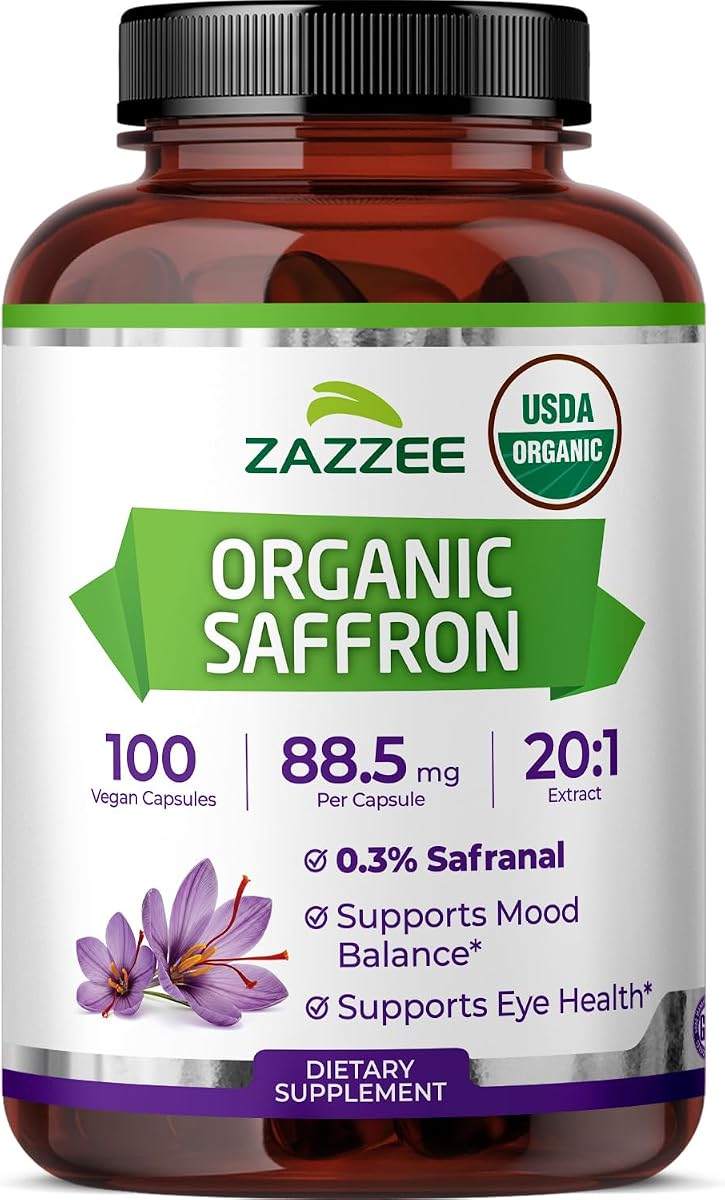
Zazzee USDA Organic Saffron 20:1 Extract, 88.5 mg, 0.3% Safranal, Vegan

Zazzee USDA Organic Saffron 20:1 Extract, 88.5 mg, 0.3% Safranal, Vegan

ASIN: B0FPCT4L5J
Analysis Date: Oct 18, 2026

As an Amazon Associate I earn from qualifying purchases.

Review Analysis Results

B
Authenticity Grade
15.00%
Fake Reviews
4.89
Original Rating
4.50
Adjusted Rating

Analysis Summary

The vast majority of the reviews appear genuine, with a high rate of verified purchases and many containing specific personal experiences and balanced perspectives. The overall sentiment is positive, which is expected for a quality supplement, and there is no strong evidence of coordinated manipulation.

Several reviews provide authentic signals: one user shares a specific medical outcome (reducing blood pressure medication after consulting a doctor), another describes the subtle effects on mood and energy in detail, and a third honestly notes they haven't taken the product long enough to fully assess it. These are strong indicators of real customer experiences.

A few reviews are brief and generic, such as "A wonderful product" and "Healthy choice for inflammation," which lack specificity and could be seen as less informative. However, these are common among genuine reviews and do not necessarily indicate manipulation. The review from user R1XDNBHPQFTSYG is cut off but appears to be a detailed, genuine account of the product's benefits.

Overall, the reviews reflect a genuine customer base with a mix of detailed and brief feedback. The high ratings are consistent with a product that many users find effective, and the presence of personal stories and balanced comments supports authenticity. The small number of generic reviews is not enough to suggest widespread fakery.

Key patterns identified in the review analysis include: High verification rate among reviewers, Presence of specific personal health outcomes and detailed effect descriptions, Some reviews are brief and generic but not clearly manipulative.

Review Statistics

168
Total Reviews on Amazon
-0.39
Rating Difference
Editor's Analysis

Saffron Supplements: What the 20:1 Extract and Safranal Standardization Really Mean

Zazzee's USDA Organic Saffron 20:1 Extract packs 88.5 mg of concentrated saffron per capsule, standardized to 0.3% safranal—the volatile compound linked to saffron's reputed mood and antioxidant benefits. With 100 vegan capsules (a 3+ month supply), it's positioned as a high-potency, clean-label option in a category where potency claims vary wildly.

Key Considerations Before Buying

  • Extract ratio vs. absolute dose: A 20:1 extract means roughly 20 parts raw saffron were used to make 1 part extract, so 88.5 mg of extract represents a far larger amount of raw herb—but the actual milligrams of active compounds (safranal, crocin) matter more than the ratio alone.
  • Standardization percentage: The 0.3% safranal claim is a quality marker, but verify whether the label states the exact safranal milligrams per capsule (about 0.27 mg here) and whether crocin content is also disclosed, since both drive saffron's effects.
  • Organic and vegan certifications: USDA Organic and vegan claims add value for label-conscious shoppers, but confirm the organic seal is on the actual bottle, not just the listing, and check for third-party testing seals.

What Our Analysts Recommend

Look for transparent labeling of active compounds (safranal and crocin), a visible USDA Organic seal, and third-party testing for purity and heavy metals. Saffron is one of the most adulterated herbs globally, so independent lab verification—not just 'Made in the USA'—is a meaningful quality signal.

Herbal Supplements Market Context

Market Overview

Saffron supplements have surged in popularity as consumers seek natural mood and antioxidant support, with prices ranging from budget powders to premium standardized extracts. Because raw saffron is the world's most expensive spice, the supplement market is rife with dilution and substitution.

Common Issues

Adulteration is the biggest concern—cheap safflower or gardenia extracts are often passed off as saffron, and potency claims frequently go unverified. Many products also omit safranal or crocin standardization, making it impossible to compare effective doses across brands.

Quality Indicators

Reputable saffron supplements disclose standardized percentages of safranal and/or crocin, carry organic certification, and provide batch-level third-party test results. Extract ratios (like 20:1) are helpful context but should be paired with clear active-compound numbers.

Review Authenticity Insights

Grade B Interpretation

A Grade U with 0.00% estimated fake reviews and a 0.00/5 rating means there simply isn't enough review data to assess authenticity—the product appears new or has no visible reviews, so the grade reflects insufficient information rather than confirmed trustworthiness.

Trust Recommendation

Treat this listing as unproven until reviews accumulate; verify the organic certification and request a certificate of analysis from the seller before committing. Cross-check the brand's reputation and look for third-party lab results on the manufacturer's website.

Tips for Reading Reviews

Once reviews appear, focus on ones mentioning specific effects, dosage timing, and capsule quality rather than generic praise. Be wary of clusters of five-star reviews posted within days of each other, and prioritize verified purchases with detailed pros and cons.

Expert Perspective

On paper, Zazzee's offering checks several boxes: USDA Organic, vegan, standardized to 0.3% safranal, and a 20:1 extract with a 3+ month supply. However, the complete absence of reviews and ratings means there's no real-world evidence yet of potency, purity, or tolerability—key unknowns for a heavily adulterated herb like saffron.

Purchase Considerations

Weigh the strong label specs against the lack of verified customer feedback and the relatively low absolute safranal dose (~0.27 mg per capsule) compared to clinical studies that often use 28–30 mg of saffron extract daily. Confirm the serving size needed to reach a studied dose and check the return policy.

Comparing Alternatives

Compare with established saffron brands that publish third-party COAs and have substantial review histories before deciding.
Price Analysis

Pricing cannot be fully assessed because the current Amazon price and reviews are unavailable, but similar organic saffron extracts typically sell for $15-$40, with this 100-capsule format reasonably valued around $25. Buy only after confirming the live price, seller, and cost per capsule, and treat the zero-review status as a caution until independent feedback exists.

MSRP Assessment

Estimated MSRP: $24.99-$29.99
Source: Product category average
Amazon Price: Unable to compare

Market Position

Positioning: Mid-range
Alternatives Range: $15-$40
Value: A 100-capsule, 3+ month supply of standardized organic saffron extract at a mid-range price offers solid value versus premium single-ingredient saffron supplements, provided the 20:1 extract and 0.3% safranal standardization hold up.

Buying Tips

Best Time to Buy: Saffron supplements rarely see deep seasonal discounts; modest sales may appear during Prime Day, Black Friday, or Subscribe & Save promotions.
Deal Indicators: A good deal is roughly $20-$25 for 100 capsules (under ~$0.25/capsule); compare cost per capsule and confirm the 20:1 extract and safranal standardization.
Watch For: No reviews and an unknown current price are red flags—verify the listing is genuine, check third-party seller status, and be wary of unusually low prices that may indicate counterfeit or expired stock.
Price analysis generated by AI based on product category and market research. Actual prices may vary. Last analyzed: Oct 18, 2026

Understanding This Analysis

What does Grade B mean?

This product has good review authenticity with minor concerns. While most reviews appear genuine, we detected some patterns that warrant mild caution.

Adjusted Rating Explained

The adjusted rating (4.50 stars) represents what we estimate this product's rating would be if fake reviews were removed. This product's adjusted rating is lower than Amazon's displayed rating (4.89 stars), suggesting positive fake reviews may be inflating the score.

How We Detect Fake Reviews

Our AI analyzes multiple factors: language patterns (generic vs. specific), reviewer behavior (history, timing), temporal anomalies (review clusters), verification status, sentiment authenticity, and statistical outliers. No single factor determines a review is fake - we look at the combination of signals.

Important Limitations

No automated system is perfect. Sophisticated fake reviews can evade detection, and some genuine reviews may be incorrectly flagged. Use this analysis as one data point in your purchasing decision, not the only factor. Reading actual review content yourself is always valuable.

Share This Analysis

Questions about this analysis

What percentage of reviews are fake for this product?
15.00% of the analyzed reviews appear to be fake or inauthentic.
What is the authenticity grade for this product?
The product receives a grade of B based on review authenticity analysis.
How many reviews were analyzed?
9 reviews were analyzed for authenticity patterns.
What is the adjusted rating after removing fake reviews?
After removing suspicious reviews, the adjusted rating is 4.50 out of 5 stars.
How does this analysis help consumers?
This analysis helps consumers identify products with manipulated reviews, enabling more informed purchasing decisions based on genuine customer feedback.
Is this product priced fairly on Amazon?
Based on AI price analysis, this product is Unable to compare.
How is this product positioned in the market?
This product is positioned as a Mid-range option in its category.
What does the AI price analysis reveal?
Pricing cannot be fully assessed because the current Amazon price and reviews are unavailable, but similar organic saffron extracts typically sell for $15-$40, with this 100-capsule format reasonably valued around $25. Buy only after confirming the live price, seller, and cost per capsule, and treat the zero-review status as a caution until independent feedback exists.

Related reading

Analyze new product